
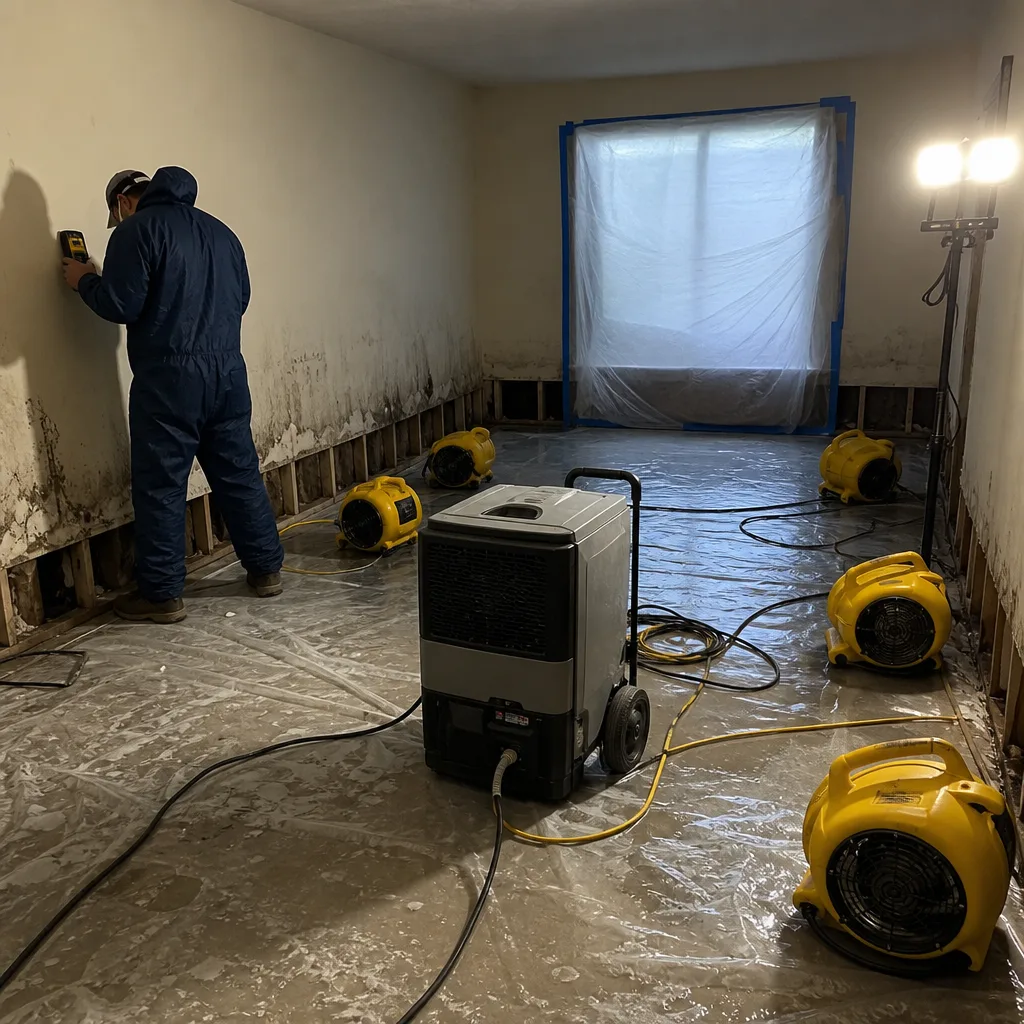
Free visual inspection and a written scope of work before any mitigation begins - photos, moisture readings, and drying logs go in your claim file
The scope we write is the scope we bill. Anything new gets shown to you, in writing, before we touch it.
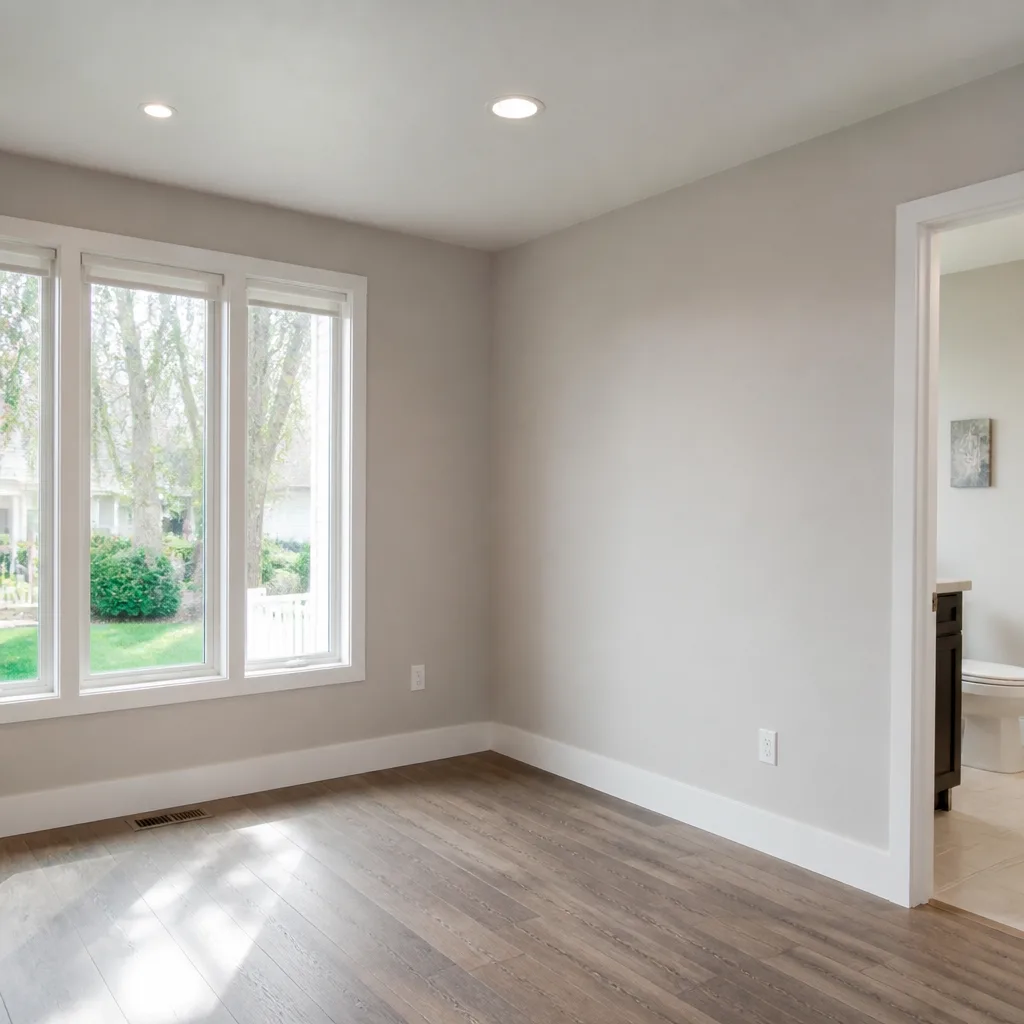
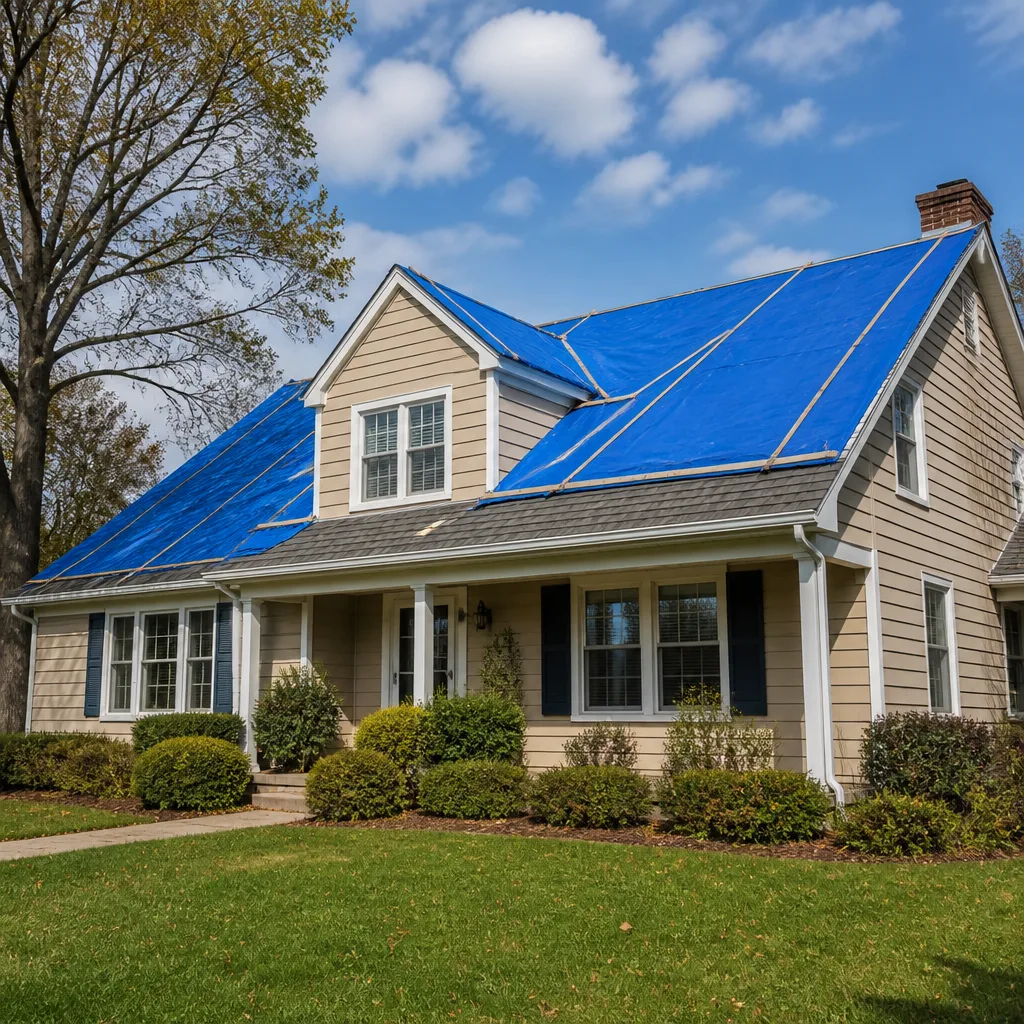
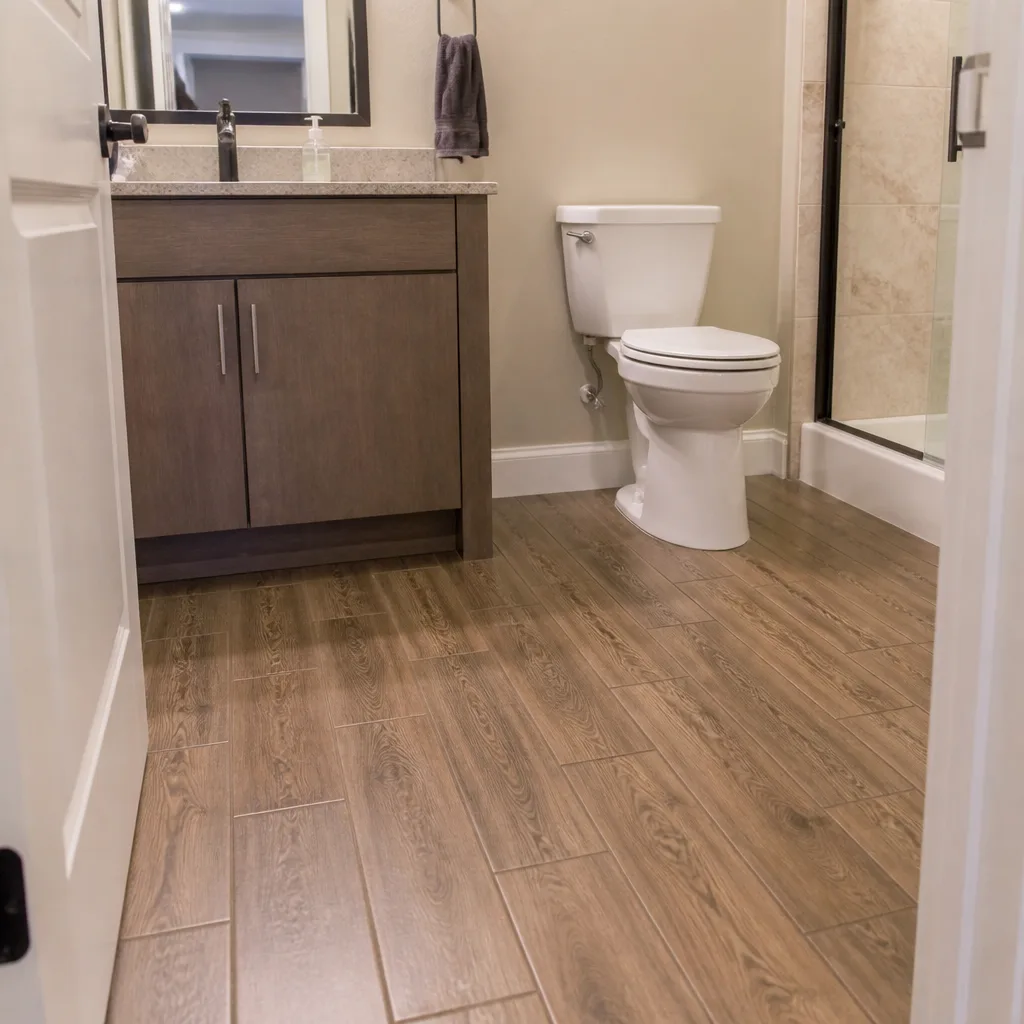
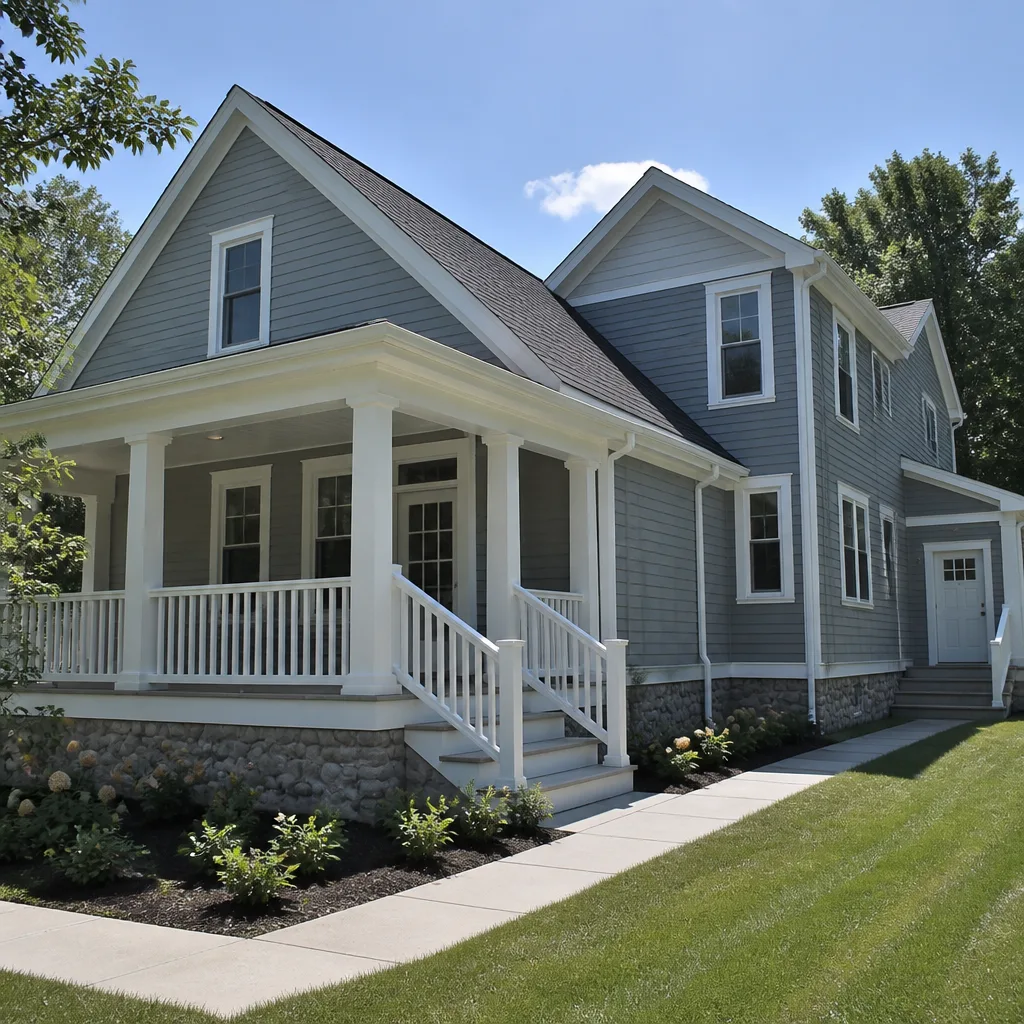
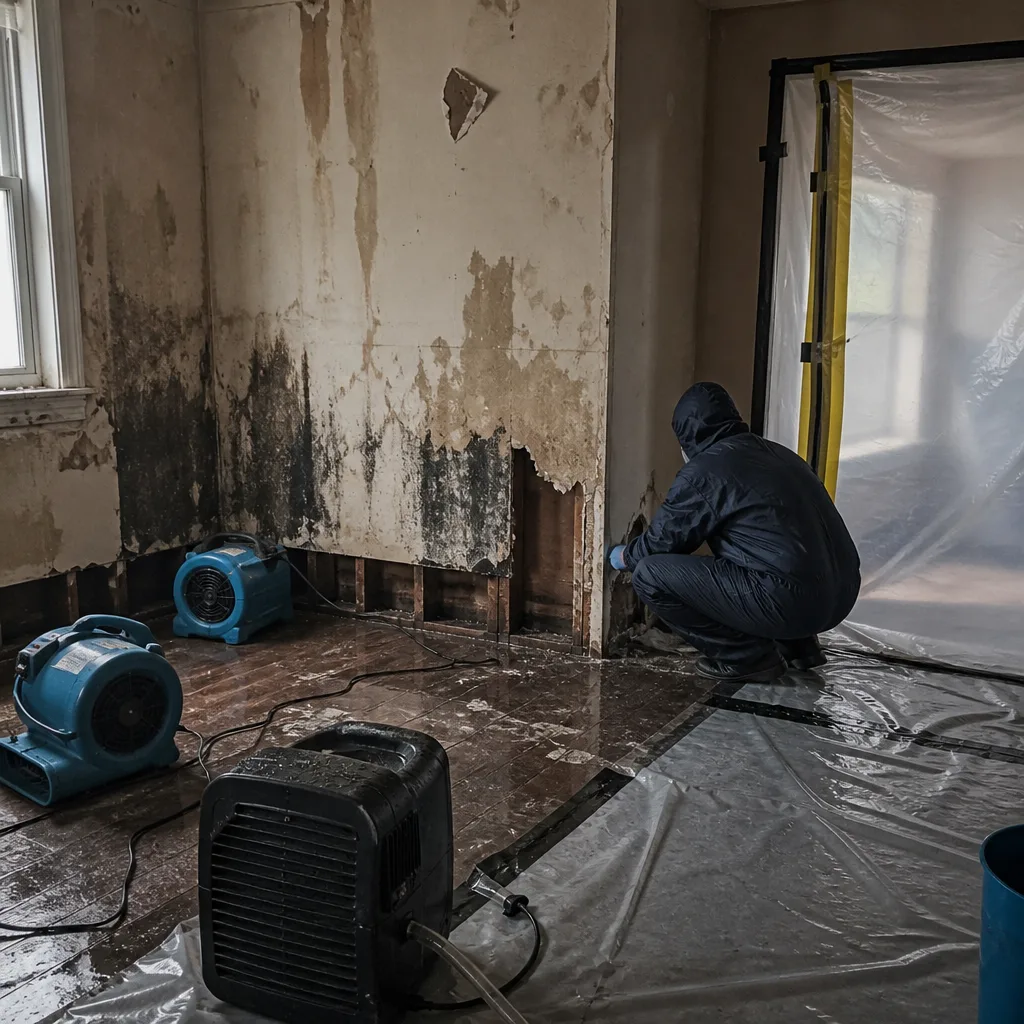 Before
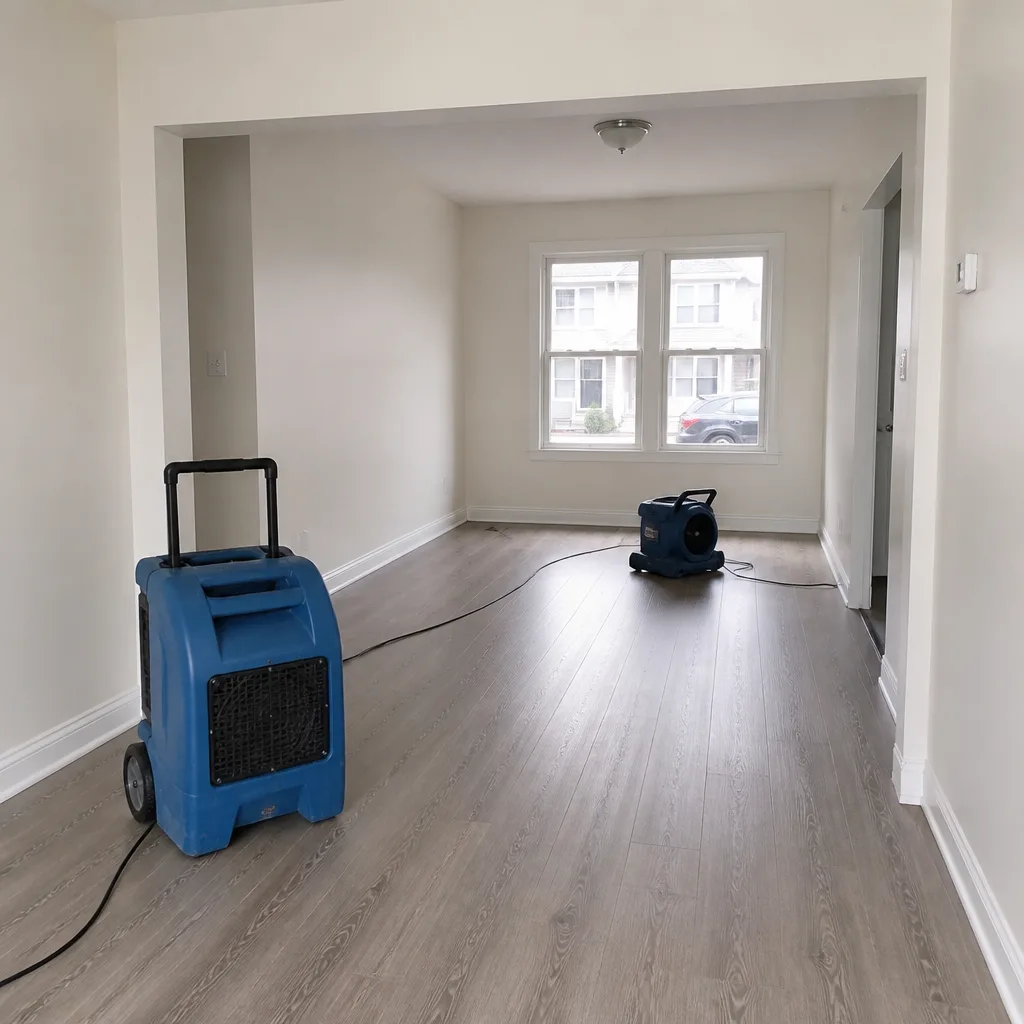 After
After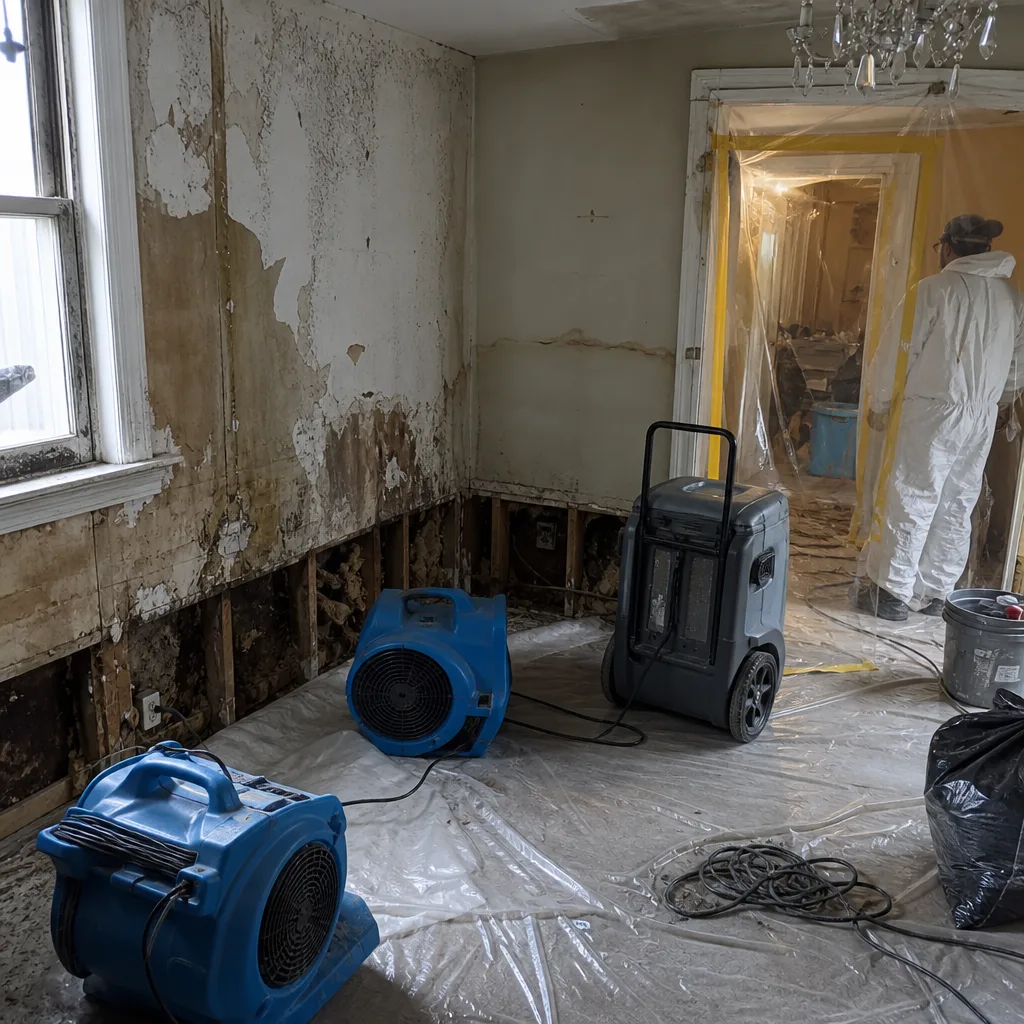 Before
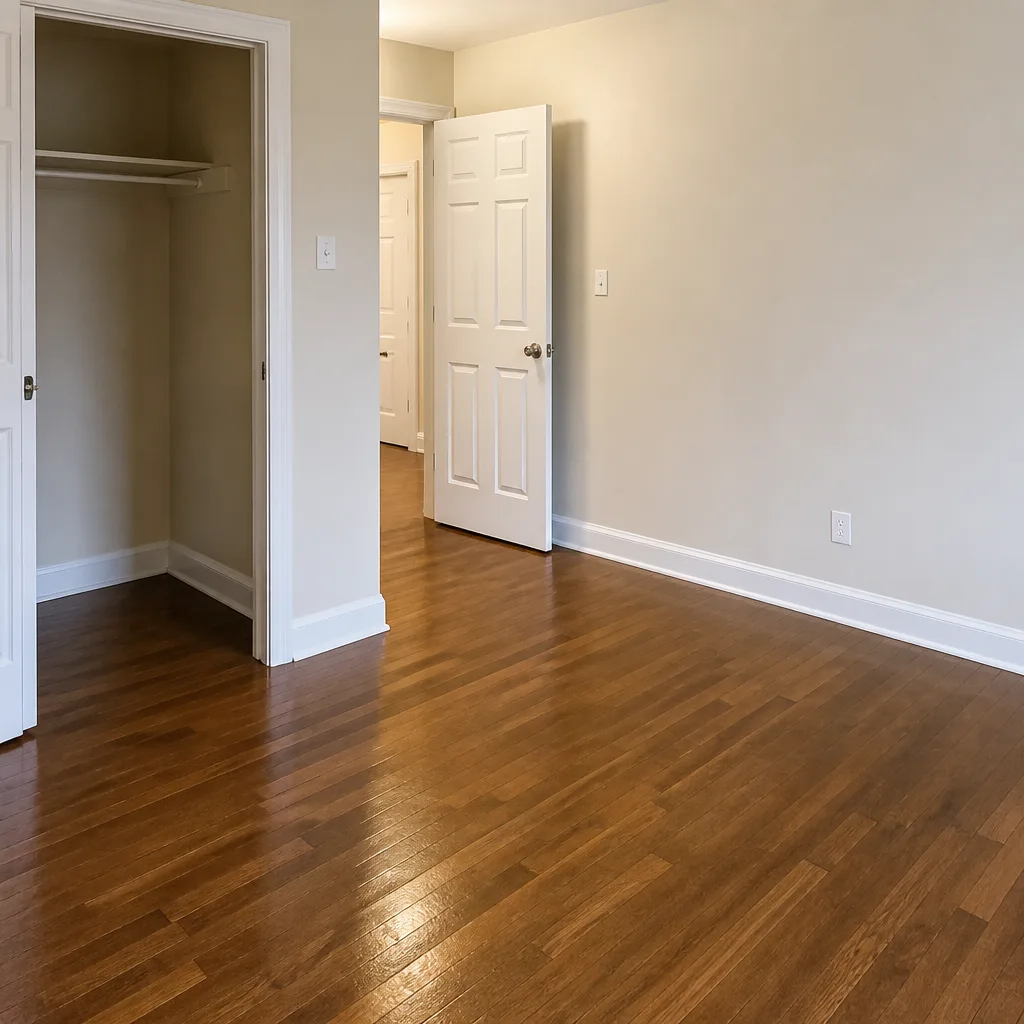 After
After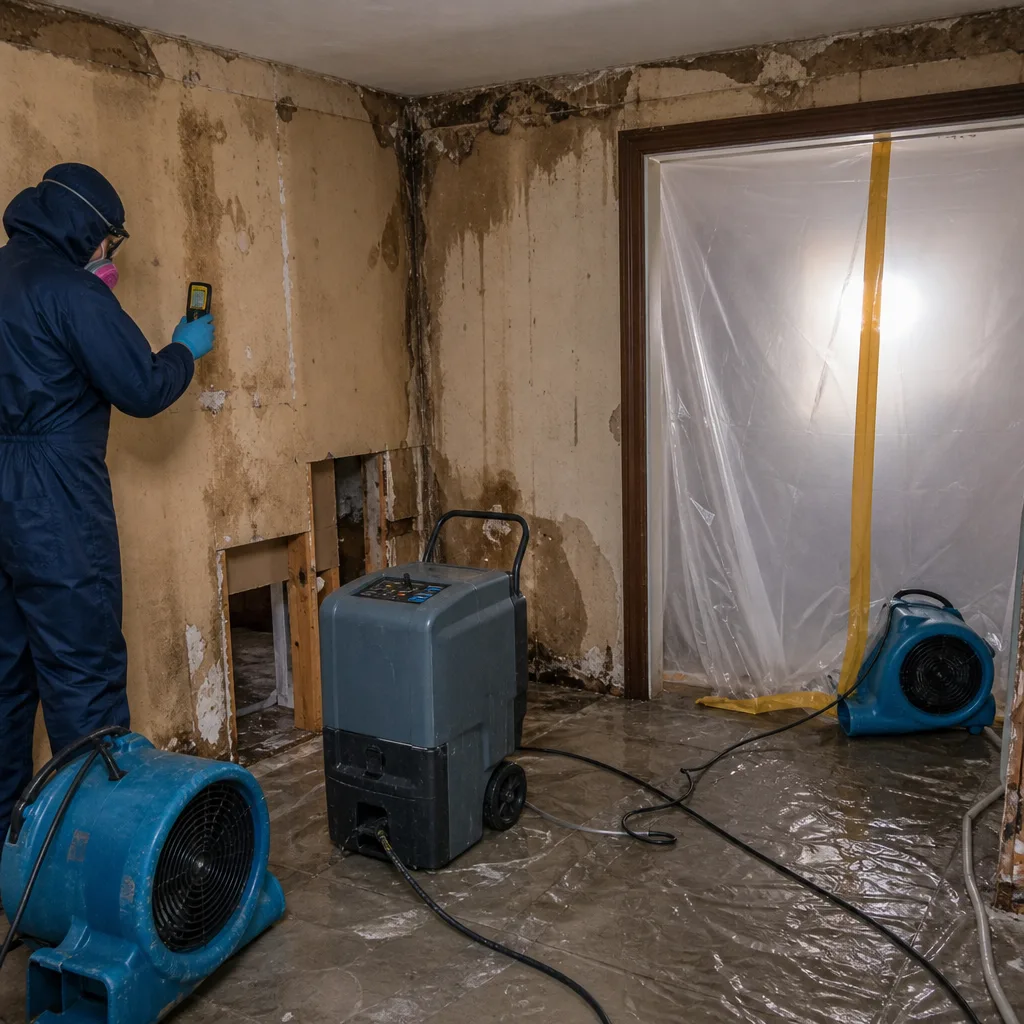 Before
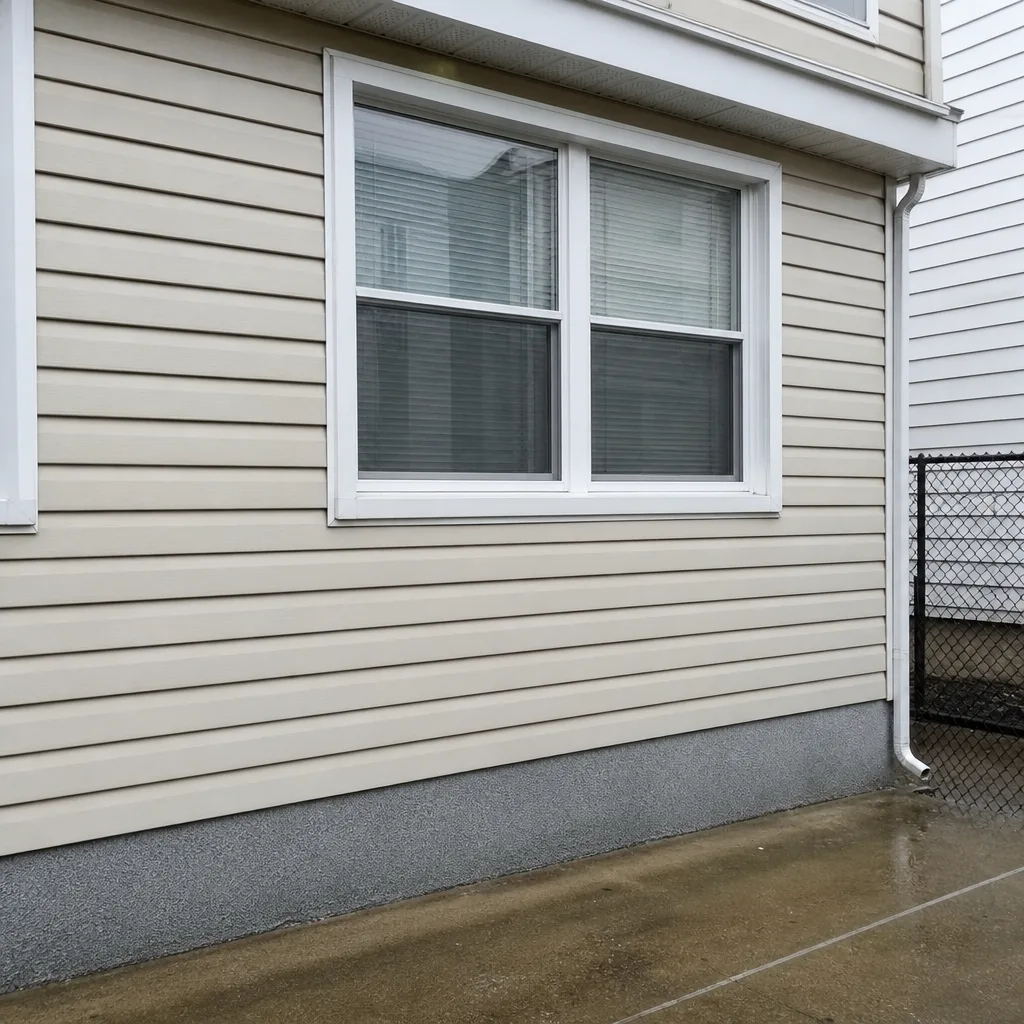 After
After24/7 Emergency Water Damage Restoration in Upper Manhattan
Water damage restoration in Upper Manhattan typically costs $380 to $2,400 for standard single-unit extraction and drying, while multi-floor spread in pre-war buildings with horsehair plaster often runs $3,500 to $8,500 when rebuild is included. A certified crew from Floodline Restoration Co. can reach most of Upper Manhattan within 45 minutes, and a live dispatcher answers at (640) 221-3499 at any hour, every day.
Here’s what the first hour actually buys you. Category 1 water from a burst supply line can become Category 2 or 3 within 48 to 72 hours as it picks up contaminants. That timeline gets shorter in pre-war Upper Manhattan buildings where water travels through shared floor joists and horsehair plaster cavities, reaching units below yours long before it shows on your ceiling. We start extraction the same visit, not tomorrow morning.
Understanding Water Damage Restoration Severity in Upper Manhattan Properties
Not all water is the same, and Upper Manhattan’s building stock makes the distinction matter more than most. Category 1 water comes from a clean source, a supply line, a tub overflow. Category 2 carries soap residue or other contaminants. Category 3 is the one that scares us: Sewage Cleanup - Upper Manhattan, river water, standing floodwater from a backed-up sewer line in a below-grade Inwood garden unit or East Harlem basement. Each category demands a different level of containment, PPE, and structural remediation.
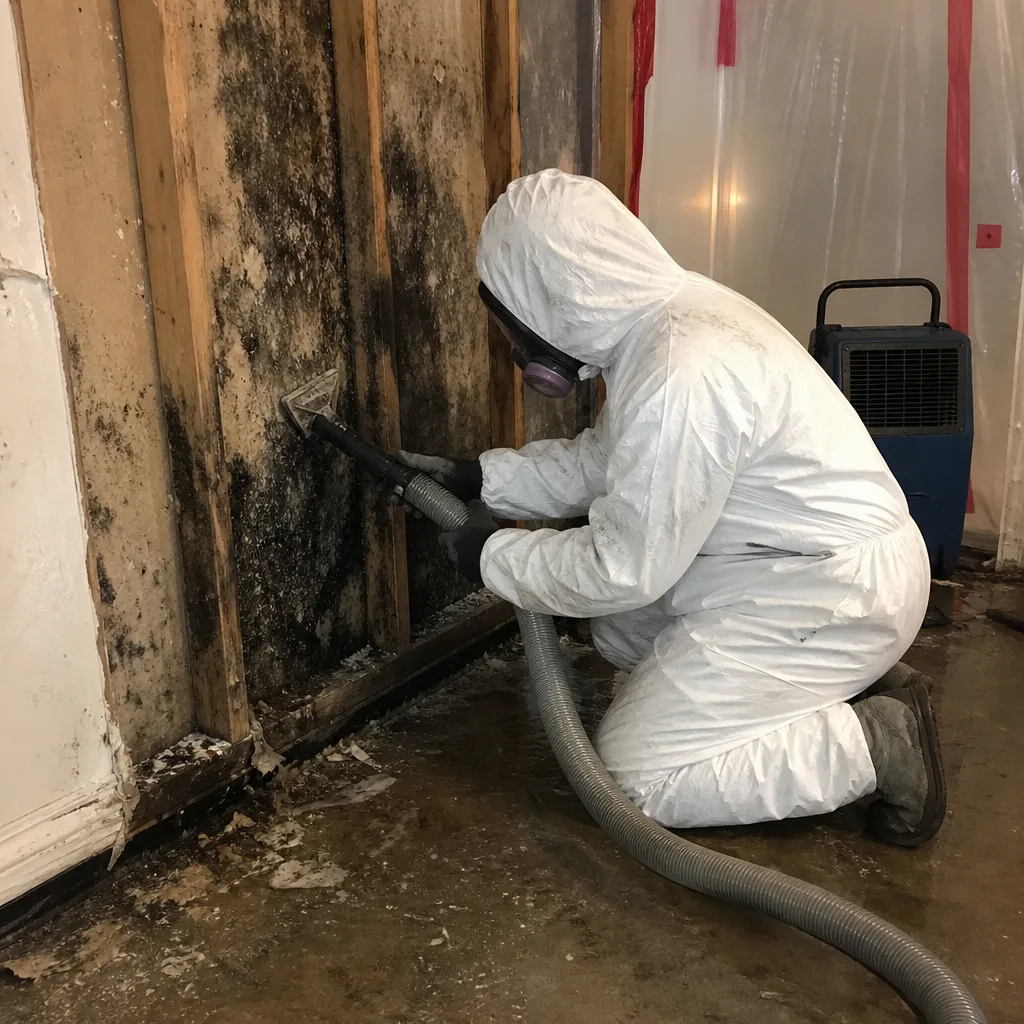
The harder problem in this borough is moisture mapping in horsehair-plaster-and-wood-lath walls. Standard drywall moisture meters read the surface, but original plaster from the 1890s through 1940 soaks and holds water differently. We use thermal imaging, probe rods, and daily logged readings with calibrated hygrometers to find saturated cavities that look bone-dry on the surface. A wall that reads fine on a pin-less meter can be hiding a colonized mold bloom behind the plaster, fed by a steam-heat supply pipe weeping inside the wall cavity for weeks. Wait for bubbling paint and you’re already into demolition territory.
Why Upper Manhattan Property Owners Choose Floodline Restoration Co.
- 45-minute response commitment across Upper Manhattan. Live dispatch routes the nearest certified crew from our New York City office to Washington Heights, Harlem, Inwood, or East Harlem the moment you hang up.
- A real person answers, 24/7. No automated system, no call screening, no voicemail at 2 a.m. A live dispatcher picks up and a crew is on the road.
- IICRC-certified technicians on every job. Crews hold current WRT (Water Restoration Technician) and FSRT (Fire & Smoke) certifications, with additional training through RIA and IFA standards.
- Free visual inspection with no obligation. We walk the affected area, map the damage, and give you a written scope before any work begins. You decide with real information.
- Direct insurance billing with adjuster coordination. We document everything from hour one, hand your carrier the moisture log, and bill them directly. You never play messenger.
- One team from first extraction to final rebuild. The same certified crew that reads the moisture map on day one handles daily readings, dries the structure, and rebuilds what needs rebuilding. No mid-job handoff, no inherited crew.
Our Water Damage Restoration Process
Inspection & Assessment
We arrive, document the visible damage, and immediately start mapping what you can’t see. In Upper Manhattan’s pre-war buildings, that means thermal imaging scans of horsehair plaster walls, probe rod readings in wall cavities, and moisture mapping across all adjacent units through shared floor joists. You get a clear scope, time estimate, and written plan before any water is extracted.
Extraction & Stabilization
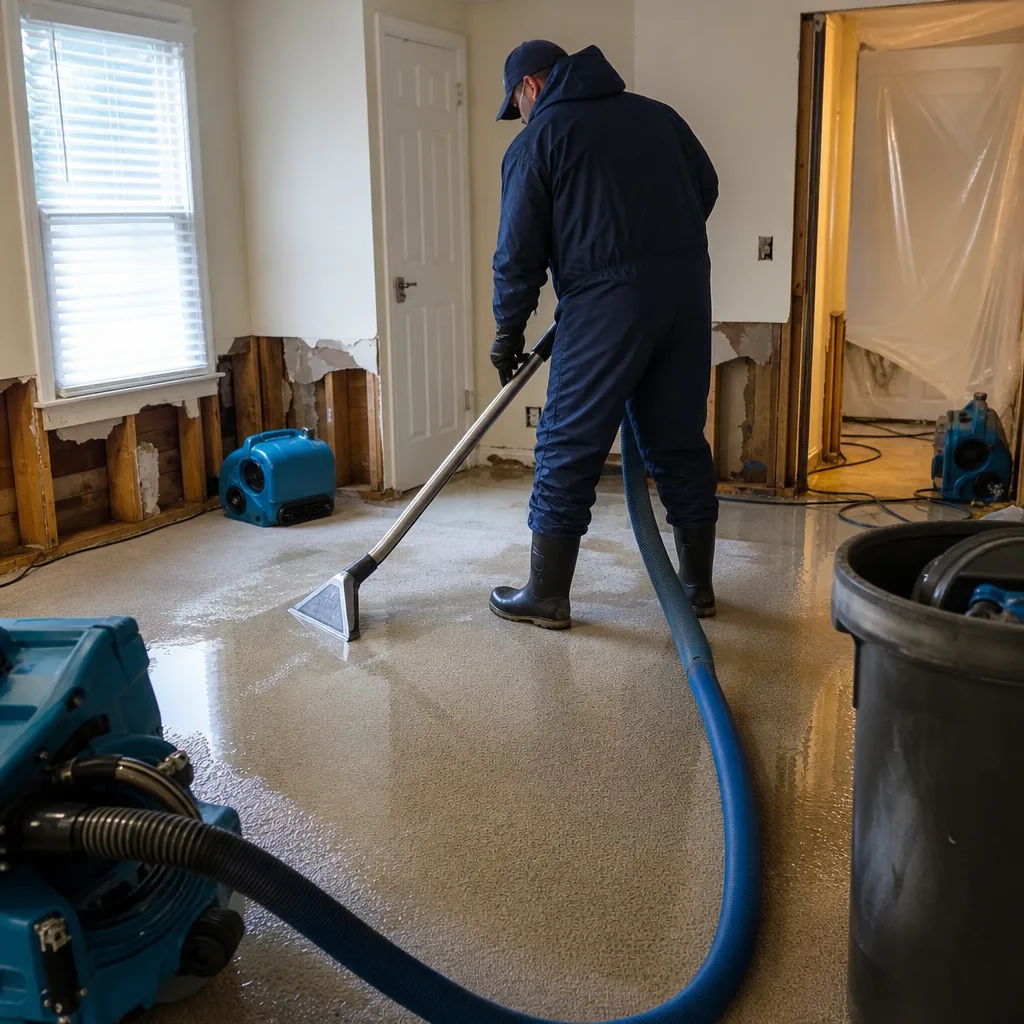
Truck-mounted and portable extraction units pull standing water from floors, wall cavities, and below-grade spaces. If the affected area sits between occupied units, we coordinate with the building super, tenants, and co-op board or landlord immediately to contain the spread before it migrates further.
Drying & Dehumidification
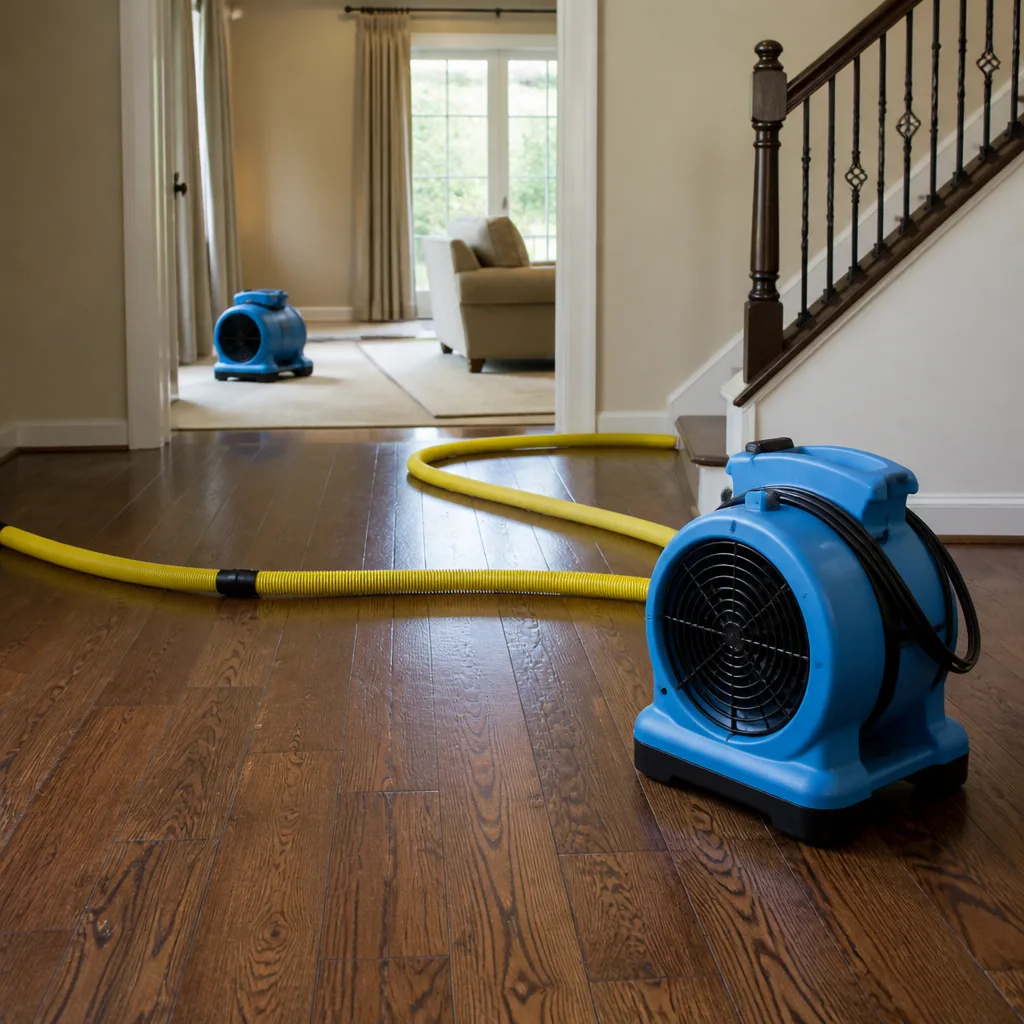
Dri-Eaz LGR dehumidifiers, XPOWER and B-Air air movers, and Injectidry systems go in based on the moisture map, not a guess. Daily moisture readings are logged until the structure hits pre-loss dry standard. In steam-heat buildings, we keep the heat on if possible to accelerate the process safely.
Cleaning & Sanitization
After extraction, contaminated surfaces get HEPA-vacuumed, cleaned with appropriate antimicrobials for the water category, and sanitized. HEPA air scrubbers run during this phase to keep mold spores and dust from migrating to tenants in adjacent units.
Targeted Demolition & Structural Drying
In pre-war Upper Manhattan buildings, saturated horsehair plaster often cannot be saved once it holds water for more than 72 hours. We open only what’s necessary, dry the lath and framing behind it, and document everything with photos for your carrier. You approve the scope before any wall is opened.
Repairs & Restoration
After the structure is dry and the moisture log is complete, we rebuild. Plaster restoration, trim, paint, flooring, whatever was opened gets put back. Then we hand you the 90-Day Done Right Promise in writing. If it’s not right, we make it right. No arguments.
Need Emergency Water Damage Restoration in Upper Manhattan Now?
Crews minutes away, answering live 24 hours a day. The sooner we start, the less it costs.
Working With Your Insurance Company
Most Upper Manhattan homeowners and co-op shareholders we serve have never filed a water damage claim before. They often discover that a slow leak behind a wall in a pre-war building is a gray area: your policy may cover the damage to your own unit, but the building’s master policy typically handles the shared stacks and risers. We sort that out with you at the start. Our documentation starts the first hour, with photos of every affected room, moisture readings logged daily, and a line-item scope of work that speaks your adjuster’s language. We call the adjuster, we walk the claim, and we bill the carrier directly when coverage is confirmed. Curt Bowman founded Floodline Restoration Co. in 2010 around a dispatch board, not a sales desk, and the insurance process here reflects that: documentation first, surprises never.
What We Provide Your Insurer
- Thorough documentation of the loss
- Photos of all damage, room by room
- Moisture readings and drying logs
- A detailed, line-item scope of work
- Direct coordination with your carrier
Built for Upper Manhattan’s Loss Calendar
Upper Manhattan runs on a distinct water damage calendar that follows the heating season. November through March, the calls are burst supply lines and split copper. Pre-war walk-ups in Washington Heights and Harlem share cold-water risers and steam-heat pipes that age differently from unit to unit, and a January deep freeze can crack a supply line inside a wall cavity that’s been quietly weeping for weeks before it lets go. February is when we saw the cracked cast-iron drain stack on West 158th Street, the one that saturated two apartments before any tenant saw a stain.
Spring brings a different problem. The topographic drop from the Washington Heights ridge down toward the Harlem River channels snowmelt and March rain into lower-grade blocks. Garden-level units in Inwood and basement apartments sit near the water table where the Hudson and Harlem Rivers meet. When a nor’easter stacks rain on top of a high tide, sewers back up and hydrostatic pressure pushes groundwater through foundation walls, which is why our Storm & Disaster Restoration in Upper Manhattan includes both immediate response and preventive planning. Summer is the flash-flood season: intense convective rain events in July and August overwhelm old combined sewers faster than they can drain, and below-grade spaces take the brunt. Fall is the relative calm before the heating season starts again. But the real point is this: the season tells us what to look for, and in Upper Manhattan, the building’s age tells us where.
Water Damage Restoration Across Upper Manhattan’s Neighborhoods
Washington Heights is where we see the most steam-heat pipe failures. The six-story walk-ups on blocks like West 158th, West 164th, and along Audubon Avenue were built for steam heat, with original supply pipes running through interior wall cavities that were never designed for access. By the time anyone notices, the plaster is saturated behind the paint. Harlem brownstones present the opposite problem: shared stacks between parlor-floor apartments and garden-level units mean a leak on the third floor is a ceiling problem on the second and a wall problem on the first. East Harlem’s NYCHA towers add a municipal contracting layer that requires separate approvals and coordination before any restoration work can begin. And Inwood’s below-grade units, particularly west of Broadway near the Harlem River confluence, face groundwater intrusion that no amount of interior drying resolves without proper perimeter sealing and drainage work.
All of this is normal here. It’s the structural reality of Water Damage Restoration in Upper Manhattan, and it’s why a generic restoration process designed for drywall suburban houses fails in this borough. The moisture map is different, the coordination is different, and the building’s own plumbing history matters.
Specialized Water Damage Restoration Services We Offer in Upper Manhattan
Emergency Water Extraction
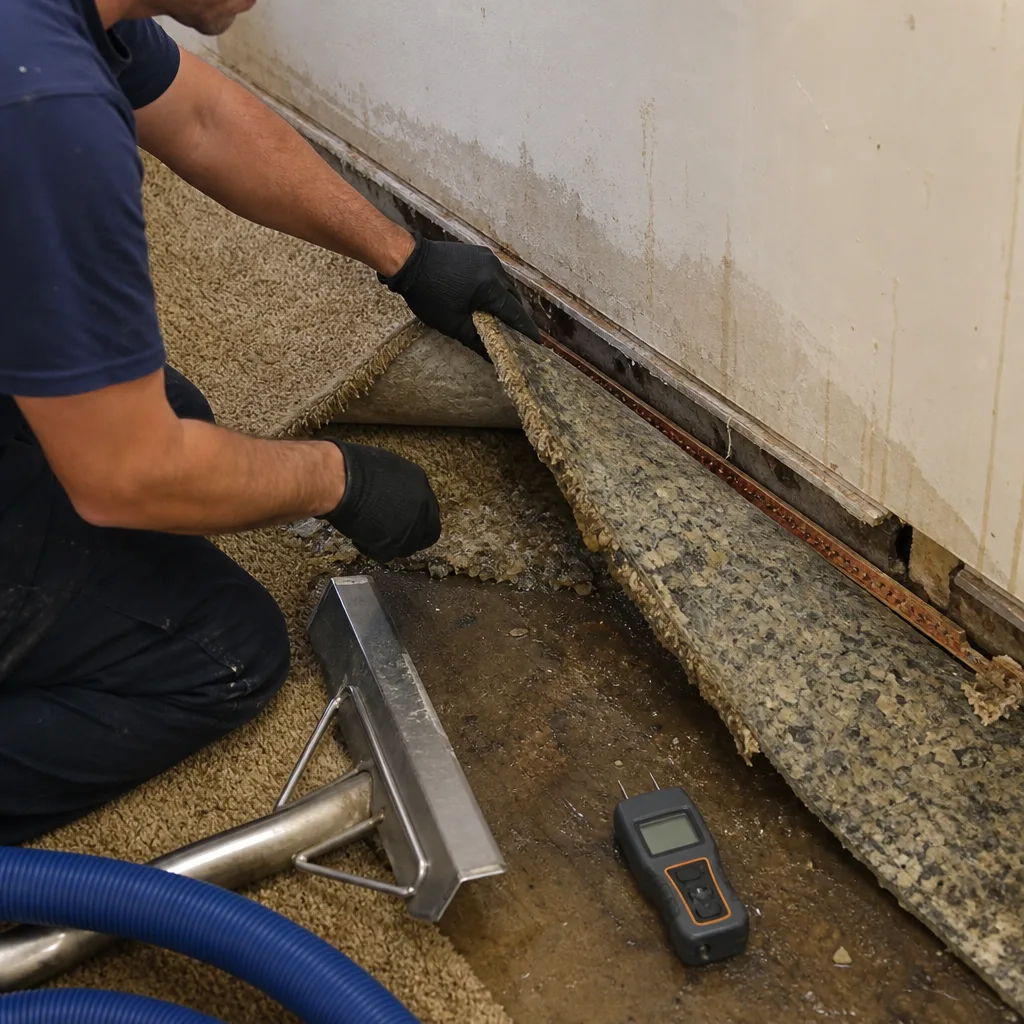
Standing water in a pre-war Upper Manhattan apartment has already started migrating through shared floor joists by the time you call. Our extraction equipment pulls water from hardwood floors, subfloor cavities, and wall bases before it reaches the plaster. Crews arrive within 45 minutes, equipment runs the same visit, and we don’t leave until the standing water is out and the drying plan is running.
Structural Drying & Dehumidification
Drying horsehair plaster and wood lath cannot follow a drywall playbook. We set up containment per floor, run Dri-Eaz LGR dehumidifiers sized for the space’s cubic footage, and log daily moisture readings with hygrometers in every affected wall cavity. The log gets handed to you and your insurer when the structure hits pre-loss condition. No hidden pockets left to re-wet the structure later.
Flood Cleanup
Basement and garden-level flooding in Inwood and lower Washington Heights is a sewer and groundwater problem first. We handle the Category 3 water with full containment, HEPA air scrubbing, antimicrobial cleaning of all affected surfaces, and proper disposal of saturated materials, following the same protocols as Fire & Smoke Damage Restoration - Upper Manhattan for comprehensive contamination control. Then we talk about drainage and perimeter sealing so the next heavy rain doesn’t repeat the loss.
Burst Pipe Restoration
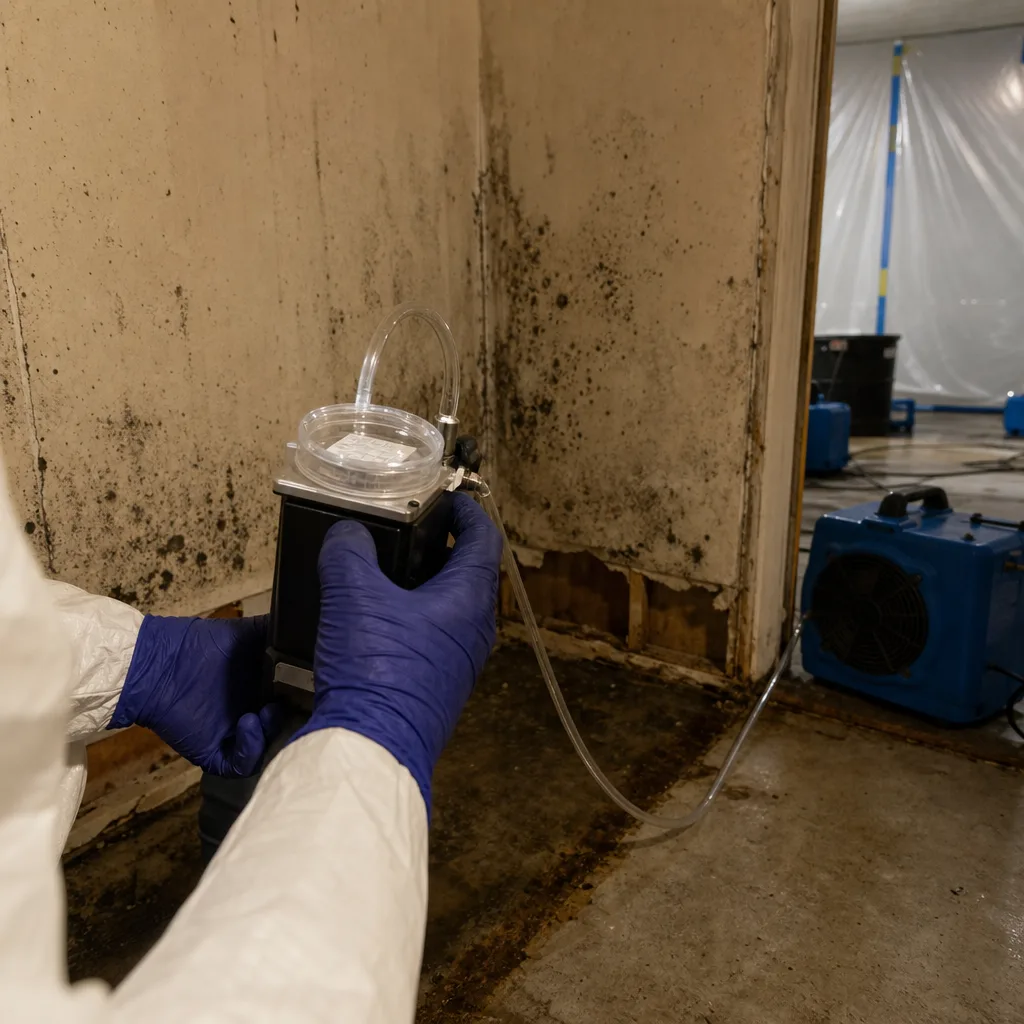
A supply line lets go in a shared riser on the fifth floor and water follows the path of least resistance for the next three floors. We map the saturation across every affected unit, coordinate with the super and neighbors, and dry the building back to pre-loss standards. The pipe itself gets repaired by a licensed plumber, but the restoration, dry-out, and rebuild stay with one crew, ours.
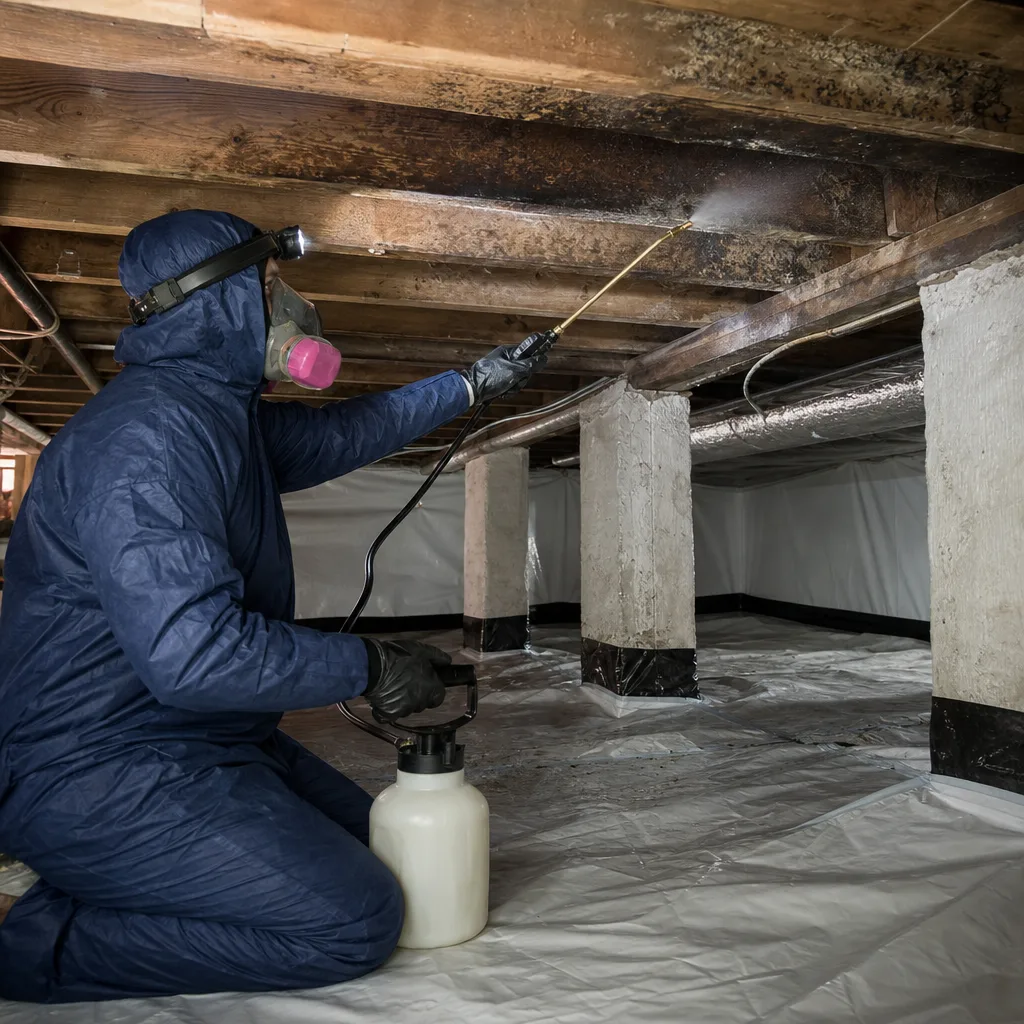
Basement Water Removal
Below-grade spaces in Upper Manhattan’s older buildings fight two enemies: groundwater pressure and aging foundation drains. We extract the water, dry the structure, and then give you straight advice on whether the fix is interior perimeter drainage, exterior waterproofing, or both. You won’t get oversold; you’ll get the same written scope we’ve provided on every job Water Damage Restoration team since day one.
What happens when you call
- 1
A real person answersNo phone trees - you reach a local pro.
- 2
You get an upfront price rangeHonest numbers before anyone is dispatched.
- 3
A background-checked tech heads outLicensed & insured, dispatched right away.
- 4
You approve before work beginsNothing starts until you say go.
Water Damage Restoration Costs in Upper Manhattan, NY
A fair question, and you deserve a straight answer. Single-unit water extraction and dry-out in Upper Manhattan typically runs $380 to $1,200 when we reach it early and the spread is contained. A supply-line break affecting two to three floors of a pre-war walk-up usually lands between $2,400 and $6,000 including plaster remediation and rebuild. Below-grade sewage or groundwater flooding with Category 3 water runs higher, often $4,500 to $9,000 when full containment and antimicrobial treatment are required. Multi-party coordination, NYCHA approvals, or steam-pipe access in original cavity walls can push the top end higher still.
What moves the price is simple. How long the water sat before we arrived, how many surfaces the moisture map shows saturated, and whether original plaster can be saved or must come out. The free visual inspection gives you a firm, line-item scope before any work starts. Senior and veteran discounts of 5% always apply, and the $50 Off Any Repair Over $250 offer stacks with it. Call (640) 221-3499 now and we’ll give you the actual number, not a range.
We Also Serve Cities Near Upper Manhattan
Floodline Restoration Co. crews are based locally and respond across the Upper Manhattan service area. Our Water Damage Restoration team regularly handles calls in Midtown West, the Upper West Side, Midtown Manhattan, and the Upper East Side as well, with the same 45-minute response commitment and live 24/7 dispatch. If you’re across the park or below 110th Street, call the same number: (640) 221-3499.
Serving Upper Manhattan, NY - Our Local Coverage Area
We’re based in the Upper Manhattan area and know this community well. Use the map below to see our service coverage - if you’re nearby, we can almost certainly help.
Upper Manhattan Water Damage Restoration Questions, Answered
Why does a small leak in my Harlem brownstone apartment always seem to affect the unit below me?
Because your floors and their ceiling are the same assembly. In a brownstone, the joists run through the floor cavity, and water travels along them like a highway. Shared plumbing stacks and horsehair plaster walls create vertical channels that pull water down faster than out. A slow sink trap drip in a second-floor kitchen often shows up first as a stain on the first-floor ceiling below it. This is not bad luck; it’s the structure of the building. The fix is the same either way: map the full spread, dry the joist bays, and don’t stop at the first visible stain.
Do I really need thermal imaging for water damage in a pre-war Washington Heights walk-up?
Yes. In a drywall building, pin-style moisture meters do fine because drywall telegraphs moisture at the surface. Horsehair plaster does not. We’ve seen walls that read bone-dry on the surface while the cavity behind them held a saturated lath and a growing mold bloom. Thermal imaging shows the temperature signature of that hidden water, and probe rods confirm exact saturation depth. Skipping this step in a steam-heat building means drying what looks wet and leaving what’s actually wet. That’s how re-wet structures happen, and they always cost more the second time.
How fast can you get to an East Harlem NYCHA building after a burst pipe?
Within 45 minutes to any address in East Harlem, including NYCHA property. Our live dispatcher answers 24/7 at (640) 221-3499, and the crew arrives ready to extract. One honest note: NYCHA work requires a separate municipal contracting approval process that runs parallel to the restoration. We handle that coordination directly with the housing authority so you’re not left on hold. The water extraction itself starts immediately.
Is basement flooding in Inwood different from a typical water damage job?
Yes, and it’s about where the water comes from. Inwood’s below-grade units sit near the confluence of the Hudson and Harlem Rivers, where groundwater pressure is higher and sewer backups are more common during nor’easters and heavy summer rain. That water is Category 3, meaning full containment, HEPA air scrubbing, antimicrobial treatment, and careful disposal. Interior drying alone won’t stop the next storm. We address both: dry the space now, and give you the waterproofing or drainage options that actually prevent a repeat.
Can you save my original horsehair plaster after a leak, or does it always have to be torn out?
Sometimes. If the plaster got wet within 72 hours and the water was clean, aggressive drying with LGR dehumidifiers in a contained space can often save it. The key is getting to it before the lath swells and the plaster keys break, which only happens when drying starts fast. If the water sat for a week inside a wall cavity, the plaster has usually lost its bond and must come out. We’ll tell you which one you’re in, with a thermal map to back it up, before any wall is opened.
Will my co-op or landlord’s insurance cover water damage in my Upper Manhattan apartment?
It depends on where the water came from. Damage from a shared riser, main stack, or building-wide pipe is typically the building owner’s responsibility under the master policy. Leaks from your own unit’s fixtures fall under your personal policy. Rent-stabilized and co-op units add another layer, and we regularly coordinate between the shareholder, the board, the super, and both carriers. We document everything from hour one, bill the responsible carrier directly, and keep you out of the middle of the claim.
How long does drying actually take in a pre-war Upper Manhattan building?
With horsehair plaster and wood lath, three to five days is realistic for a contained single-unit dry-out. Multi-floor spans through shared joists can take seven to ten days. The honest answer is that we don’t declare it dry on a calendar. We declare it dry when the daily moisture readings hit the pre-loss dry standard specific to that building material. That’s what the log you get shows, and it’s what our 90-Day Done Right Promise stands behind.
What should I do in the first 30 minutes after discovering water damage in Upper Manhattan?
First, shut off the water source if you can do so safely, at the fixture or the main. Second, call us at (640) 221-3499. Don’t wait for visible staining to spread, don’t assume a small drip up high is contained, and don’t start pulling up floors yourself. Third, if it’s safe, move furniture and electronics out of the water’s path. In a pre-war building, every hour the water travels through shared joists and plaster cavities, the scope of the job grows. Call first, then move what you can.
Written by Curt Bowman, Owner at Floodline Restoration Co., providing Water Damage Restoration and full-cycle reconstruction for Upper Manhattan property owners since 2010.