
RIA Water Damage Restoration in West New York: A Homeowner’s Guide
A restoration crew can pull every visible drop of water from a room and still leave moisture readings above 16% inside the wall cavity, well above the threshold where mold colonies establish. RIA certification exists precisely to catch what extraction alone misses. In West New York’s dense, pre-war housing stock, that gap between visibly dry and actually dry is where most failed restorations begin.
If you’ve got water in your home right now and you’d rather not sort through this guide while the clock runs, call (640) 221-3499. A live dispatcher answers. If you want to understand what RIA standards actually require before you let anyone touch your walls, keep reading.
What RIA Certification Actually Requires on a Job Site
The Restoration Industry Association sets the technical bar for water damage work, and it’s a lot more specific than most homeowners realize. A certified crew doesn’t just show up with fans. They’re required to establish baseline conditions before drying begins, set written drying goals for every affected material, and document progress with daily readings until those goals are met. In West New York, where we’ve been doing this since 2010, we still meet homeowners every week who were told a job was done based on a crew’s say-so rather than numbers on a log.
Here’s what RIA-compliant work includes on a live job:
- Initial moisture mapping: Readings from every affected wall, floor, and ceiling surface, plus the surrounding unaffected areas for comparison.
- Psychrometric readings: Temperature, relative humidity, and dew point measured inside the structure and outside, so the drying plan targets the right vapor pressure differential.
- Written drying goals: A specific moisture content target for each material type, referenced against a dry standard for that material in that environment.
- Daily monitoring: Moisture content re-measured every 24 hours with the same type of meter, logged, and adjusted.
- Final verification: Confirmation that every affected material has reached its drying goal before equipment comes out.
Uncertified crews typically skip the baseline readings, skip the psychrometrics, and remove equipment when the homeowner says the room feels dry. The wall cavity never gets checked. Six months later, mold shows up behind the baseboard, and the homeowner is paying twice. That’s not a coincidence. That’s the missing log.
Why West New York Buildings Fight the Drying Process
West New York is built dense. Pre-war brick rowhouses, many of them sharing party walls, basement apartments carved into foundations, radiator pipes running through original plaster. None of that dries the way a 1990s stick-frame house in the suburbs dries. Brick and masonry hold water longer than drywall, and when two units share a wall, moisture from one side migrates into the other. We’ve walked into jobs on Boulevard East where a leak two floors up was reading elevated inside a first-floor wall cavity.
RIA protocols address this directly because they treat drying as an engineering problem, not a labor problem. The dense materials in West New York homes often require lower relative humidity targets and longer equipment run times than a typical sheetrock wall. A certified technician accounts for the building type before setting the drying goal. An equipment owner sets up fans and hopes. If your home is a brick rowhouse from the 1920s, you need the first approach.
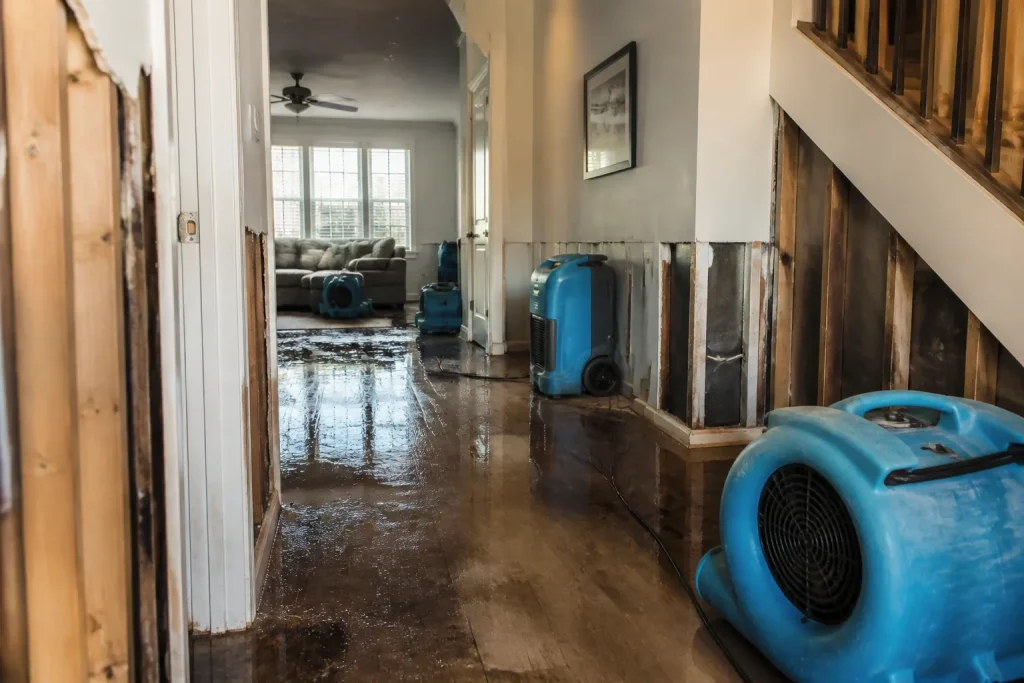
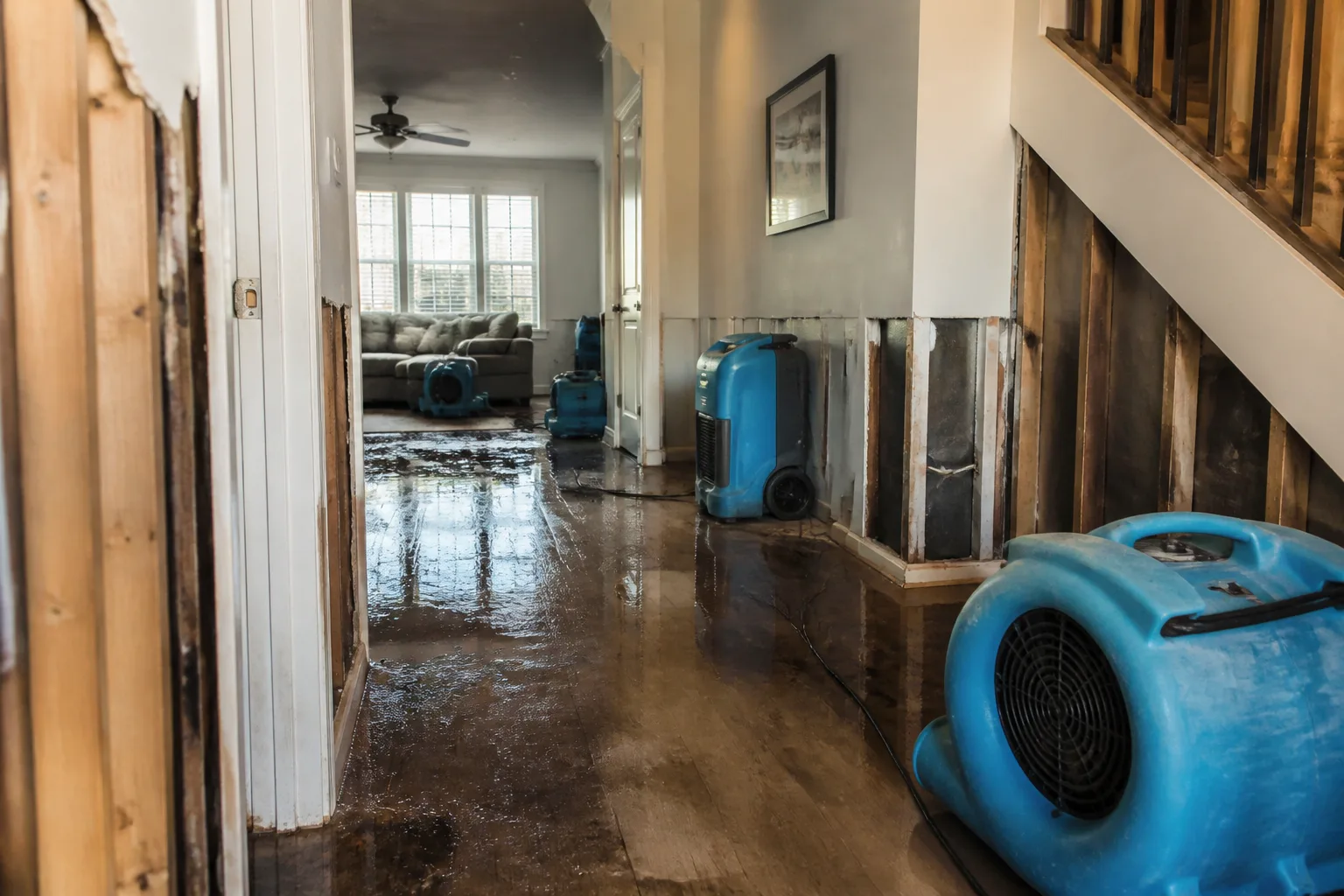
Basement apartments pose their own issue: limited airflow, a single egress, and concrete floors that wick groundwater. RIA standards require that water in those settings be extracted from the slab as well as the air, using equipment like the Injectidry systems we run for cavities and subfloor spaces. A wet-vac cannot pull water from inside a concrete cap. The reading will show it, and the mold will prove it.
How to Read a Moisture Log Yourself
You don’t need to be a technician to check whether the crew is doing what they claim. The moisture log is the simplest tell. Every legit RIA-compliant job produces one. Here is what to look for:
- A starting number for every affected room, not a single number for the whole house. Moisture is never uniform. If the log doesn’t show per-room, per-material readings, the crew didn’t map the damage.
- A downward trend. Readings should drop daily. If they plateau for three days while equipment is still running, the drying plan is wrong and should be adjusted.
- Targets tied to material type. Wood and drywall have different dry standards. A log that treats them the same isn’t a log, it’s a timesheet.
- The magic numbers: For most interior wood framing in this climate, a genuinely dry reading is 12% moisture content or lower. Drywall in a conditioned space should sit between 8% and 12%. Concrete slabs can settle in the 70% to 80% relative humidity range and still pass once the vapor barrier is intact. Anything above 16% inside a wall cavity is actively inviting mold.
If a crew hands you a one-page “completion certificate” with no numbers on it, that’s not drying documentation. That’s a goodbye letter. We hand every homeowner in West New York a daily log, shared with the carrier, based on readings from our Phoenix and Dri-Eaz meters. You can hold the log, read the trend, and call us out if a number stalls.
RIA-Compliant Documentation vs. a Completion Certificate
Insurance carriers have gotten stricter about this in the last five years. A standard homeowner’s claim for water damage used to settle on a contractor’s invoice and a photo or two. Now, many adjusters in New Jersey ask for drying records before they approve the final payment. They’ve seen too many claims for secondary mold damage that traced back to incomplete drying.
The difference is simple. RIA-compliant documentation shows the condition of the structure before drying, the target for each material, the daily readings, and the final confirmation that every target was met. A completion certificate says the work finished. It does not say the structure was dry. If your carrier is asking for the first and your contractor can only produce the second, you’re likely to eat the difference.
This is one reason we built water damage restoration in West New York around the same crew from extraction through rebuild. The person who writes the drying goal is the person who verifies it. The person who verifies it is the person who rebuilds the wall. Nobody gets to blame a subcontractor later.
Questions to Ask Before Any Restoration Crew Starts Work
You don’t need a certification number to test a company’s competence. You need five questions. Ask them before water touches a single piece of equipment:
- “What’s your baseline moisture reading in the worst room?” If they can’t answer on the spot, they haven’t taken one. Walk away.
- “What drying targets are you setting for my wall type?” The answer should mention material type and a number. “We’ll get it dry” is not an answer.
- “Will I get a daily log with readings?” If the answer is anything but yes, you are hiring an equipment renter, not a restoration company.
- “Who does the final verification, and what number confirms the job is done?” The tech setting the goal should be the tech confirming it. The number should be specific.
- “How do you handle a wall cavity that won’t come down on schedule?” A trained tech will talk about adjusting the drying system, possibly penetrating the cavity or using targeted injection drying. A bad answer is silence or a shrug.
We’ve asked ourselves these questions on every job since Curt Bowman founded Floodline Restoration Co. in 2010. The answers haven’t changed because the standards haven’t. RIA certification exists to keep homeowners from paying for the illusion of dry.
When to Call a Pro
Some water events are cleanup problems. A spilled aquarium on a tile floor, for instance, is a mop job. But any water that has touched drywall, baseboards, hardwood, or a ceiling cavity is a restoration problem, even if the surface looks fine right now. Water wicks upward and outward inside wall cavities. By the time you see a stain, the moisture has been present for days.
Here in West New York, the older the building, the lower your tolerance should be for waiting. Brick wicks, plaster holds water, and shared walls don’t care whose pipe burst. If you’ve had a supply line fail, a water heater go, or a sewer back up, call (640) 221-3499. A live person answers, and a certified crew can be at your door the same day. We use professional-grade equipment from XPOWER and B-Air to move air the way the structure needs, not the way it’s convenient to set up.
Related services in West New York: if the water sat long enough, you may need mold remediation in West New York. If the event started with a kitchen or furnace fire, see fire and smoke damage restoration in West New York. Both run on the same documentation standard.
The Bottom Line
RIA certification isn’t a badge. It’s a set of documented practices that separate a dry home from a home that simply looks dry. In West New York’s older housing, that distinction is the entire ballgame. Before you hire anyone, ask for baseline readings, drying goals, and a daily log. If they hesitate, keep looking.
We’ve spent 15 years earning the trust of homeowners in West New York one moisture log at a time. If you’ve got water in your home, call Floodline Restoration Co. at (640) 221-3499 for a free estimate. We’ll be there when we say, the log will be in your hands, and the job will be done right, backed in writing by our 90-Day Done Right Promise.
Frequently Asked Questions
RIA stands for the Restoration Industry Association, the oldest and largest professional trade group for restoration contractors. RIA certification confirms that a technician has been trained in the technical standards for water damage assessment, drying system design, and documentation, not just equipment operation.
Most West New York homes dry in three to five days when the drying system is designed correctly. Pre-war brick and basement spaces can run longer because masonry holds moisture and airflow is limited. The daily moisture log tells you where you are against the target, so you’re never guessing.
Yes. Most homeowners’ policies in New Jersey cover water damage restoration performed by certified contractors, and carriers increasingly require RIA-compliant documentation before approving final payment. We bill carriers directly, and we hand you and your adjuster the same daily log.
Ask for the baseline moisture reading before work starts. Ask what drying target applies to your wall type. Ask whether you’ll receive a daily moisture log. A certified company answers all three without hesitation. Call us at (640) 221-3499 and ask, we’ll walk you through every reading.
Written by Curt Bowman, Owner at Floodline Restoration Co., serving West New York since 2010.
Need Damage Restoration Help?
Call Floodline Restoration Co. - licensed & insured, here with fast after-hours help in West New York.
(640) 221-3499