
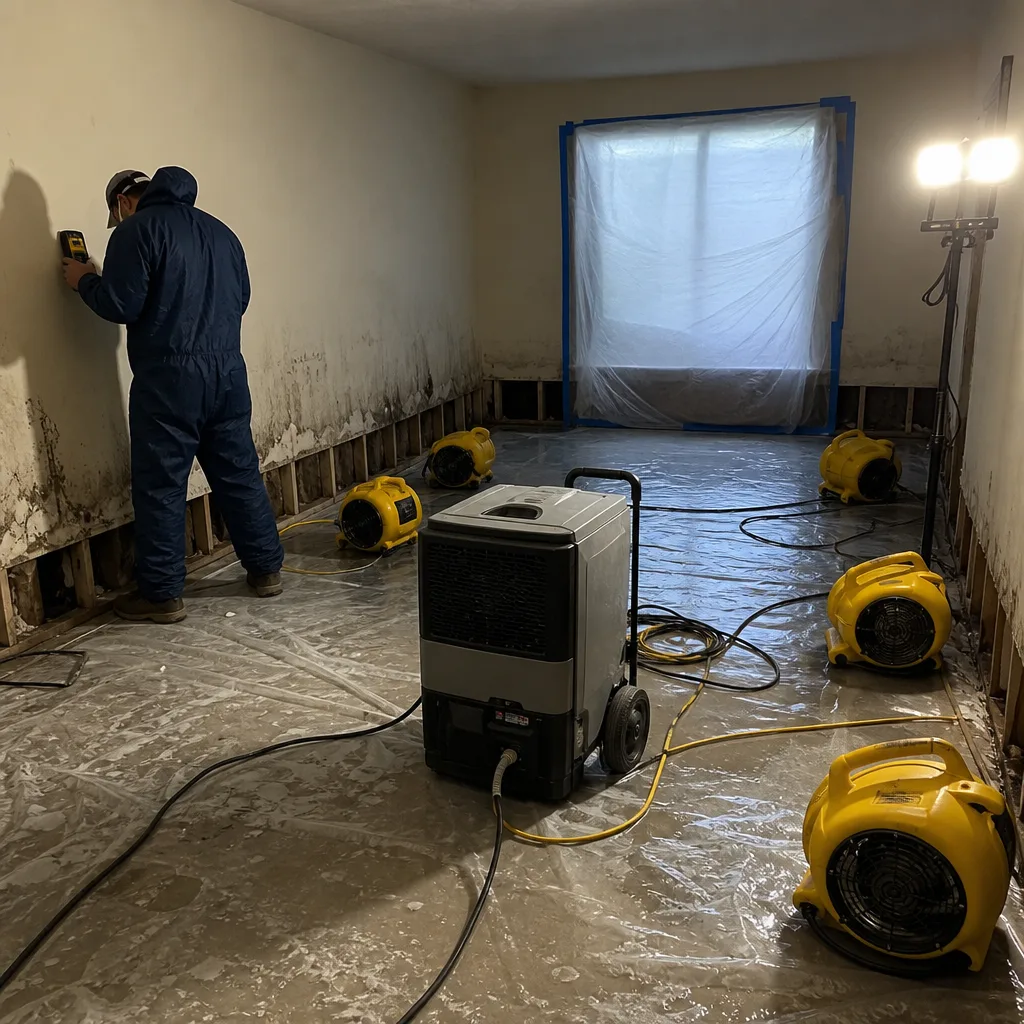
Free visual inspection and a written scope of work before any mitigation begins - photos, moisture readings, and drying logs go in your claim file
The scope we write is the scope we bill. Anything new gets shown to you, in writing, before we touch it.
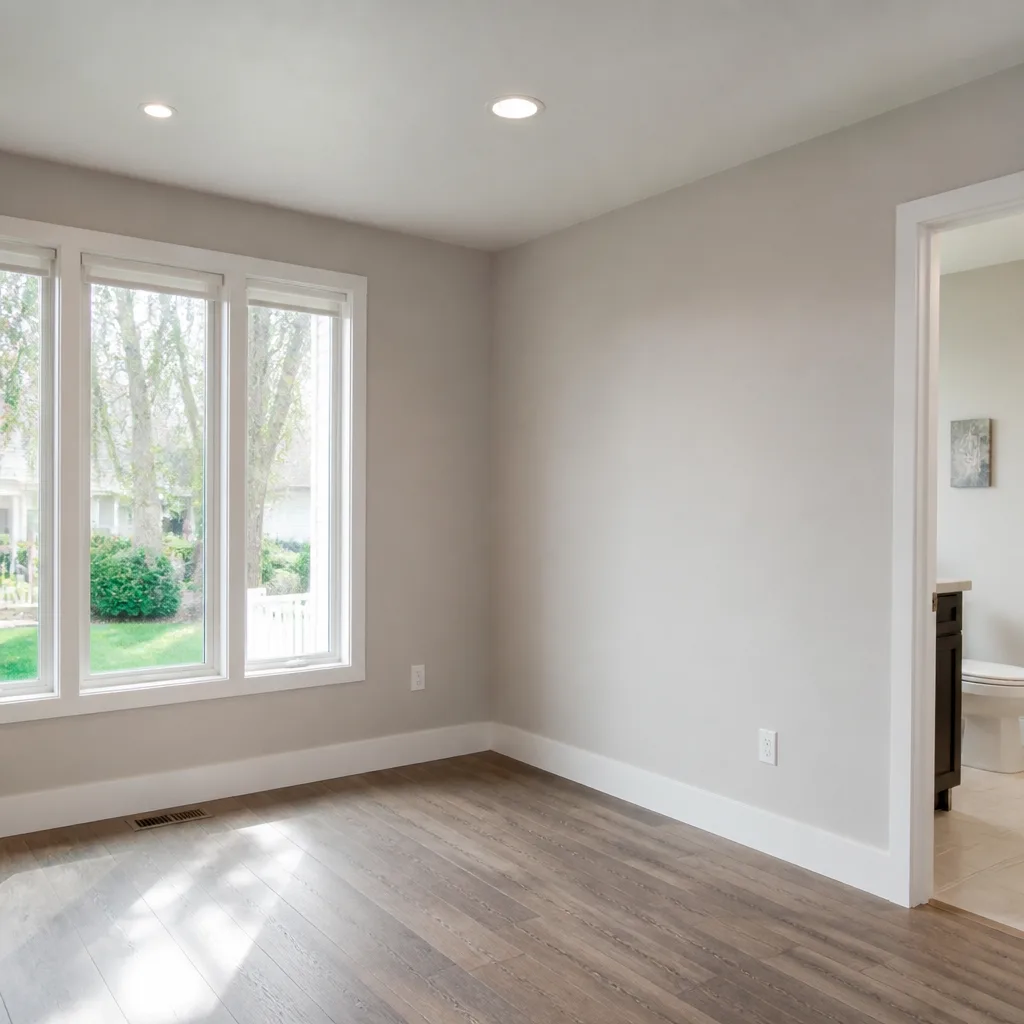
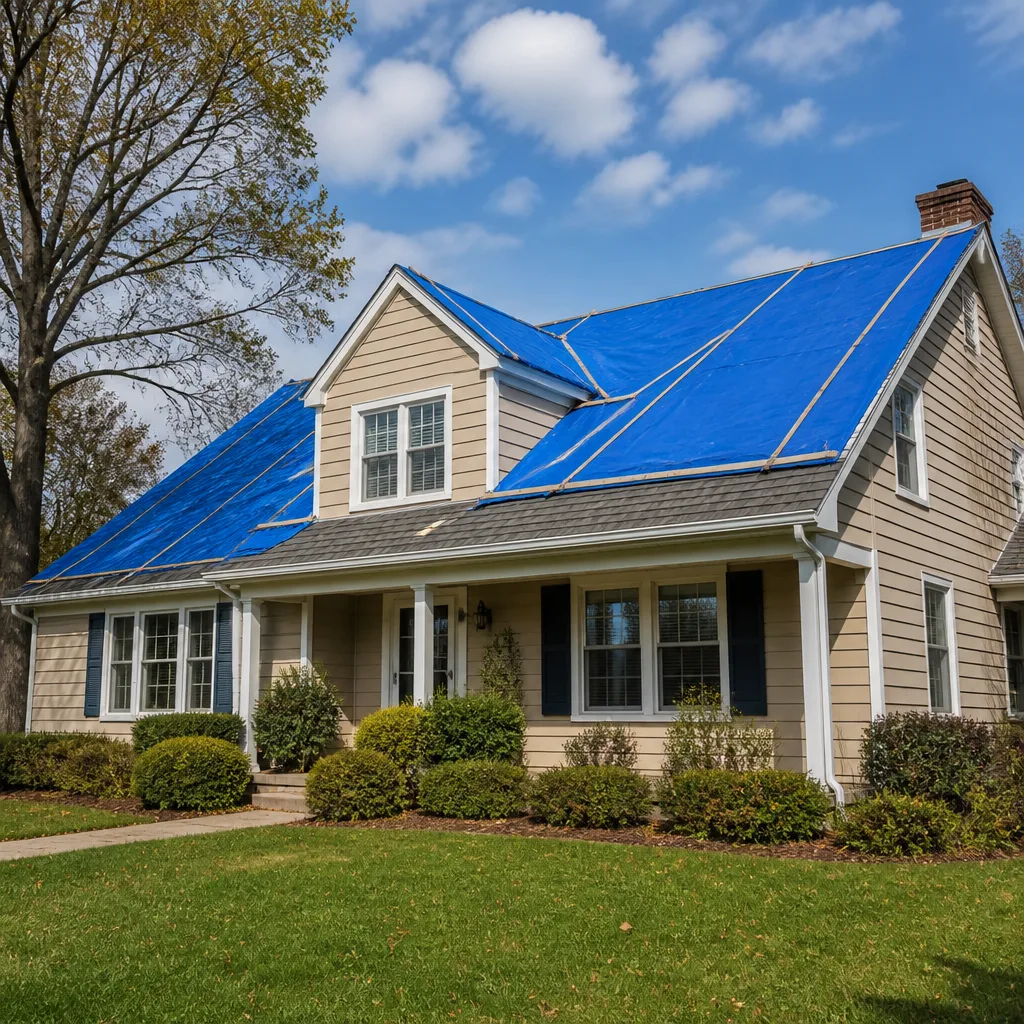
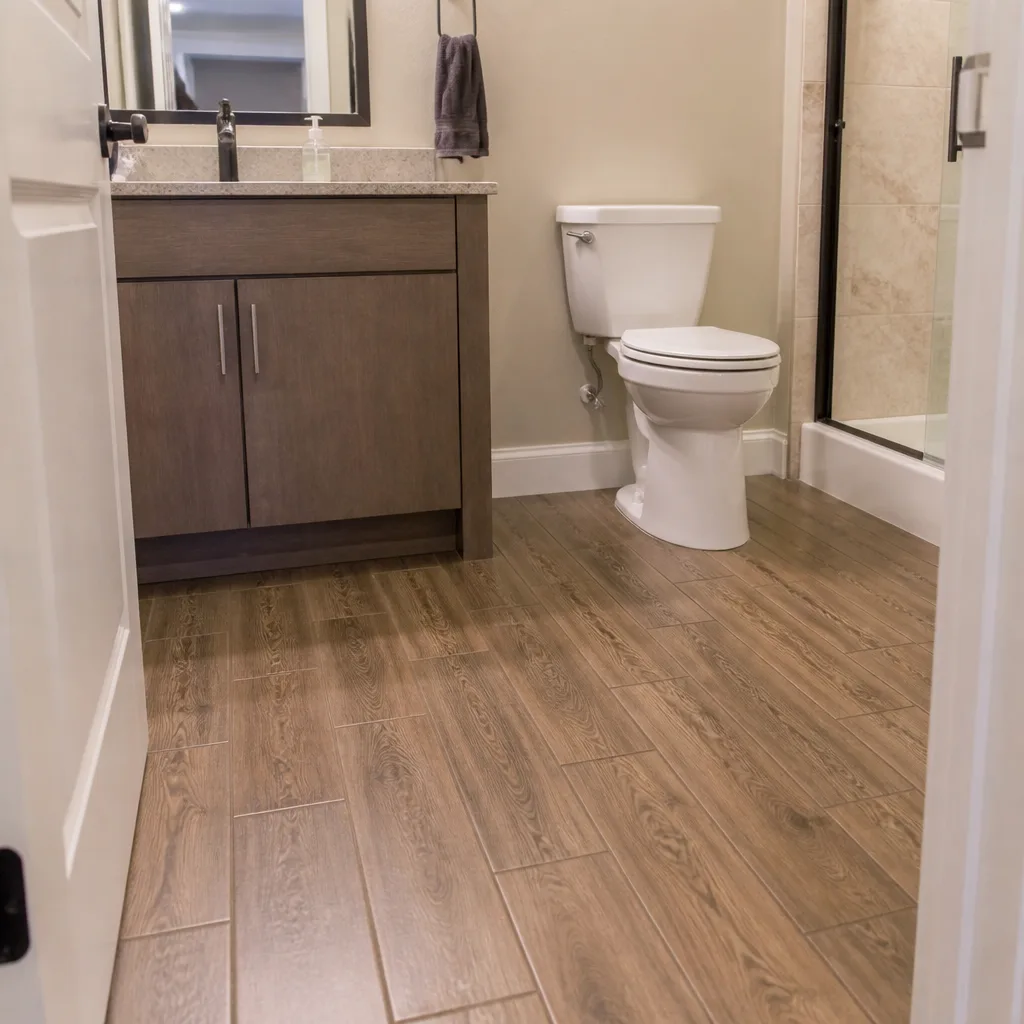
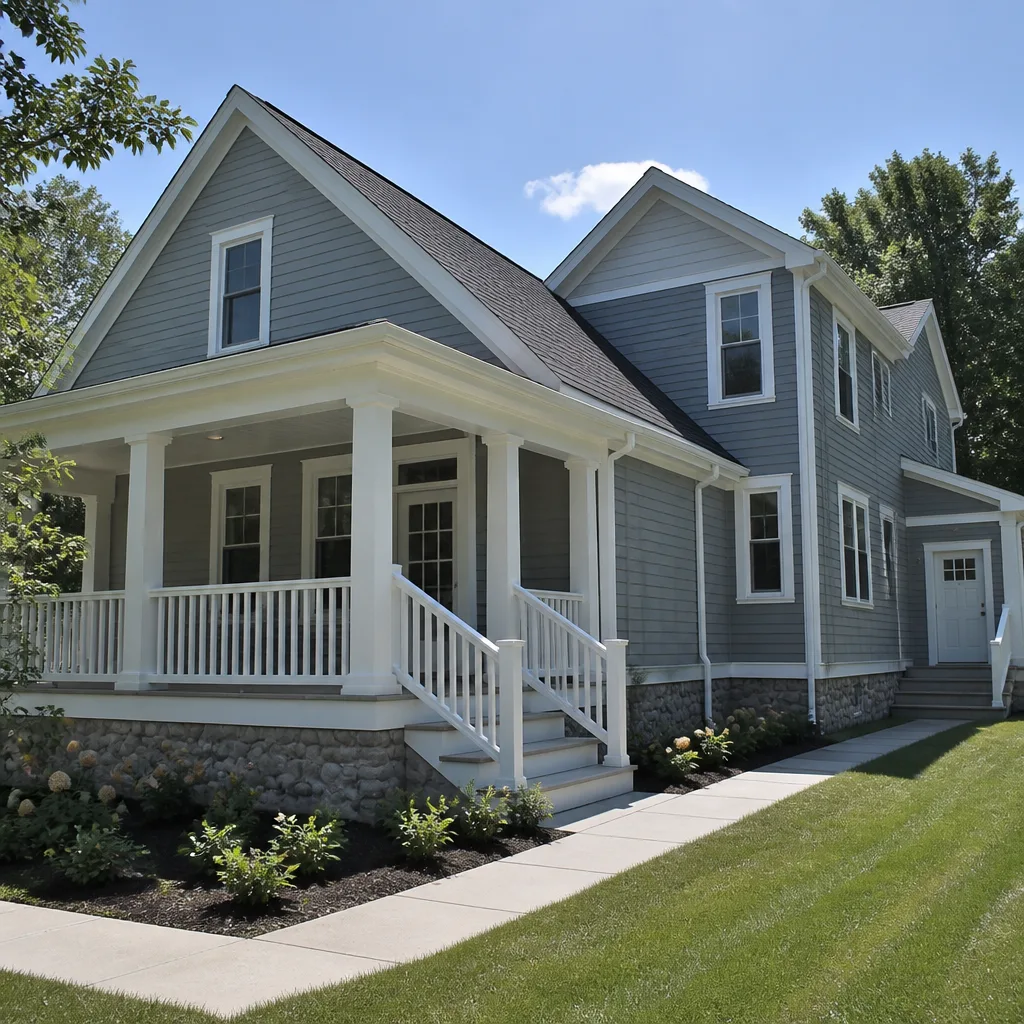
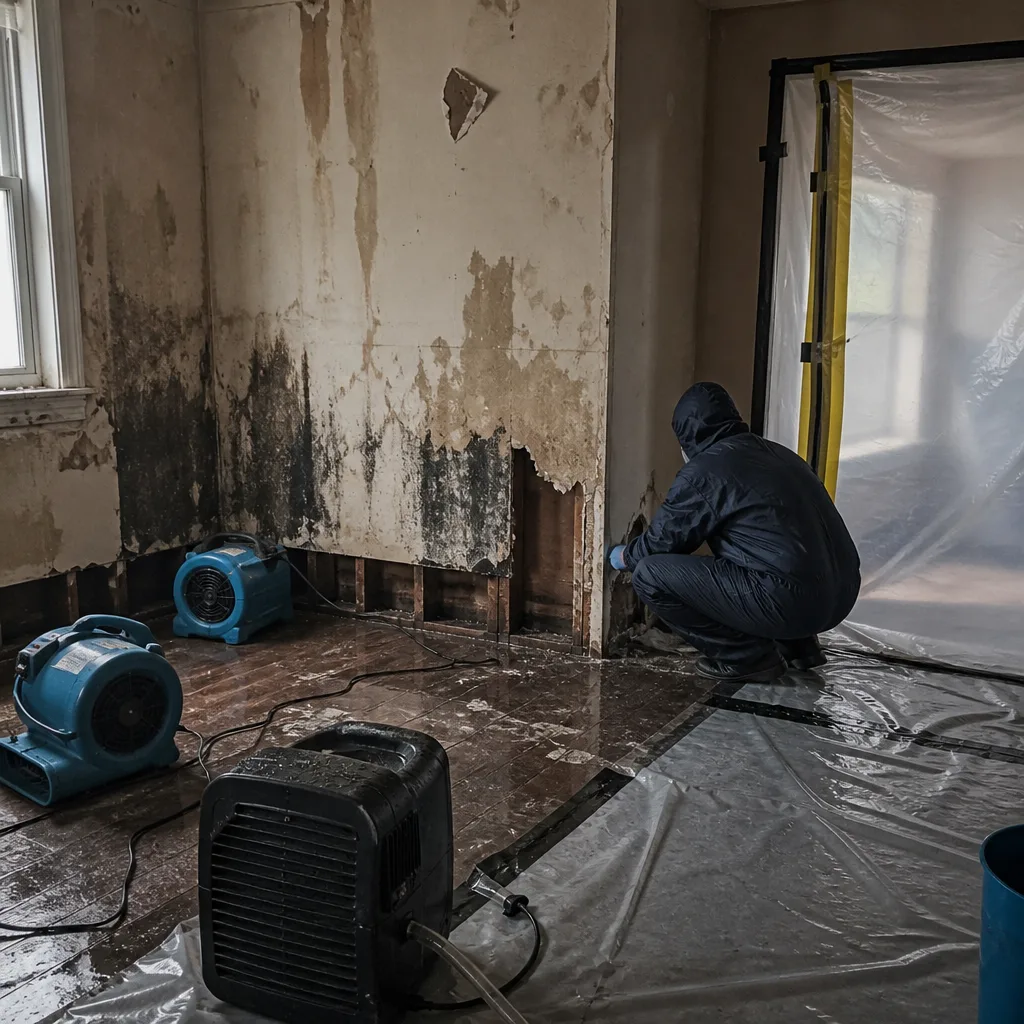 Before
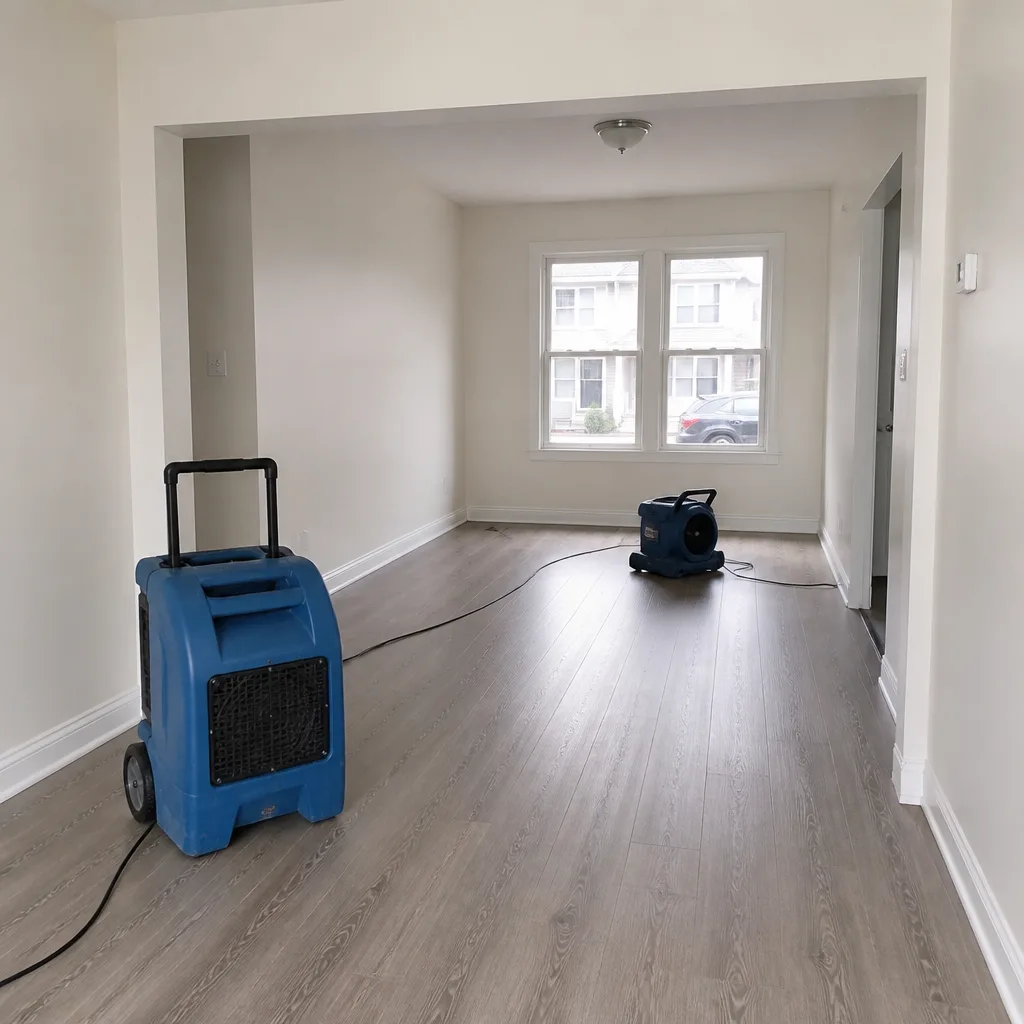 After
After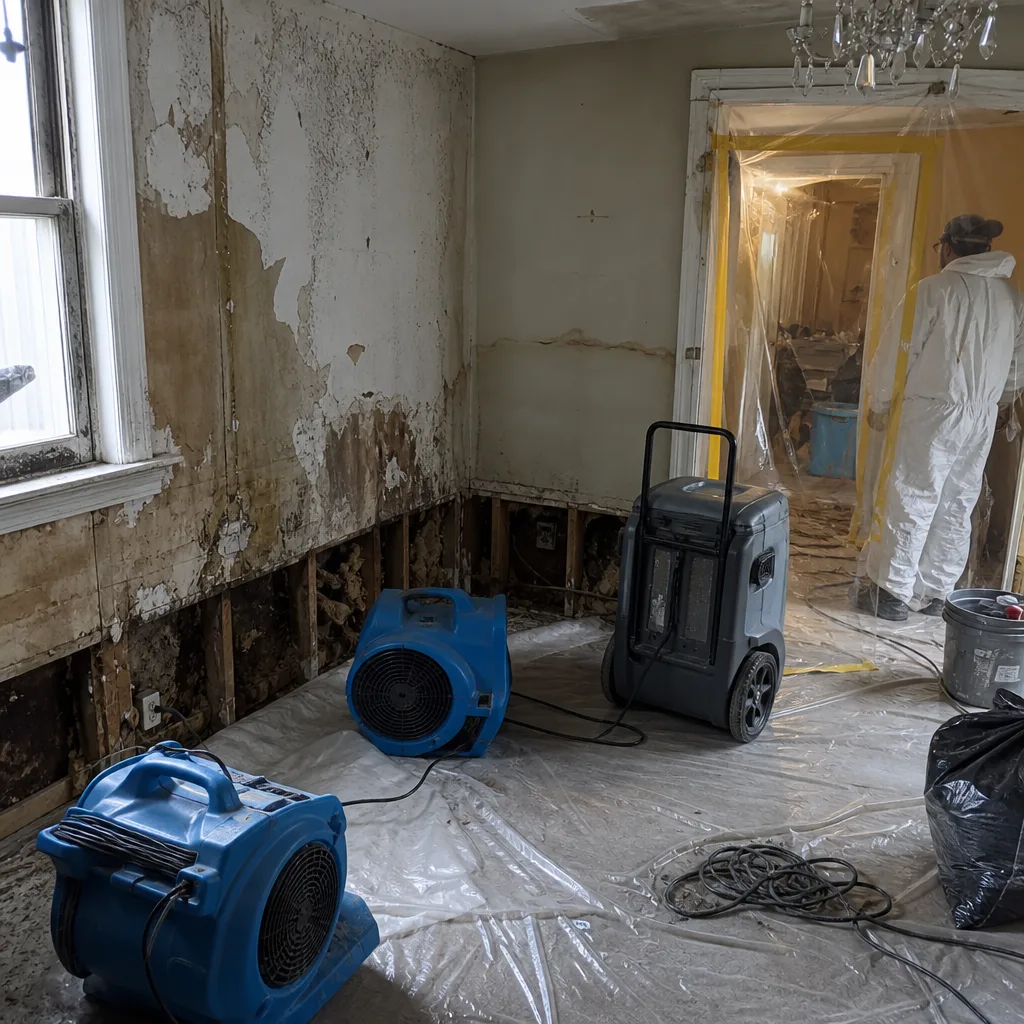 Before
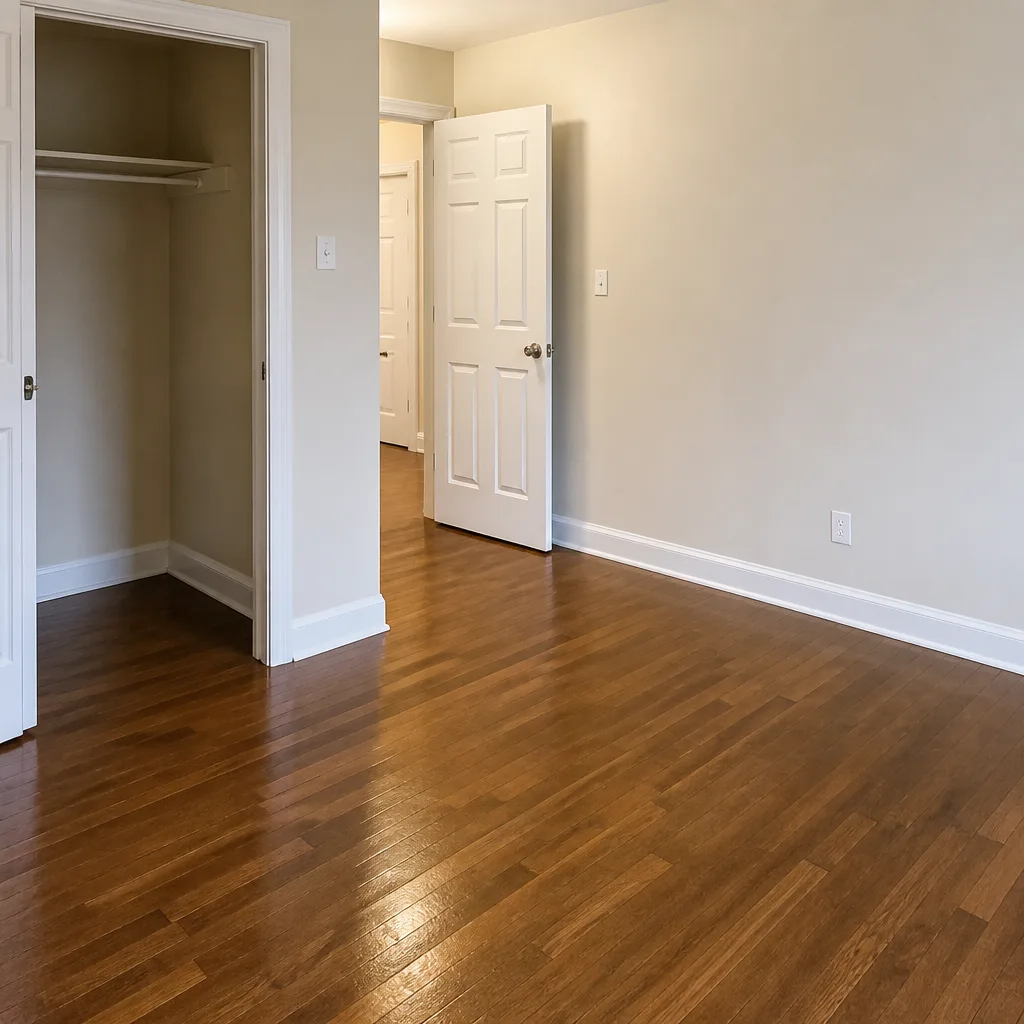 After
After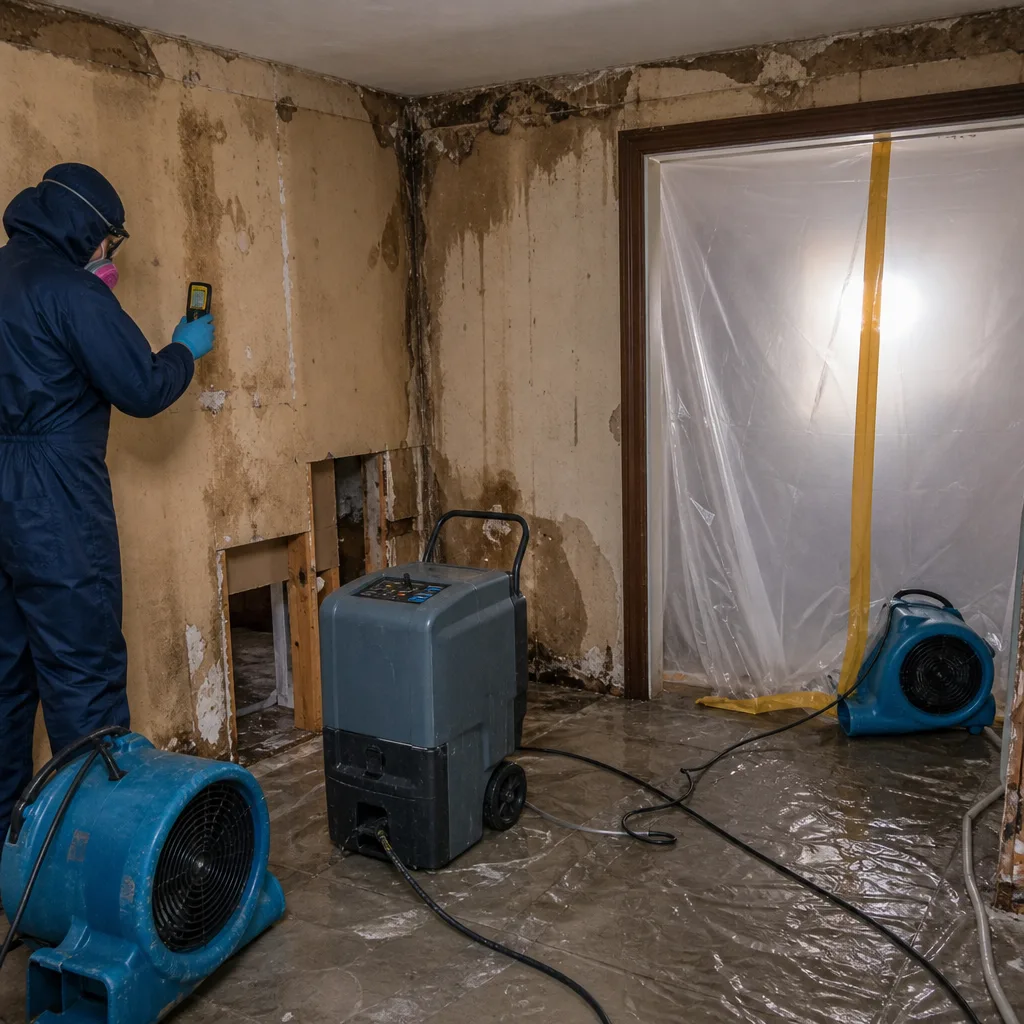 Before
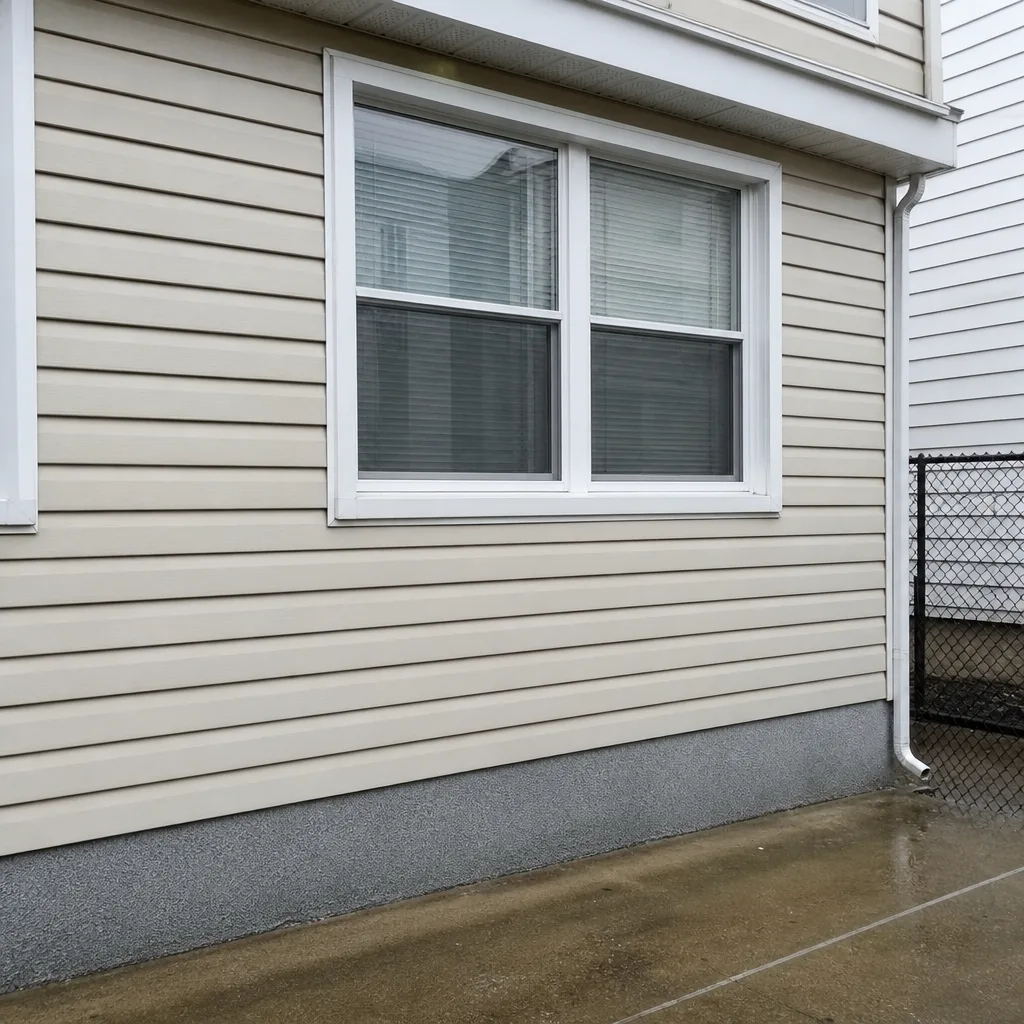 After
After24/7 Emergency Water Damage Restoration in West New York
Water damage restoration in West New York typically costs between $1,500 and $5,500 for a standard two-room extraction and dry-out, with full multi-unit remediation running $8,000 to $25,000 depending on how far the water traveled through shared building assemblies. Our crews reach any address in West New York within 45 minutes, with a live dispatcher answering at (640) 221-3499 around the clock. The first hour matters more here than anywhere else: in a pre-war brick walk-up, water that starts on the fourth floor is already finding its way into the third by the time you finish reading this.
We don’t put you through a phone tree at two in the morning. A person picks up, asks the right questions, and gets a certified crew moving toward your building while you’re still on the line. The visual inspection is free, and we’ll give you a straight read on what you’re looking at before any equipment comes off the truck.
Understanding Water Damage Restoration Severity in West New York Properties
The severity question in West New York starts with water category. Category 1 water comes from a clean supply source like a burst supply line or an overflowing sink. Category 2 carries significant contamination, think washing machine discharge or sump overflow. Category 3 is grossly contaminated: sewage backflow, river surge from the waterfront corridor, or days-old standing water in a basement. The category dictates everything from the PPE our technicians wear to whether affected drywall gets dried or cut out and replaced.
But in West New York, severity has a second dimension that suburban restoration companies rarely account for: vertical migration. Your building was likely built between 1900 and 1940, with shared plaster-and-lath or early drywall assemblies running floor to floor. Water doesn’t stay in the unit where it started. It follows the joist bays, the cast-iron waste stacks, and the electrical chases. Moisture mapping on the fourth floor is only half the job. We read the floors below before writing any scope, because what looks like a contained bathroom leak can actually be a four-unit vertical migration that’s already wetting plaster on two separate floors.
Along Boulevard East and the Hudson River waterfront, the calculus changes again. Those high-rise mechanical rooms and below-grade parking levels sit in FEMA-designated flood zones. Water that gets into those lower levels carries river sediment and salt. That’s a different kind of damage entirely, one that requires aggressive structural drying and often full replacement of affected insulation and wall assemblies rather than simple drying in place.
Why West New York Property Owners Choose Floodline Restoration Co.
- 45-minute response commitment to any address in West New York, from the Palisade grade to the waterfront. A certified crew leaves the moment you hang up, not after a callback from a salesperson.
- Live answer, 24/7, every day. You’ll never reach voicemail at 2 a.m. A dispatcher who knows restoration, not a recording, picks up and starts your file immediately.
- IICRC-certified crews trained to WRT (Water Restoration Technician) and ASD (Applied Structural Drying) standards. Background-checked, uniformed, and carrying professional identification.
- Free visual inspection with moisture mapping, so you know the real scope before any work is approved. No pressure, no inflated line items.
- Direct insurance billing. We work with your carrier from the first call so you don’t become the messenger between adjuster, landlord, and restoration crew.
- One team, start to finish. From extraction to structural drying to the final rebuild, the same Floodline Restoration Co. crew handles every phase. No mid-job handoff to a subcontractor you’ve never met.
Our Water Damage Restoration Process
Inspection & Assessment
We arrive with thermal imaging cameras and penetrating moisture meters. In a West New York walk-up, that means reading the wet unit first, then walking the units directly below to trace vertical migration through plaster-and-lath seams, joist bays, and pipe chases. You get a written scope, not a verbal estimate.
Extraction & Stabilization
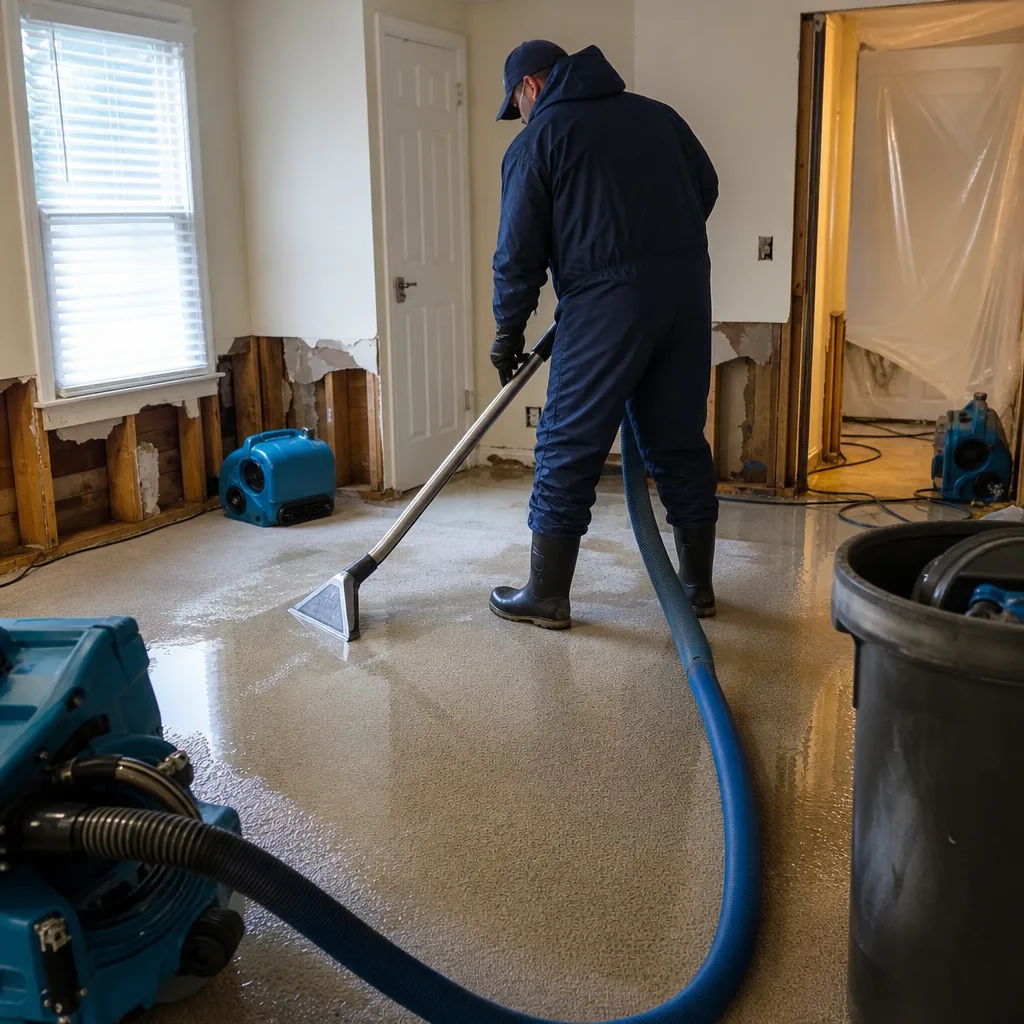
We pull standing water with truck-mounted and portable extraction units, then set containment to isolate affected areas and stop contaminated water from migrating through shared building cavities. If the water is category 3, we remove unsalvageable materials now rather than trying to dry them.
Drying & Dehumidification
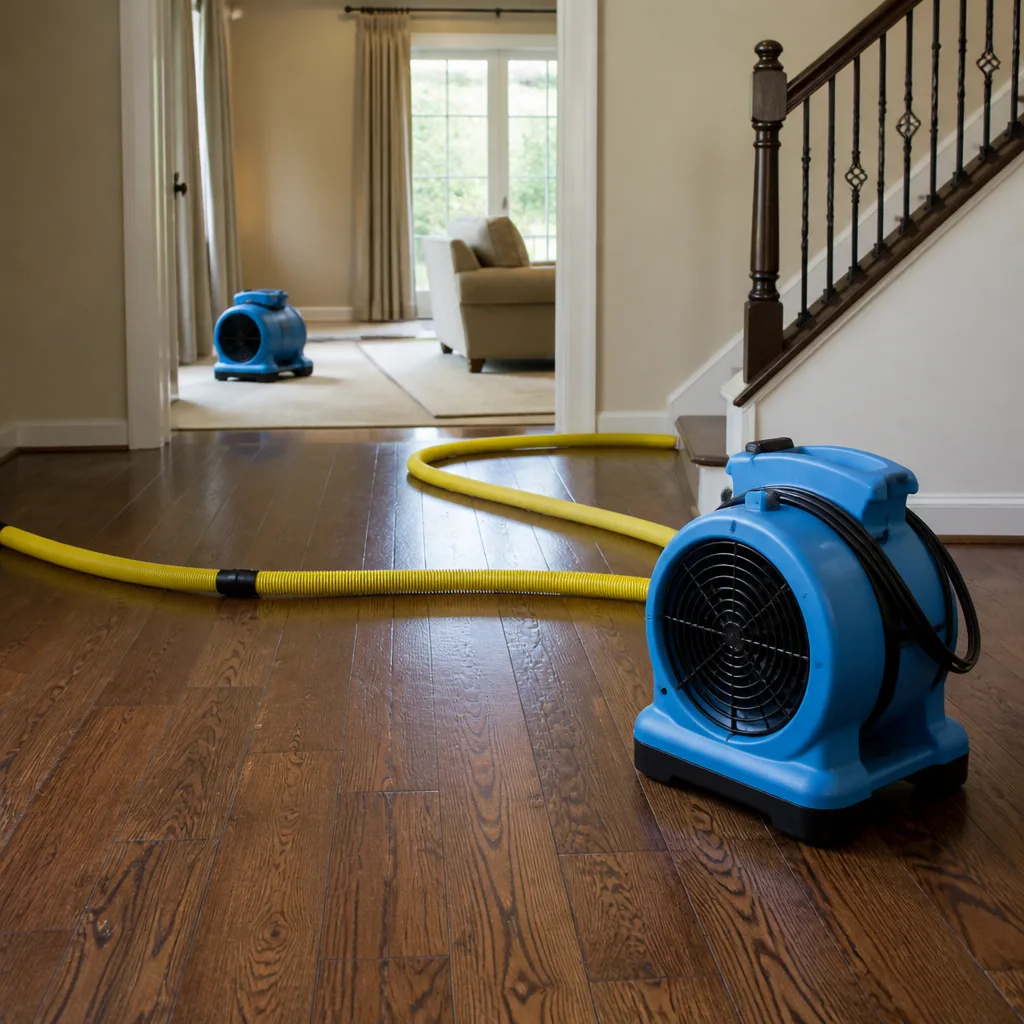
Professional-grade Dri-Eaz dehumidifiers and Phoenix air movers go in, positioned according to the moisture map, not scattered randomly. We log readings every 12 hours and share those logs with every affected tenant, landlord, and adjuster. You’ll never wonder if the job is actually drying.
Cleaning & Sanitization
Affected surfaces get treated with appropriate antimicrobial agents. HEPA air scrubbers run during the entire drying cycle to capture any particulate released as materials release moisture. The building won’t smell like a water event when we’re finished.
Moisture Verification
We don’t call a job dry because the equipment ran for three days. We call it dry when the moisture readings on every logged surface, in every affected unit, hit the pre-loss baseline. In a multi-unit West New York building, that means verification across the whole vertical stack, not just the unit where the leak started.
Repairs & Restoration
When the structure is dry, we rebuild. Fresh drywall, new plaster, paint, trim, flooring, whatever it takes to return your home to pre-loss condition or better. Same crew, same accountability, backed by our 90-Day Done Right Promise in writing.
Need Emergency Water Damage Restoration in West New York Now?
Crews minutes away, answering live 24 hours a day. The sooner we start, the less it costs.
Working With Your Insurance Company
In West New York, a single water event frequently involves more than one insurance policy. Your policy, the landlord’s policy, the neighbor’s policy below you, all covering different parts of the same soaked building. We’ve handled hundreds of these multi-policy losses, and we know that documentation is what keeps a claim from dragging on for months. From the first hour, we photograph everything room by room, log every moisture reading, and create a line-item scope that insurance adjusters recognize because it follows industry-standard formats they can process without back-and-forth.
We bill the carrier directly when coverage is approved, and Curt Bowman’s team will talk to your adjuster on your behalf so you’re not stuck interpreting policy language at midnight. You hired a restoration company, not a second full-time job.
What We Provide Your Insurer
- Thorough documentation of the loss, including cause and point of origin
- Photos of all damage, room by room, with timestamps
- Moisture readings and drying logs from day one to dry standard
- A detailed, line-item scope of work with pricing
- Direct coordination with your carrier, including adjuster meetings on site
Built for West New York’s Loss Calendar
West New York’s damage calendar is predictable, which means the restoration crews working here should be equally predictable in their readiness. January and February bring the deep-freeze weeks when aging galvanized supply lines in century-old buildings let go. A pipe that froze on a Tuesday night has soaked three floors by Wednesday morning. That’s the most common winter call we run in the apartments off Bergenline Avenue and up toward Palisade Avenue.
Spring brings the thaw and the first heavy rains. On the uphill blocks toward the Palisades, runoff hits old foundation walls hard, and sub-slab moisture works its way into basements that haven’t seen water all winter. Summer is the thunderstorm season: flash flooding that overwhelms old combined sewer lines and pushes water back up through floor drains in ground-level units. And the waterfront corridor carries a year-round risk that inland blocks don’t have, persistent ground moisture from the Hudson, heavier in the FEMA flood zones, and more aggressive on below-grade spaces than anywhere else in town.
Nor’easters deserve their own mention. They hit in autumn and early winter, bringing wind-driven rain against older window assemblies on exposed western walls. We’ve dried out more units behind Boulevard East after a nor’easter than any other storm pattern.
Water Damage Restoration Across West New York’s Neighborhoods
West New York’s streets run dense and steep, and each corridor has its own pattern of water damage. The blocks between Bergenline Avenue and Kennedy Boulevard carry the oldest building stock in town, much of it brick, much of it from the 1920s, with cast-iron waste lines that fail from the inside out. A fourth-floor kitchen leak in these buildings is rarely just a fourth-floor kitchen leak. It’s a vertical event.
West of Palisade Avenue, toward the base of the Palisades grade, the foundation walls take the runoff from the entire uphill slope. Basement water intrusion here is a recurring theme, and not the kind you mop up. We’re talking about water pushing through cove joints and old stone-and-mortar foundation walls every time the rain comes hard in the spring and summer.
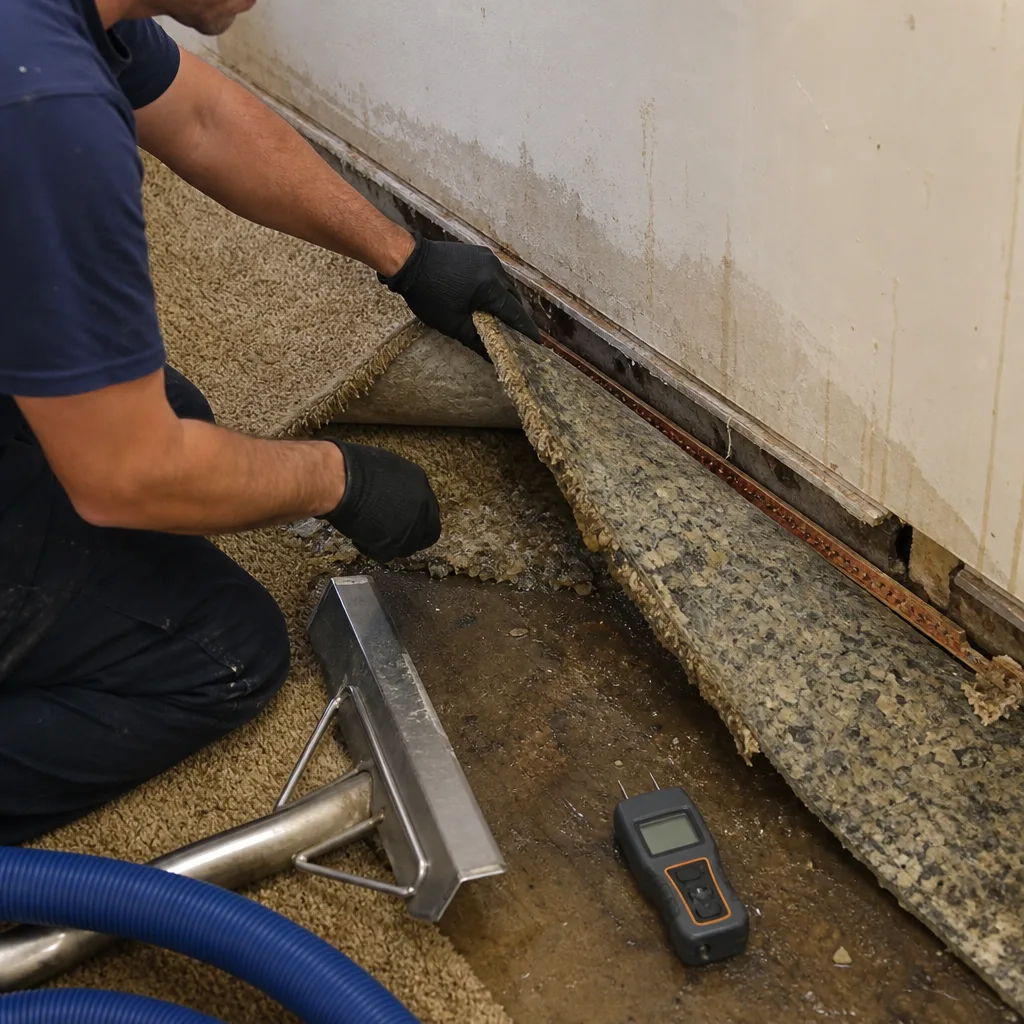
Along Boulevard East and the riverfront high-rises, the mechanical systems are newer but the water risk is structural. These buildings sit in the FEMA-designated flood zones and carry ongoing moisture in their lower levels. When a mechanical room flood happens in a waterfront high-rise, category 1 water turns into category 2 fast if it picks up dust, oil, and construction residue.
And in the blocks near Donnelly Memorial Park and the municipal complex, the mixed residential and commercial buildings mean a water event in a ground-floor storefront migrates into apartments above through shared ceiling assemblies. Landlord-tenant coordination gets complicated fast, but it’s work we know well because we’ve been doing it in this town for years.
Specialized Water Damage Restoration Services We Offer in West New York
Emergency Water Extraction
The clock starts the moment the water stops or the moment you notice it hasn’t. Our extraction teams arrive with truck-mounted units that pull hundreds of gallons an hour, getting standing water off your floors and out of your wall cavities before it wicks up drywall and soaks into subflooring. In West New York’s multi-story buildings, speed here means the difference between drying three units and rebuilding six.
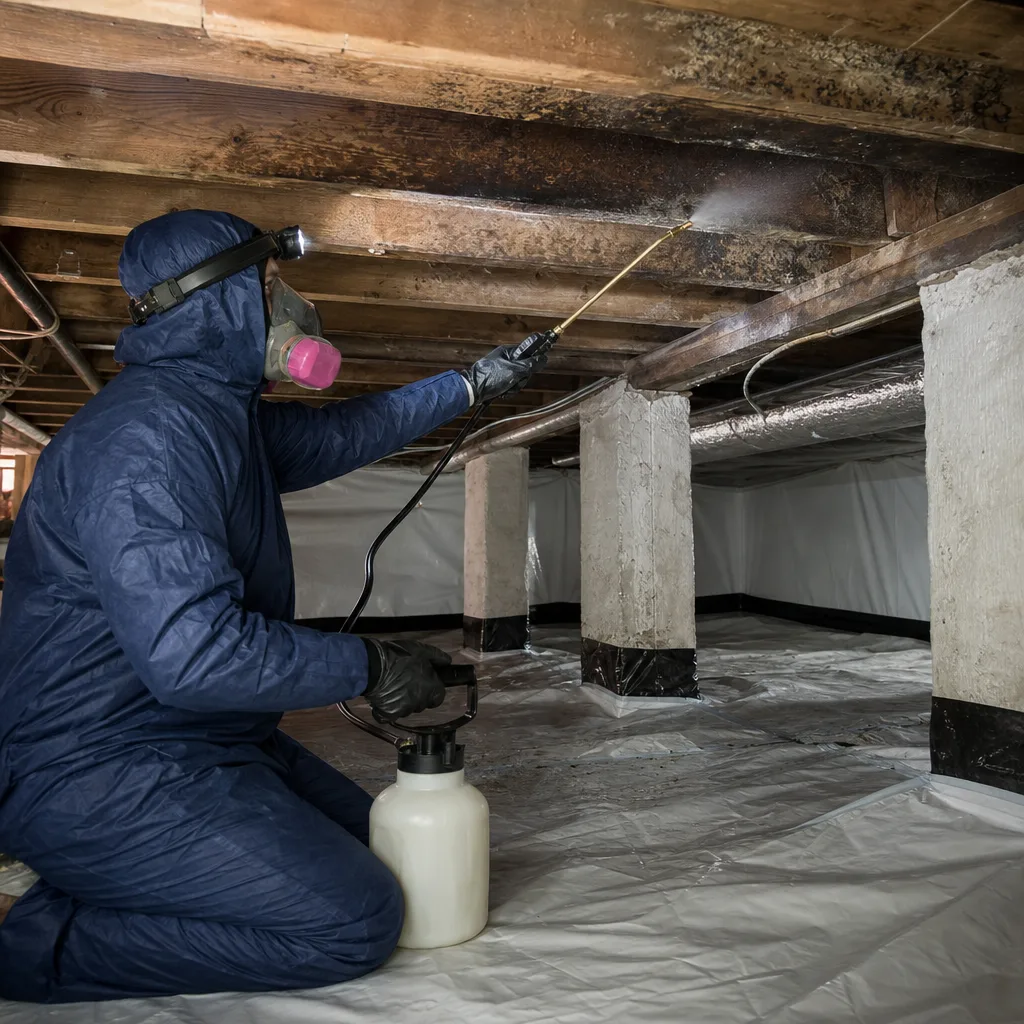
Structural Drying & Dehumidification
Drying in a pre-war brick walk-up is not a single-room operation. The building itself holds moisture in the plaster, the lath, the joists, the shared party walls. We run Dri-Eaz dehumidifiers and Phoenix air movers positioned off the moisture map, and we hold the equipment in place until every logged surface hits the dry standard. That can take three days or it can take ten, depending on how far the water traveled and how saturated the building assemblies got.
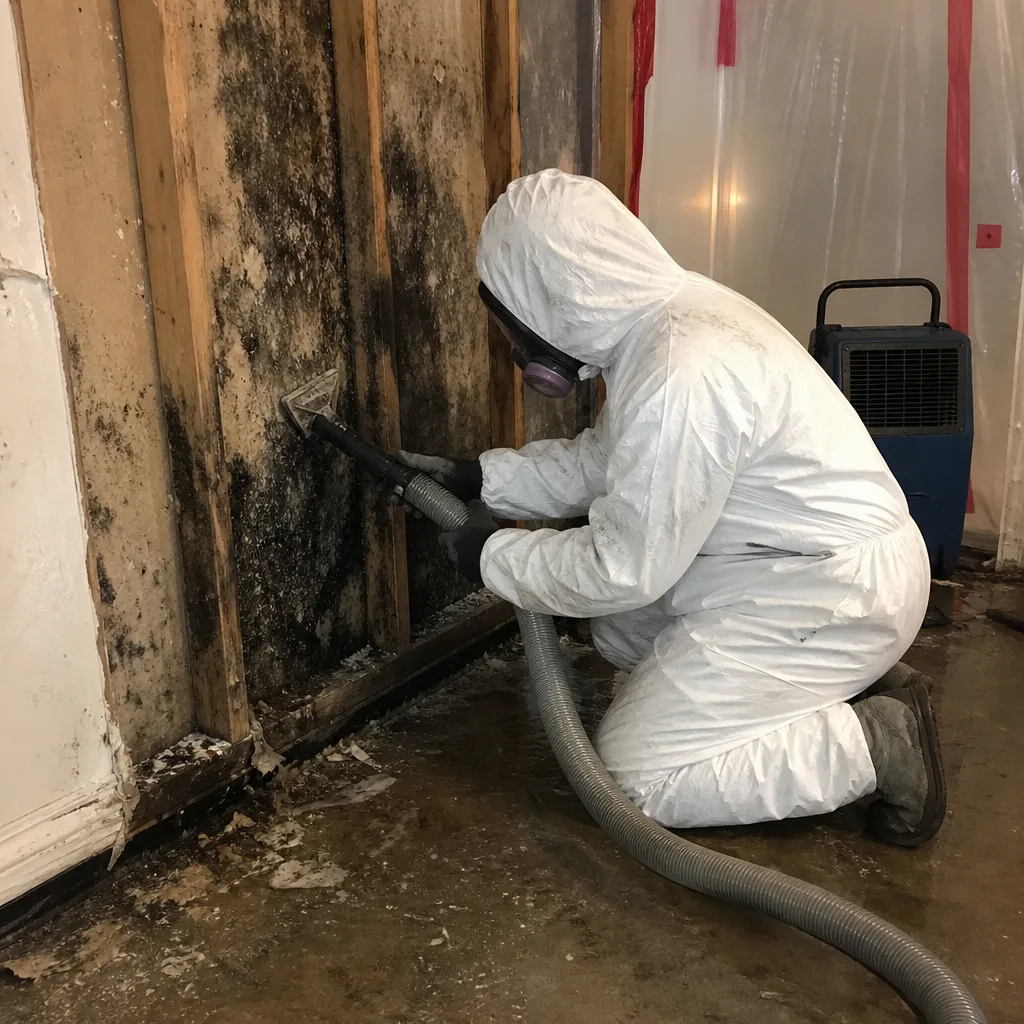
Burst Pipe Restoration
Most burst-pipe losses in West New York are in older buildings with aging galvanized supply lines. When one of those lines lets go, the water is under pressure and moves fast. We handle the extraction, the drying, and the pipe repair coordination, so you’re not trying to line up a plumber and a restoration company separately. Our full-cycle approach means one call handles the whole mess, from the soaked carpet to the finished wall repair.
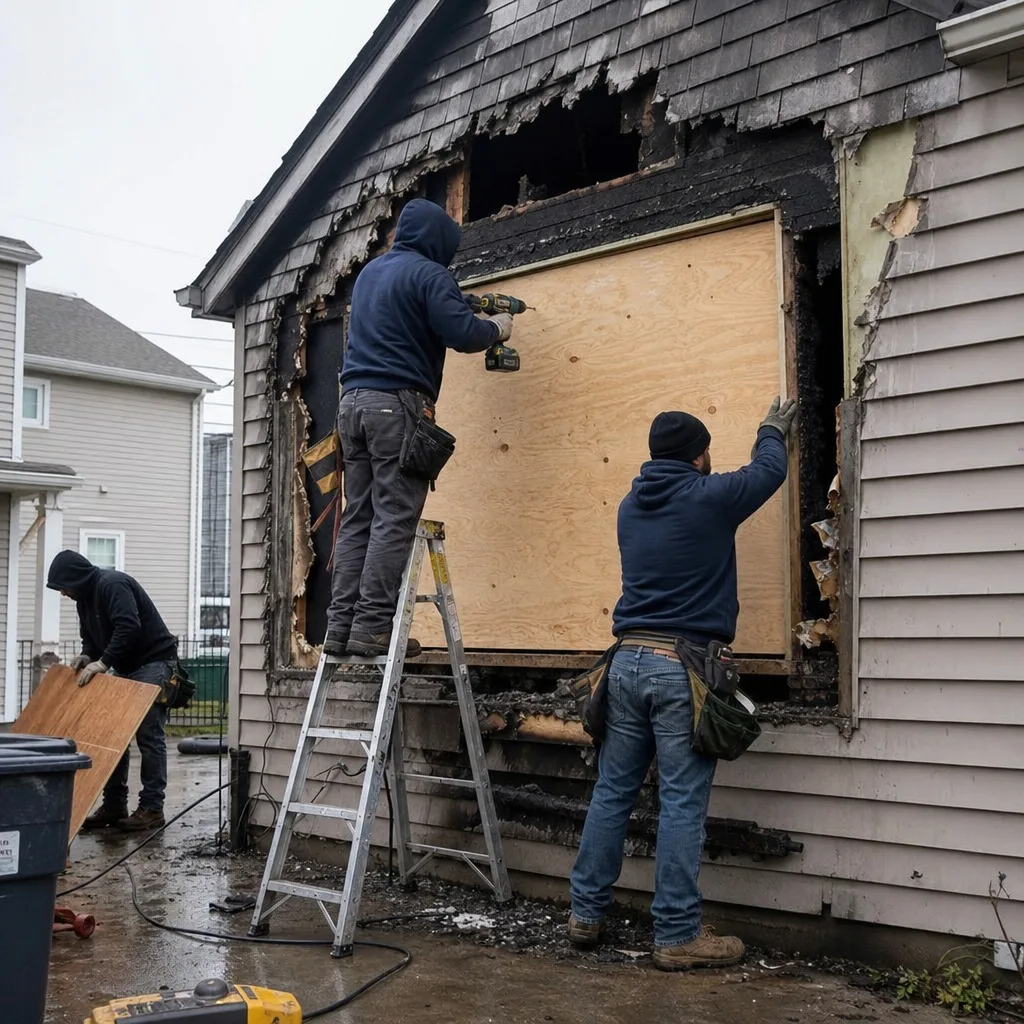
Flood Cleanup
Waterfront flooding and storm-driven surge bring contaminated water into your ground-floor space or basement. Flood Cleanup is different from clean-water extraction: it requires containment, antimicrobial treatment, and often removal of saturated materials rather than drying. We’ve worked the waterfront corridor since Sandy and we know what the river leaves behind.
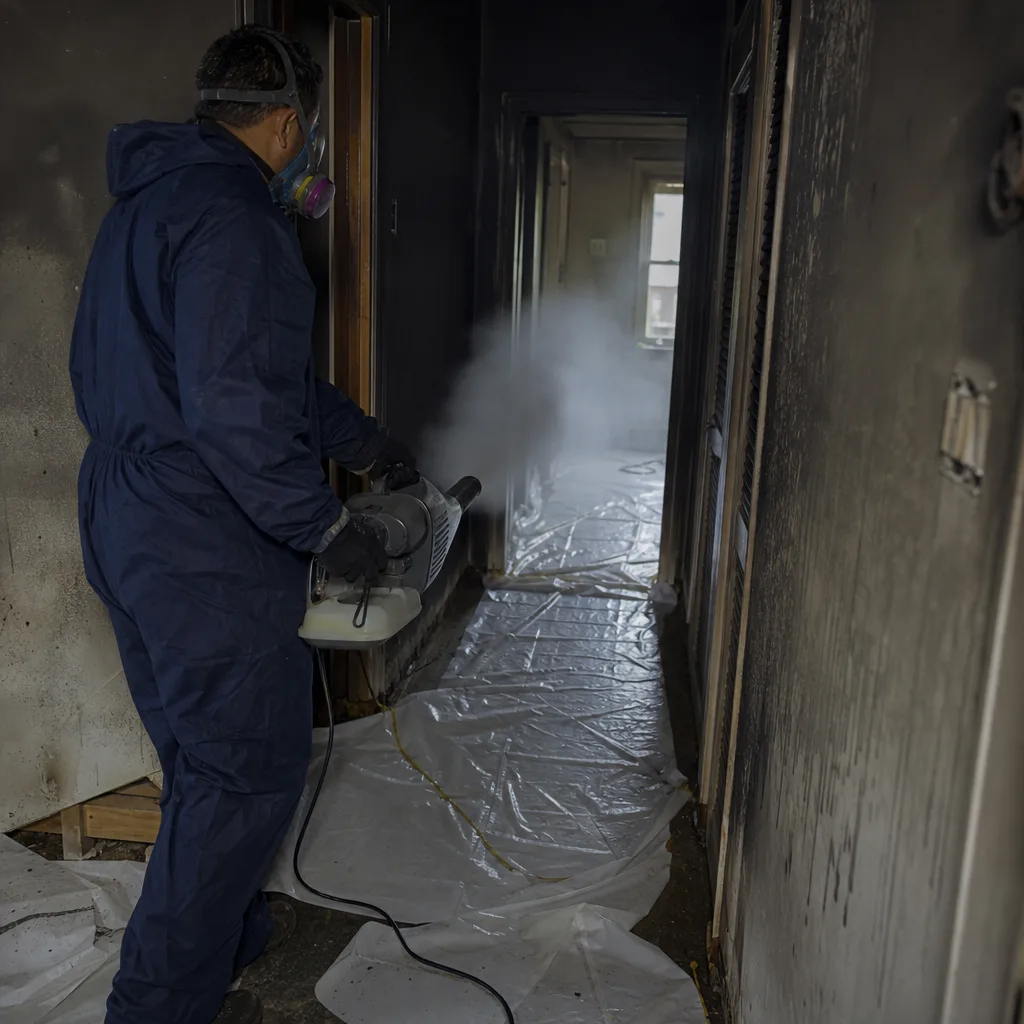
Basement Water Removal
Basements in West New York’s older buildings are often unfinished, with dirt floors, stone foundations, and decades of accumulated dust. When water gets in, it doesn’t just need to be pumped out. It needs to be treated for contamination, the space needs to be dried aggressively, and the moisture intrusion point needs to be identified so it doesn’t happen again next time it rains.
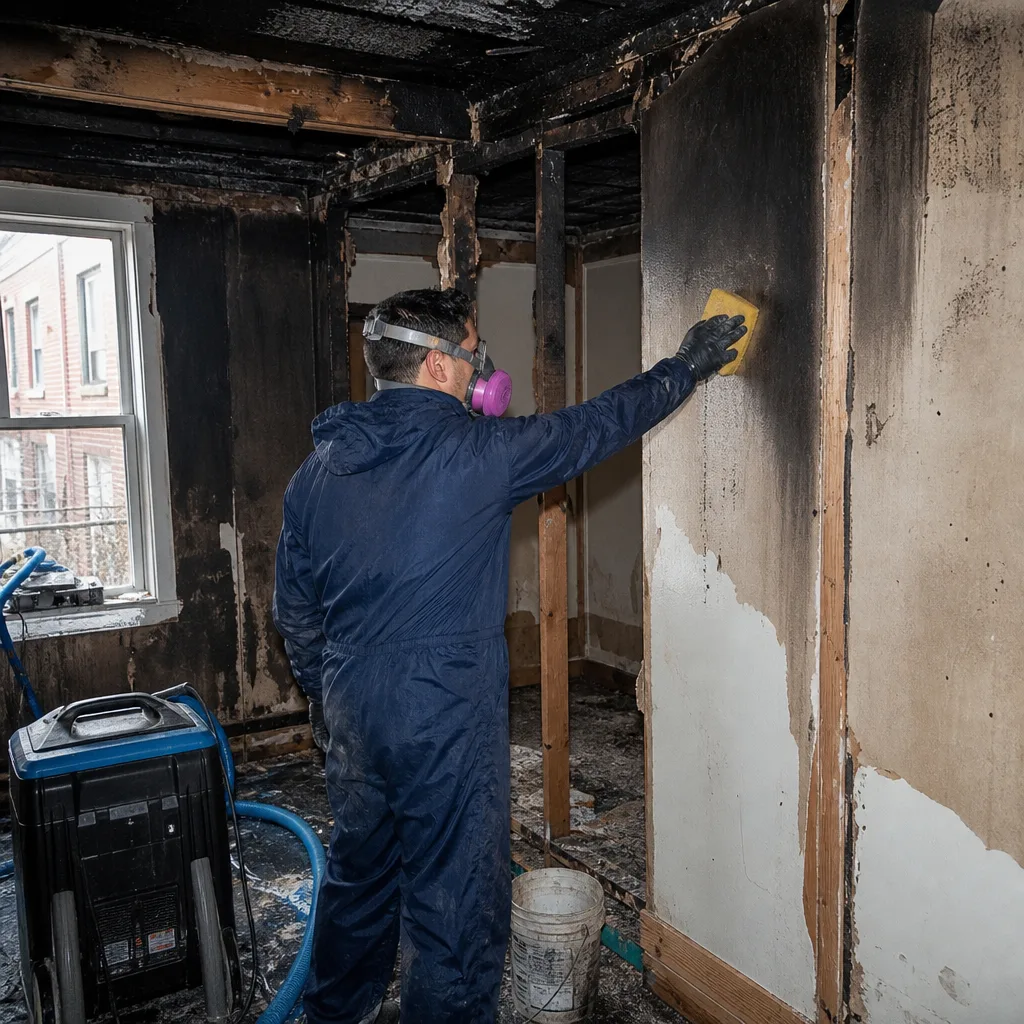
What happens when you call
- 1
A real person answersNo phone trees - you reach a local pro.
- 2
You get an upfront price rangeHonest numbers before anyone is dispatched.
- 3
A background-checked tech heads outLicensed & insured, dispatched right away.
- 4
You approve before work beginsNothing starts until you say go.
Water Damage Restoration Costs in West New York, NJ
Here’s the straight answer on pricing. A typical single-unit water extraction and drying job in West New York runs $1,500 to $5,500. That covers a standard leak like a burst supply line in a bathroom or kitchen, with extraction, containment, three to five days of drying, and moisture verification. A full apartment that’s been saturated through multiple rooms runs $4,000 to $10,000. When water has migrated through four or more stacked units in one building, which is common here, the total restoration across all affected units typically lands between $8,000 and $25,000, and in severe cases with extensive rebuild, it can run higher.
What moves the price: the water category, how many units are affected, whether flooring and drywall need full replacement versus drying, and whether the damage is in a pre-war building with plaster-and-lath (more labor intensive) or a newer high-rise with standard drywall. The best way to get a firm number is the free inspection. We’ll walk the affected units, map the moisture, and give you a written scope with a line-item price before any work begins. No verbal guesses, no surprises on the back end.
We Also Serve Cities Near West New York
Our crews regularly work in the surrounding Hudson County communities, bringing the same 45-minute response and multi-unit expertise to Water Damage Restoration in West New York as well as North Bergen, Ridgefield, Weehawken, and Union City. If you’re on the edge of town or in a neighboring jurisdiction, call (640) 221-3499 and we’ll route the nearest available crew to you.
West New York Water Damage Restoration Questions, Answered
Why does water damage in a West New York walk-up often affect four or more units at once?
Because pre-WWII brick walk-ups share continuous building cavities across floors. Plaster-and-lath ceilings, joist bays, pipe chases, and party walls all run vertically through the structure. Water from a burst supply line on the fourth floor follows those channels downward, pooling in the ceiling assembly of the third floor, then soaking into the walls of the second. In buildings from the 1920s and 1930s especially, those assemblies are original and rarely sealed against lateral water movement. By the time you notice the water in your unit, it may have already passed through the unit below you. If you’re dealing with water in a multi-unit West New York building, call (640) 221-3499, and we’ll inspect the full vertical path, not just the visible damage.
Do I have to coordinate with my landlord and other tenants during restoration in West New York?
No. That’s our job. In a multi-unit water event, the landlord’s insurance policy, your policy, and possibly a neighbor’s policy all have a stake in the same loss. We coordinate directly with all parties: landlords, tenants, and the adjusters from each policy. We’ll handle access agreements for units we need to inspect, keep every affected tenant informed of drying progress, and share moisture logs with everyone who has a legitimate need to see them. You hired a restoration company to take this off your plate, and the plate stays with us until the last unit is dry.
What category of water is common in flooded basements near the West New York waterfront?
Category 3, which means grossly contaminated. In the FEMA flood zones along the Hudson, floodwater carries river sediment, salt, sewage, and whatever else the surge picked up on its way in. That water is not safe to extract and dry in place. It requires containment, full removal of saturated porous materials, antimicrobial treatment, and aggressive structural drying before any rebuild work starts. If your waterfront building’s lower level has taken on river water, call (640) 221-3499 immediately. Category 3 water gets more dangerous and more expensive to remediate the longer it sits.
How fast can mold start growing after a water leak in a West New York apartment?
Mold spores can begin colonizing within 24 to 48 hours in a warm, damp environment. In West New York’s older buildings, that window is often shorter because the plaster-and-lath and original wood framing hold moisture longer than modern drywall. By the time you see visible mold, the colony has already been established for days. That’s why the first 24 hours of extraction and drying matter so much, and why we dispatch crews to West New York around the clock rather than waiting for the next business day. The sooner the water comes out and the air movers go in, the less likely mold becomes part of the conversation.
Why do you walk the floors below before writing an estimate on an upper-floor leak in West New York?
Because in a 1920s brick walk-up, the water doesn’t stop at the floor. It has already found the seams in the plaster-and-lath, the joist bays, the pipe chases. If we only scope the unit where the leak started, we’re writing an estimate for half the job. The second-floor ceiling may look dry, but the cavity above it may be saturated, and that moisture will telegraph through within days. Walking the floors below before writing the estimate is how we avoid surprising you with a change order later, and it’s what a restoration company that actually knows West New York’s building stock does as standard practice. It’s also what allows us to give you a firm number on the first scope, not a moving target.
How fast can you actually get to West New York?
Our commitment is 45 minutes from your call to a crew at your address, anywhere in West New York. A live dispatcher takes your call at (640) 221-3499, identifies the nature of the water event, and routes the nearest available certified crew to you immediately. No callbacks, no sales screening, no waiting for a regional manager to approve the dispatch. In a vertical-migration event, those 45 minutes matter.
Will insurance cover water damage restoration in West New York?
Most homeowner and landlord policies cover sudden and accidental water damage, such as a burst pipe, an overflowing appliance, or a failed water heater. Flood damage from the Hudson River is typically a separate flood insurance policy, not standard homeowner’s coverage. We’ll work with your carrier and help you understand what’s covered before any work begins. For full-service Water Damage Restoration, we bill the carrier directly when coverage is approved, and we’ll document the loss from the first hour so your claim has everything it needs.
What should I do in the first 30 minutes after I discover water damage?
First, stop the source if you can do so safely: shut off the supply valve at the fixture or the main if it’s accessible. Second, no electrical contact, don’t touch appliances, outlets, or electrical panels in wet areas. Third, call (640) 221-3499. Our live dispatcher will walk you through immediate steps while the crew is en route. Don’t try to extract water yourself with a shop vac if the water could be contaminated, and don’t lift soaked carpet or padding without protective gear. The first 30 minutes are about stopping active water flow and getting a certified crew moving toward your building.
Serving West New York, NJ - Our Local Coverage Area
We’re based in the West New York area and know this community well. Use the map below to see our service coverage - if you’re nearby, we can almost certainly help.
Get a Free West New York Water Damage Inspection
If you’ve got water where it shouldn’t be, or you suspect water is moving through your building’s shared assemblies, call (640) 221-3499. A live dispatcher answers, a certified crew heads your way, and the visual inspection is free. You’ll get a straight answer about what you’re dealing with and a written scope before any work begins. Floodline Restoration Co. has been restoring homes since 2010, and every job carries the 90-Day Done Right Promise, in writing, no arguments. Senior and veteran discounts always apply, and current standing offers can be applied to your restoration work. Call now, and we’ll get your home dry the right way, the first time.
Written by Curt Bowman, Owner at Floodline Restoration Co., providing full-cycle water damage restoration to homeowners and property owners in West New York, NJ since 2010.