
How to Choose the Right Damage Restoration Company in West New York
The right damage restoration company in West New York is the one willing to put its commitments in writing before any work starts. That means a defined scope, a direct billing agreement with your insurance carrier, and a post-job warranty that spells out what happens if something fails. If a company hesitates on any of those three, keep looking. If you’d rather skip the research and talk to someone who can answer these questions directly, call (640) 221-3499.
We pulled a flooded carpet pad out of a split-level over on 60th Street last March where the homeowner had already called two other companies. Both gave her a verbal estimate and a promise. Neither would put the scope in writing before she signed. She called us third. The difference wasn’t talent; it was paperwork. That’s the whole point of this guide.
What to Look for in a Restoration Company: The Three Clauses That Matter
Every restoration company in West New York claims certification, fast response, and insurance expertise. Those claims are identical because the marketing is copied from the same templates. The only reliable way to separate accountable companies from those who protect themselves first is to look at the contract. Three clauses tell you everything.
Scope lock. A written scope of work, agreed before any equipment enters the house, prevents scope creep billing. If a company won’t produce a line-item scope before you sign, walk away. We’ve seen homeowners in West New York handed bills 40% higher than the estimate because the original scope was verbal and the “unforeseen conditions” clause was wide open. A square deal means the scope is in writing and changes require your signature.
Direct carrier billing confirmation. “We handle insurance” is the most overused sentence in this industry. What it actually means varies wildly. Ask for the specific language: does the company bill the carrier directly, or do you pay upfront and chase reimbursement? We bill the carrier directly on covered losses, which means the homeowner never plays messenger between us and the adjuster. That’s a contractual commitment, not a website claim.
Written post-job warranty with defined failure terms. This is the rare one. Ask for the warranty document before you hire. Look for specifics: how long it lasts, what it covers, and what happens if something fails. If the answer is “we guarantee our work” with no paper behind it, that guarantee is a sentence, not a commitment. Our 90-Day Done Right Promise is handed to the homeowner in writing at job completion. If it’s not done right, we fix it. No argument process, no paperwork battle. The K.E.Y.S. code we built around it is not a logo; it’s the standard we hold ourselves to on every job in West New York.
Why “Certified Technicians” Is a Useless Claim Without This One Question
Certification matters. IICRC, RIA, and IFA standards are real, and a company’s commitment to them says something. But the marketing claim “certified technicians” means nothing if the person standing in your living room at 2 a.m. isn’t the certified one. Restoration companies in West New York employ a mix of certified leads, apprentices, and subcontractors, and the ratio varies by company and by night.
The question that gets you a real answer: “Who specifically will be on my job, and which certifications do they hold individually?” If the response is vague or defensive, you have your answer. If the company can name names and credentials, that’s a different operation entirely. Our technicians are background-checked and uniformed, and they carry their certifications with them. The person who reads the moisture map on day one is the same person doing daily readings until the dry standard is met. That continuity matters more than any badge on a website.
The Handoff Problem: Where Restoration Jobs Go Wrong
Here’s the structural flaw most homeowners in West New York don’t discover until month six: many restoration companies split the job. A mitigation crew handles water extraction and drying. Then a completely separate reconstruction subcontractor handles the rebuild. Two crews, two contracts, two insurance claims, and a liability gap the homeowner falls into when something goes wrong.
Ask directly: “Does your company handle reconstruction in-house, or do you subcontract it?” If they subcontract, ask who’s liable when the rebuilt wall shows a moisture problem six months later. The mitigation company will blame the contractor. The contractor will blame the mitigation company. You’ll be in the middle with a wet wall and two voicemails.
We built Floodline Restoration Co. home around closing that gap. Extraction, drying, and rebuild happen under one roof, with one crew, one contract, and one name on the warranty. The line the water left is where we start, and the job isn’t done until the rebuild is finished and the guarantee is in your hand. No handoff, no inherited crew, no “that wasn’t our scope.”
Red Flags in the First Phone Call
The first phone call tells you more than a dozen online reviews. When you call a restoration company in West New York, you’re not just scheduling service; you’re auditioning the company under stress. Pay attention to five specific red flags that reliably predict problems months later.
- Vague timelines. “We’ll get someone out soon” is not a commitment. A company that runs a dispatch board, not a sales desk, can tell you when a crew will arrive. We answer calls with a live person at two in the morning, because a dispatcher, not a recording, is what gets a certified crew to your door the same visit.
- Inability to name the certification body. “Our guys are certified” without naming IICRC, RIA, or IFA is a red flag. A real company can tell you which standards its people trained to.
- No mention of moisture documentation. A professional restoration company maps moisture from day one and logs daily readings until the dry standard is met. If the person on the phone can’t explain how they document drying progress, you’re talking to a salesperson, not a restoration technician.
- Pressure to sign before assessment. No legitimate company requires a signature before an assessment is complete. If you’re being pressured to commit before anyone has looked at the damage, that’s not urgency; that’s a sales tactic.
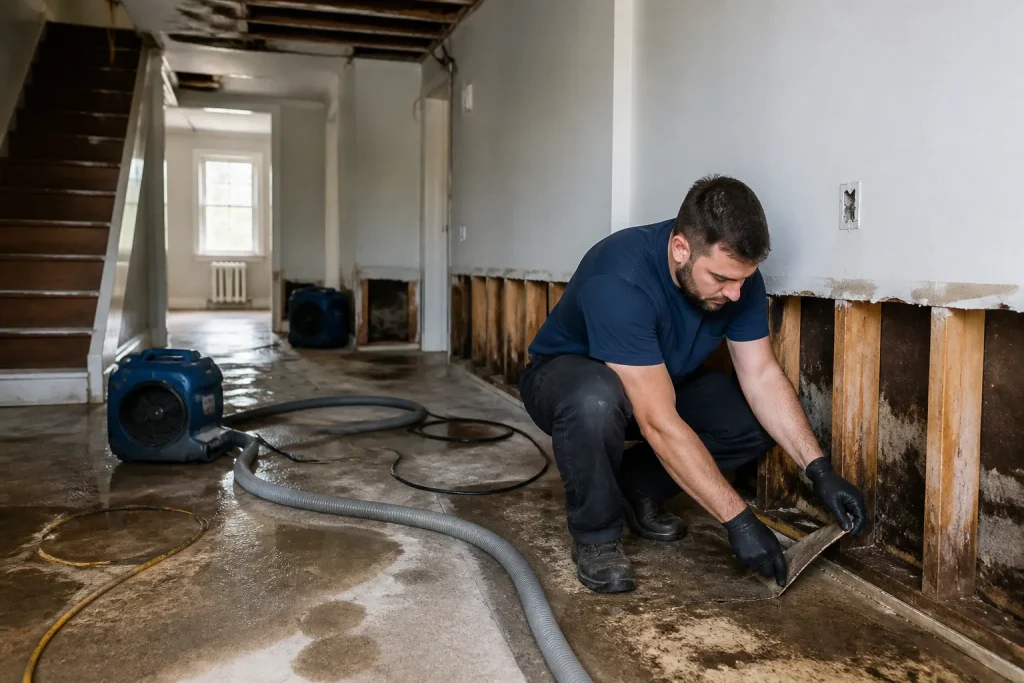
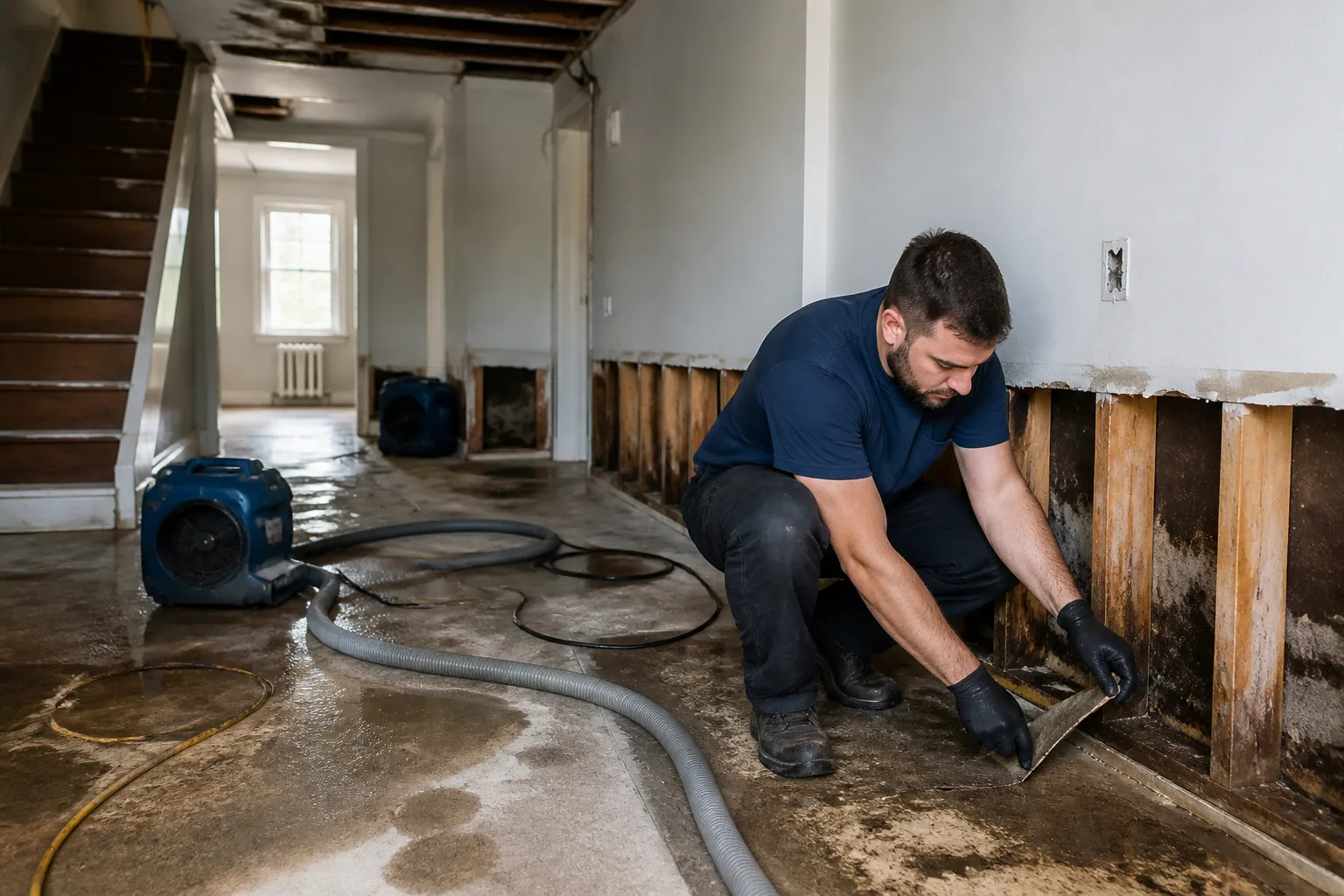
- Evasiveness on equipment. Ask what equipment they use. If they can’t name brands, they’re not running professional-grade gear. We use Dri-Eaz, Phoenix, XPOWER, B-Air, and Injectidry equipment. Those aren’t buzzwords; they’re the difference between drying a wall and just making it look dry.
When to call a pro: the moment you see standing water, smell mold, or notice ceiling discoloration. Not tomorrow, not after the weekend. Water damage compounds by the hour in West New York’s older housing stock, and what starts as a $400 extraction becomes a $4,000 rebuild if you wait. We’ve seen it happen in the same building twice because the first company dried the surface and missed the cavity.
Related services in West New York: Water Damage Restoration in West New York, Mold Remediation in West New York, and Fire & Smoke Damage Restoration in West New York.
How to Verify Insurance Direct Billing Is Real
“We handle the insurance” is the most common phrase in restoration marketing. What it means in practice ranges from “we’ll send the adjuster a report” to “we’ll argue with the carrier on your behalf until the check clears.” Homeowners in West New York who’ve been through a claim once know the difference.
Ask these three questions: Does your company have established relationships with major carriers? Who on your team communicates with the adjuster, and how often? If the carrier disputes a line item, who absorbs that cost? The answers separate companies that bill carriers from companies that actually work with them.
We bill the carrier directly on covered losses. That’s not a favor; it’s a structure. The homeowner never plays messenger between us and the adjuster, and the daily moisture logs we hand to the carrier become part of the claim file. Photo documentation, daily readings, and a written scope before work starts mean the adjuster sees exactly what we saw. That’s how claims get approved without the homeowner making fifteen phone calls.
The Bottom Line
Choosing a restoration company in West New York comes down to one principle: evaluate what a company commits to in writing, not what it says on its website. Three clauses matter: scope lock, direct carrier billing, and a written warranty with defined failure terms. Ask who specifically will be on your job and what certifications they hold individually. Find out whether reconstruction is in-house or subcontracted, because the handoff gap is where six-month problems live. And trust the first phone call: specific timelines, named equipment, documented moisture readings, and no signature pressure are the marks of a company built around dispatch, not sales.
If you’re in West New York and need help, Floodline Restoration Co. offers free estimates. Call (640) 221-3499 and you’ll get a live person, not a recording, even at two in the morning. We’ve been serving this community for over 42 years under Curt Bowman’s leadership since 2010, and we plan to be here in thirty years answering the phone the same way.
Frequently Asked Questions
Ask which specific certifications the technicians on your job will hold individually, not just which bodies the company claims to train to. IICRC, RIA, and IFA are the standards that matter in our trade. A company that can name the technician and the certification before work starts is a company worth hiring. Call (640) 221-3499 and we’ll tell you who’s coming and what they hold.
Most homeowner policies cover water, fire, and storm damage restoration, but the details depend on your policy and the cause of damage. A company that bills your carrier directly removes you from the reimbursement chase. Ask for carrier relationships and adjuster communication structure before you sign. We handle direct carrier billing on covered losses and provide daily moisture documentation to support every claim.
Speed depends on the company’s dispatch structure, not the size of their ad budget. A company with live 24/7 dispatch answers the phone at 2 a.m. and has a crew on the road that same visit. A company with a recording gets back to you in the morning. We answer calls with a live person around the clock, 7 days a week, and most jobs are completed in a single visit using professional-grade Dri-Eaz, Phoenix, XPOWER, B-Air, and Injectidry equipment.
Surface drying and actual drying are different things. Water wicks into drywall, subfloor, and framing within hours, and a fan pointed at a wet wall is not moisture mapping. If you’ve had standing water for more than a few hours, you need professional assessment. If the water touched sewage or the area smells musty, do not attempt cleanup yourself. Call (640) 221-3499 for a free estimate and an honest answer about what actually needs doing.
Written by Curt Bowman, Owner at Floodline Restoration Co., serving West New York since 2010.
Need Damage Restoration Help?
Call Floodline Restoration Co. - licensed & insured, here with fast after-hours help in West New York.
(640) 221-3499