
Free visual inspection and a written scope of work before any mitigation begins - photos, moisture readings, and drying logs go in your claim file
The scope we write is the scope we bill. Anything new gets shown to you, in writing, before we touch it.
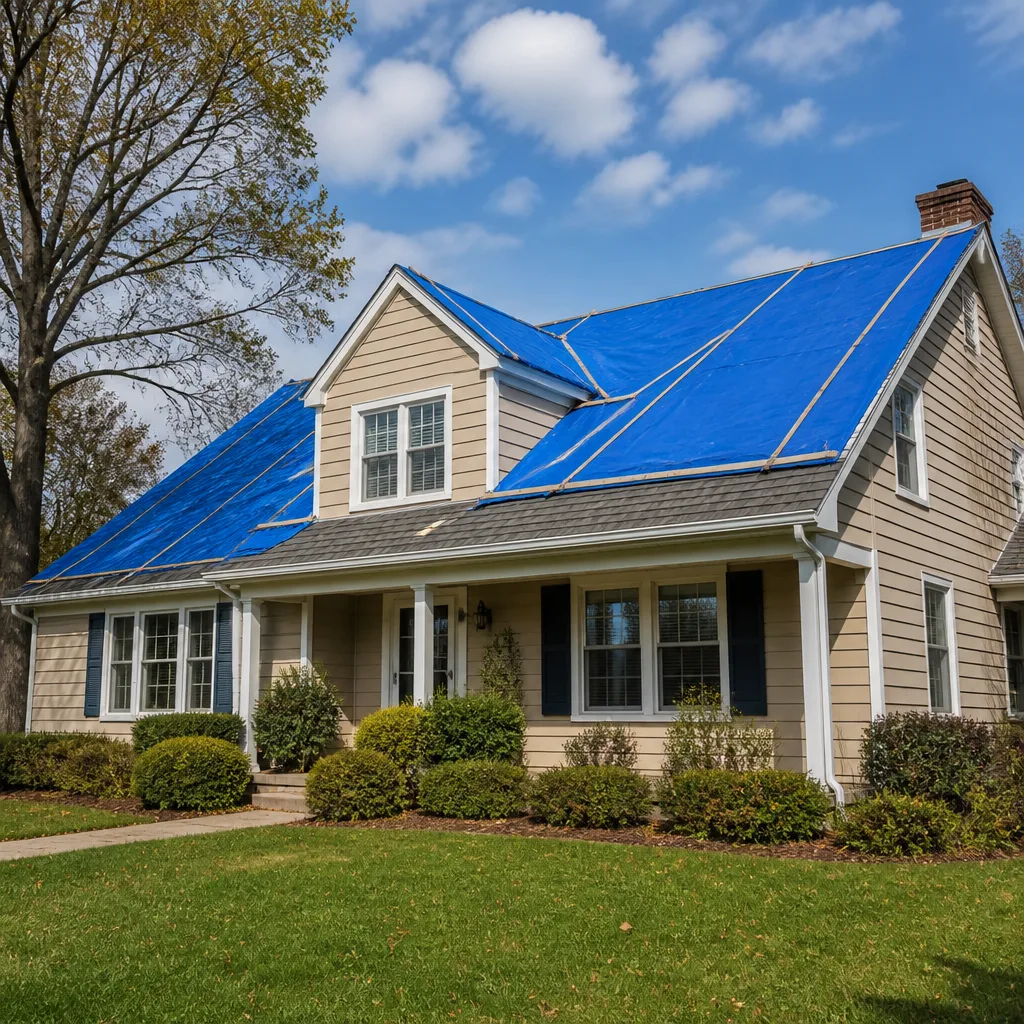
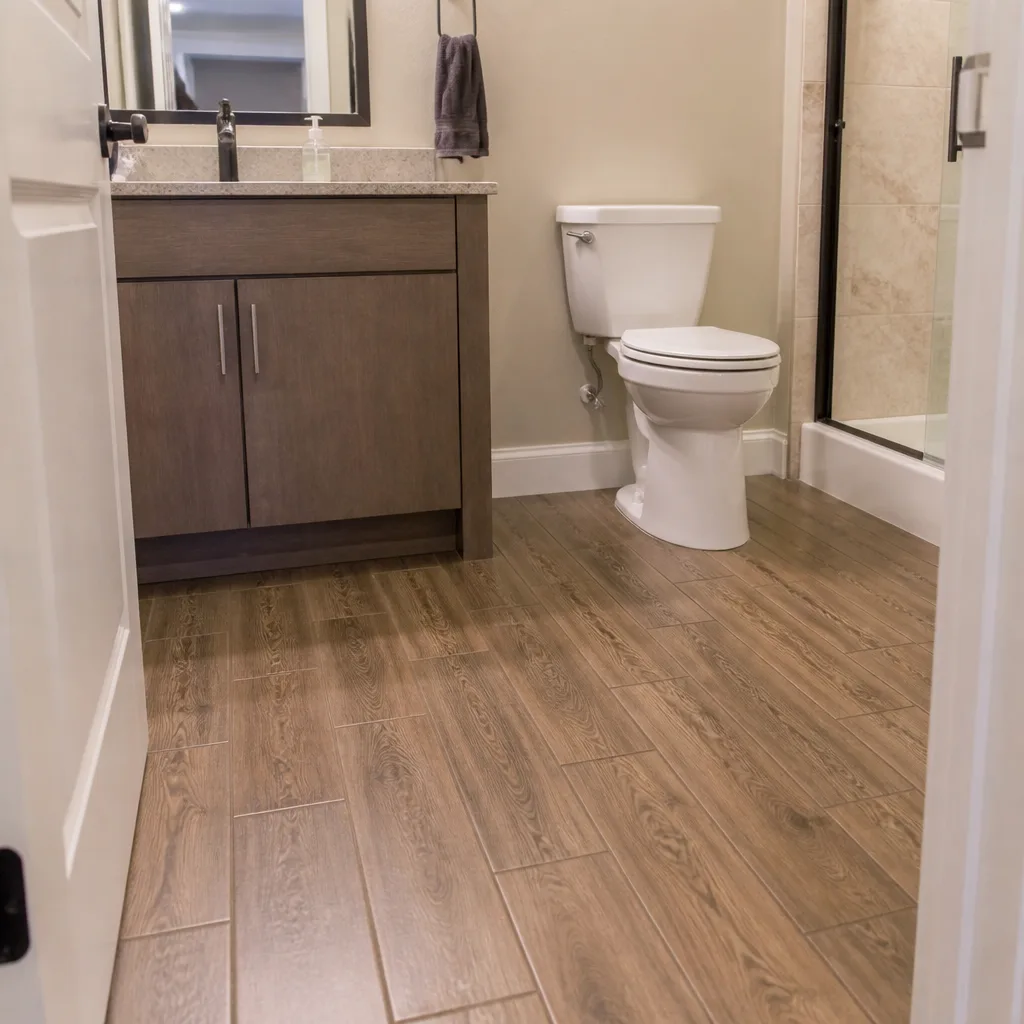
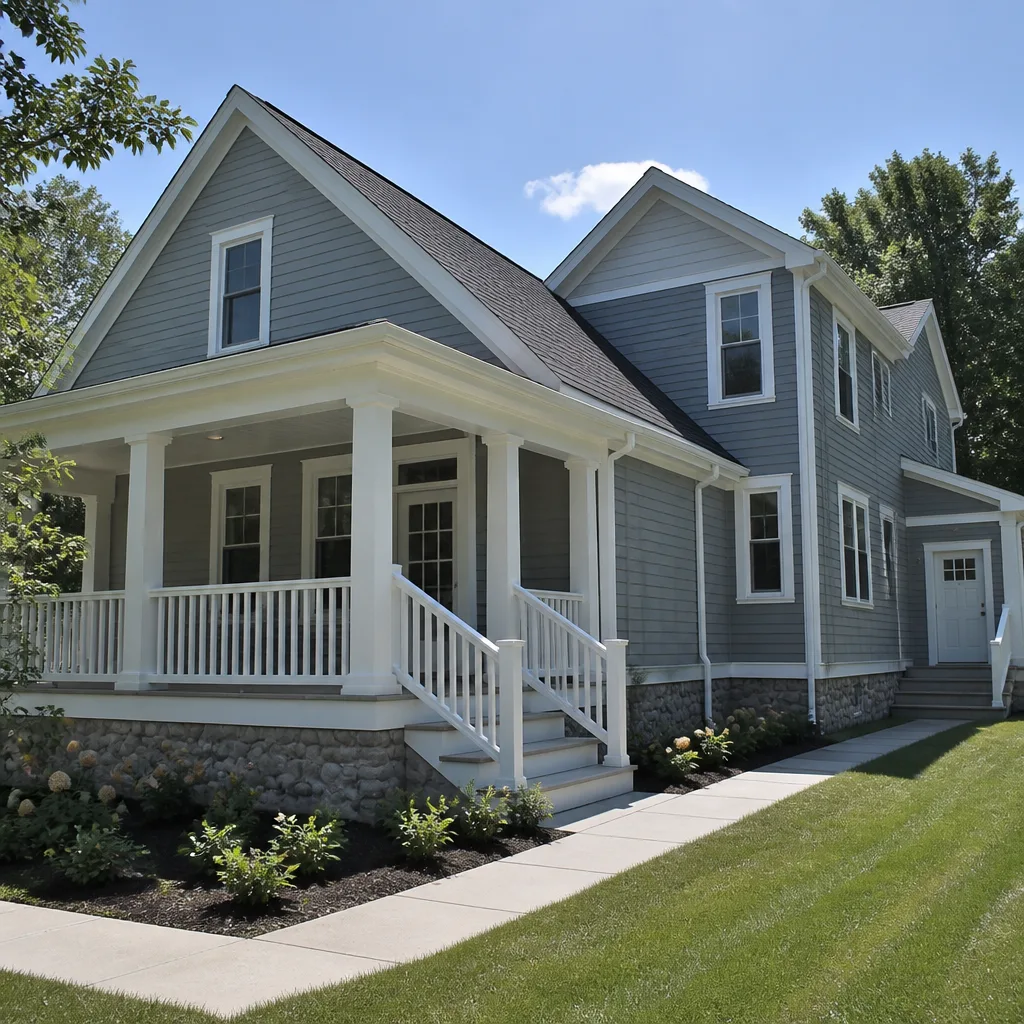
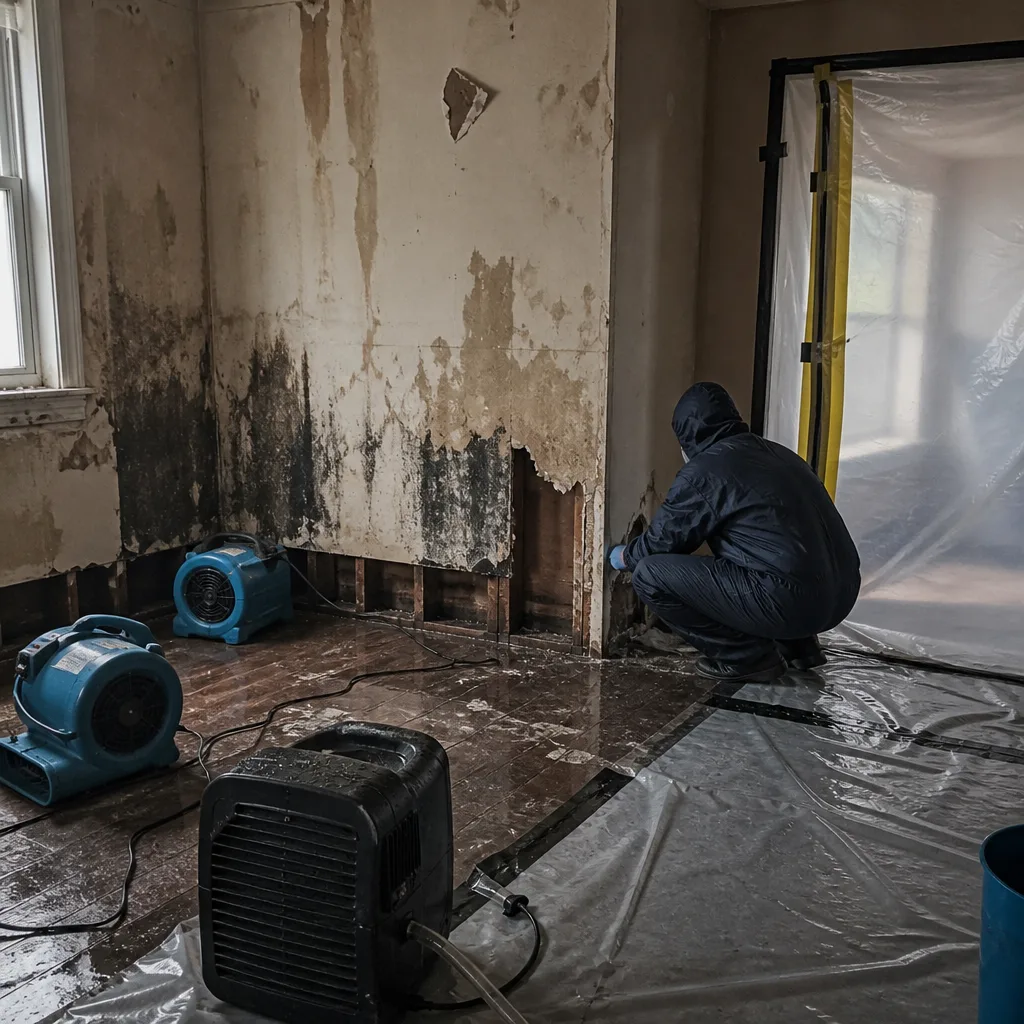 Before
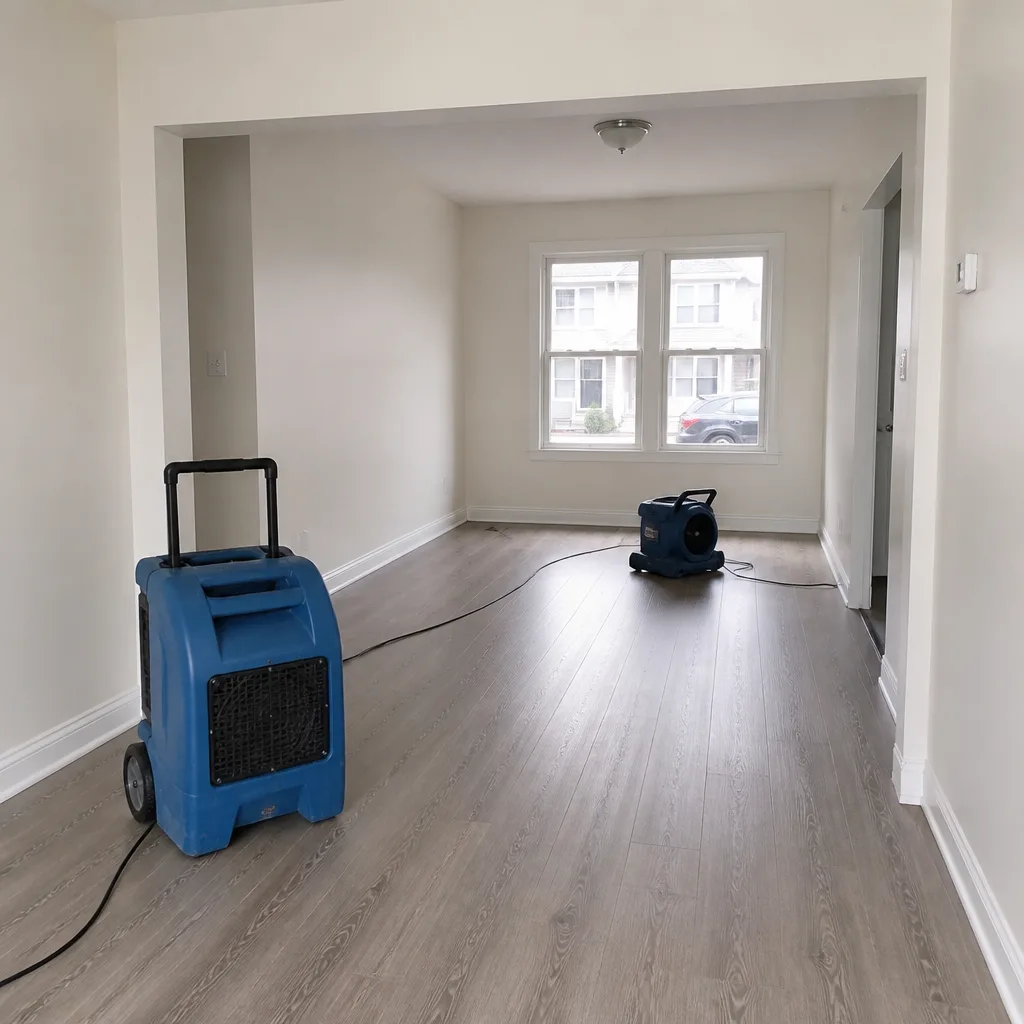 After
After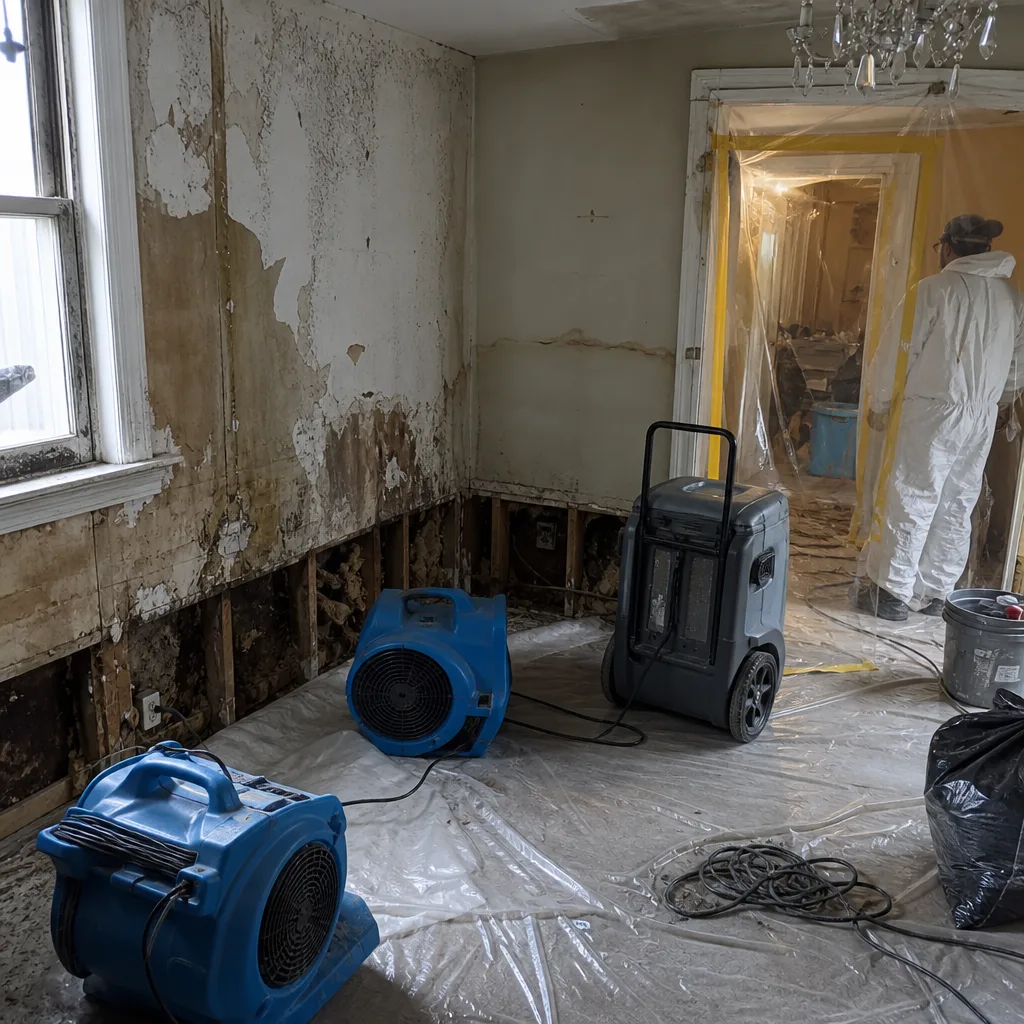 Before
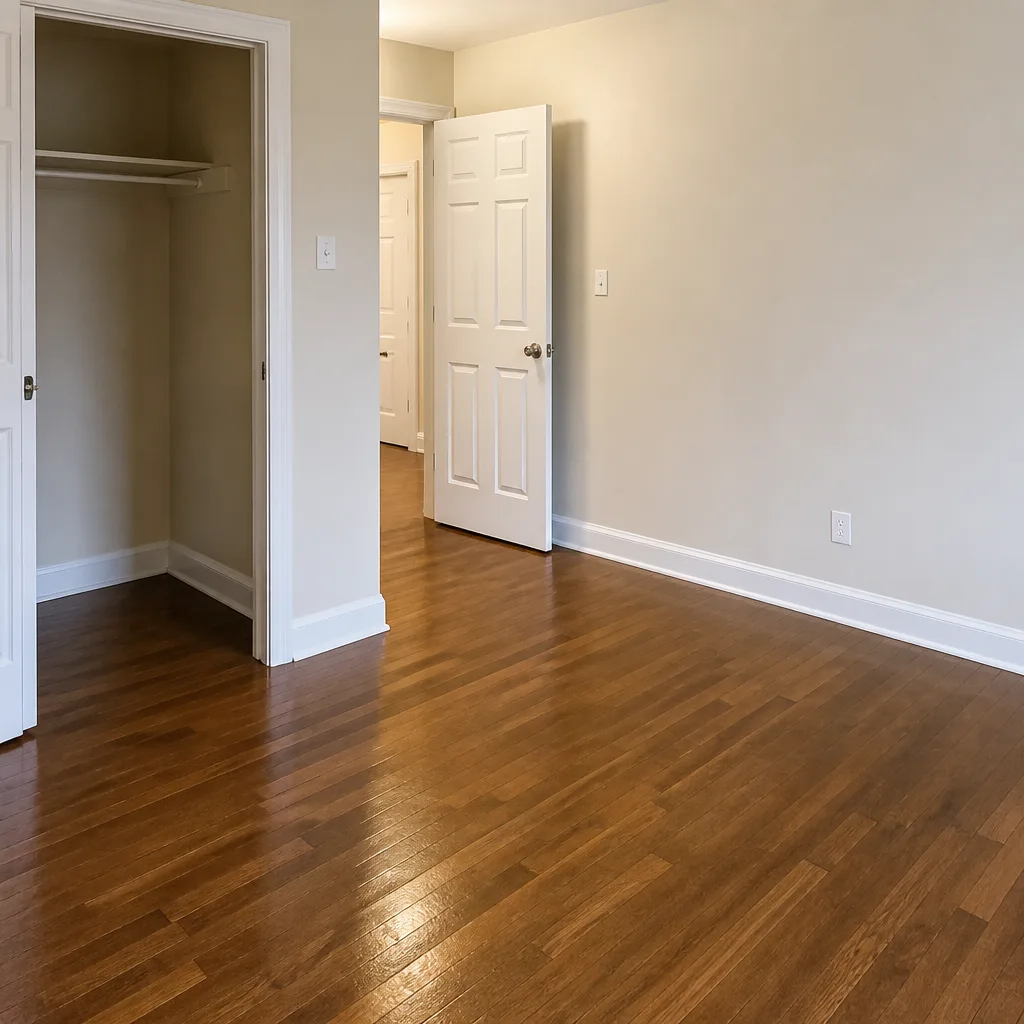 After
After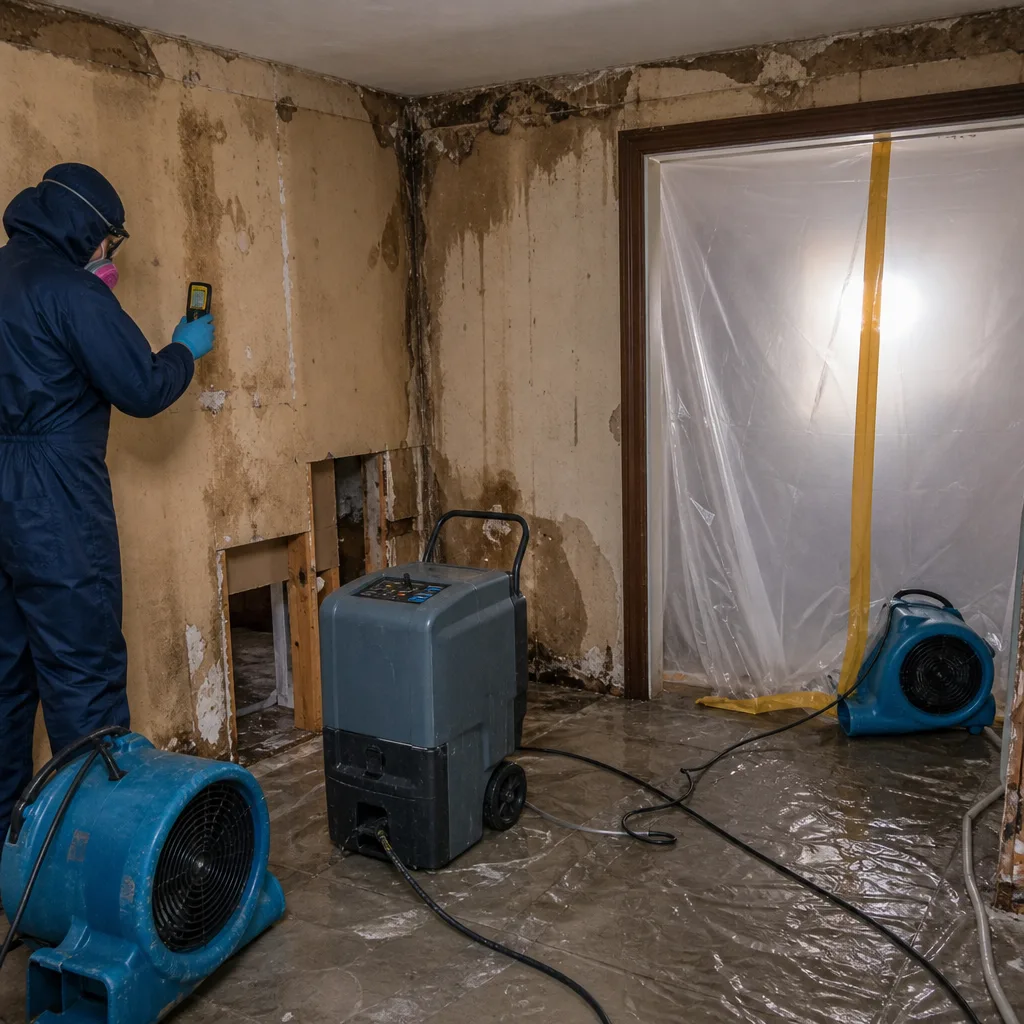 Before
 After
After24/7 Emergency Mold Remediation in Central Harlem
Mold remediation in Central Harlem typically costs $1,800 to $6,500 depending on how far the colony has spread and whether it’s reached into horsehair plaster or structural timber. Most jobs on occupied brownstone floors are completed within 3 to 7 days. Call (640) 221-3499 and a live dispatcher answers, not a recording. We send a certified crew into Central Harlem the moment you need us, every day of the year, at any hour.
The first hour matters more than most homeowners realize. Mold growing behind a wall in a Central Harlem rowhouse doesn’t stay behind that wall. It follows the warm, humid air moving through stud cavities and up through shared party walls. What starts as a quarter-sized stain near a radiator pipe becomes airborne spores inside a week. We arrive, contain the affected area, and stop the spread before demolition begins. That’s the whole point of emergency response. Free visual inspection, real answers, and a written scope before any work starts.
Understanding Mold Remediation Severity in Central Harlem Properties
Mold damage falls into levels of severity, and Central Harlem’s building stock makes those levels mean something different than they do in a suburban sheet rock house. A Level 1 issue, under 10 square feet of visible growth, often sits on a bathroom ceiling or around a window sill in an English basement. Level 2, 10 to 30 square feet, usually tracks behind baseboards or inside a closet wall where a drain stack sweats. Level 3 and above means the colony has entered wall cavities, and in a pre-war brownstone that means it has entered the horsehair plaster, the lath, and possibly the old-growth timber behind it. Containment, HEPA air scrubbing, and clearance testing become non-negotiable at that stage.
Here’s what matters locally. Horsehair plaster reads differently on a moisture meter than drywall. It holds water longer, hides saturation behind a hard lime-and-plaster surface, and gives mold an organic food source that modern gypsum never does. Cast iron drain stacks, original to buildings thrown up between 1885 and 1920, sweat in summer humidity and leak slowly at bell joints. The mold you see on a basement wall in Central Harlem is often fed by moisture you can’t see inside a wall cavity shared with the neighboring brownstone.
Why Central Harlem Property Owners Choose Floodline Restoration Co.
- 45-minute response commitment: Our Central Harlem dispatch targets on-site arrival within 45 minutes of your call. A live person answers, a crew rolls, and you get a call with the tech’s name before we arrive.
- 24/7 live answer, never an automated system: Call at 2 a.m. on a Sunday. A dispatcher picks up. No press-one, no voicemail, no Monday-morning callback.
- IICRC-certified crews: Our technicians hold IICRC credentials including AMRT (Applied Microbial Remediation Technician) and WRT. That’s the certification that matters for mold, not a contractor’s word for it.
- Free visual inspection: We assess the situation before quoting. If it’s not mold, we’ll tell you that and won’t sell you a remediation you don’t need.
- Direct insurance billing: We work directly with your carrier. You don’t play messenger between us and an adjuster, and that’s the way it should be.
- One team from extraction to reconstruction: The same certified crew that sets containment on day one is the crew that rebuilds the wall when drying is done. No handoff, no new faces, no lost scope.
Our Mold Remediation Process
Inspection & Assessment
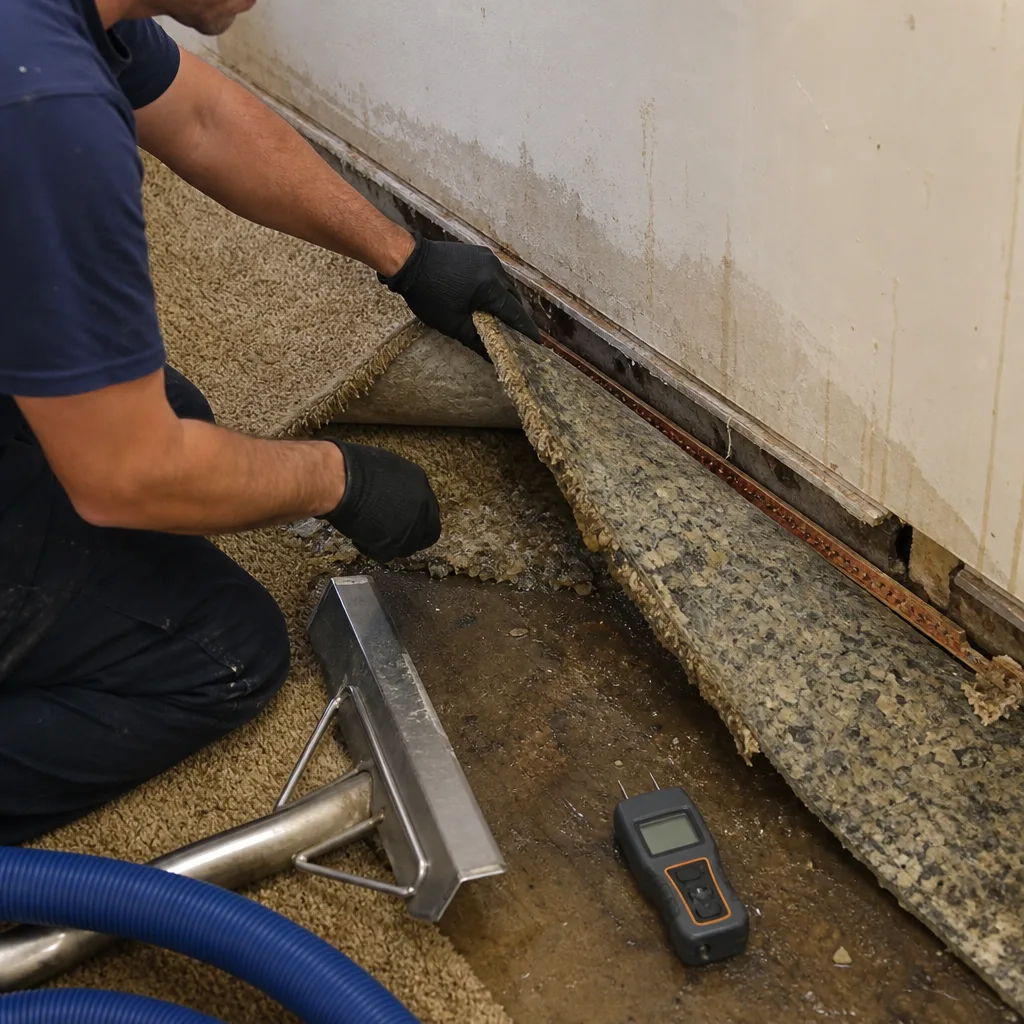
We start with a visual inspection plus moisture mapping. Thermal imaging cameras find cold wet spots behind plaster. Hygrometers and penetrating moisture meters give us actual wood and plaster moisture content across every affected wall.
Containment Setup
We build containment barriers with 6-mil poly sheeting and negative air pressure so that mold spores are pulled out of the space and exhausted through HEPA-filtered air scrubbers. In a Central Harlem brownstone, this matters more than in an open-plan loft: adjacent units are inches away through party walls.
Source Removal
We cut out contaminated horsehair plaster, remove saturated lath, and bag all debris inside the containment zone. No drag-through-the-house disposal. In pre-war buildings, this often means carefully cutting around original moldings and trim the owner wants to salvage.
Structural Drying
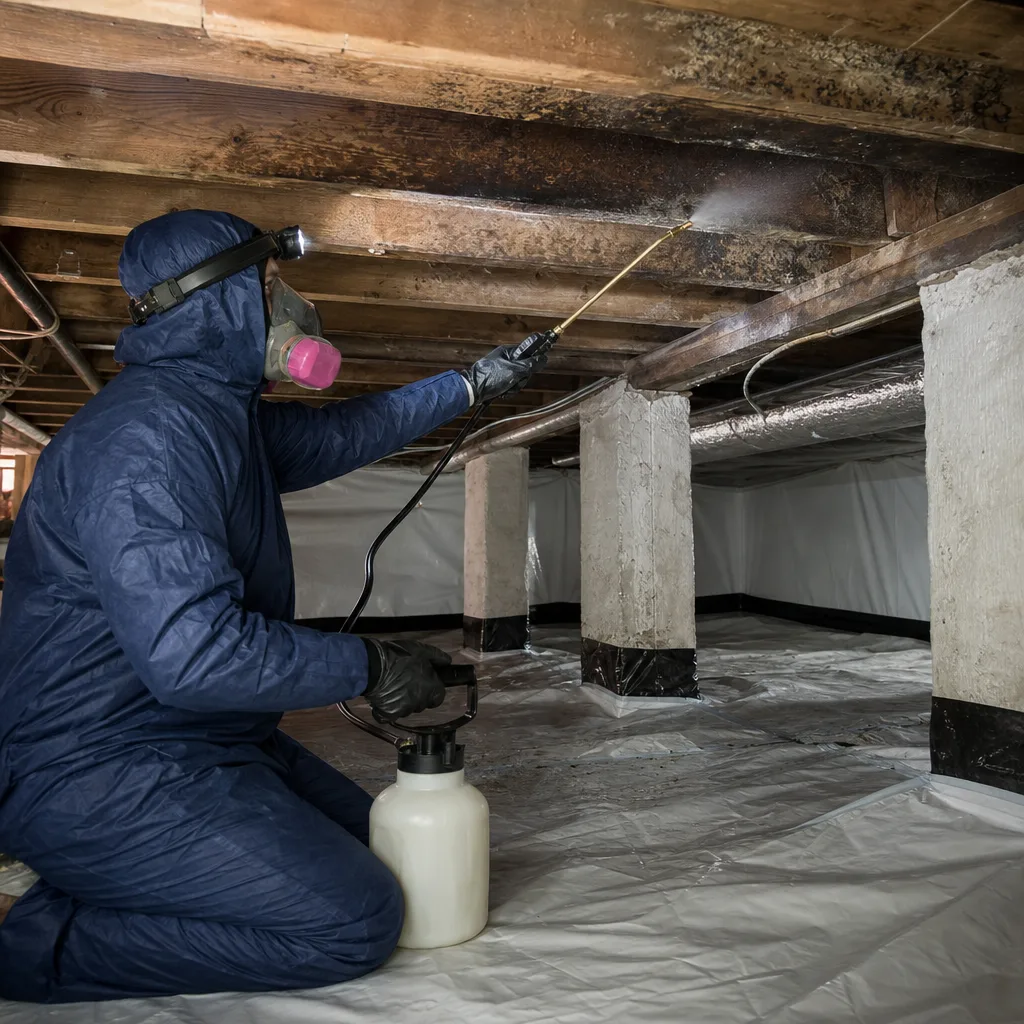
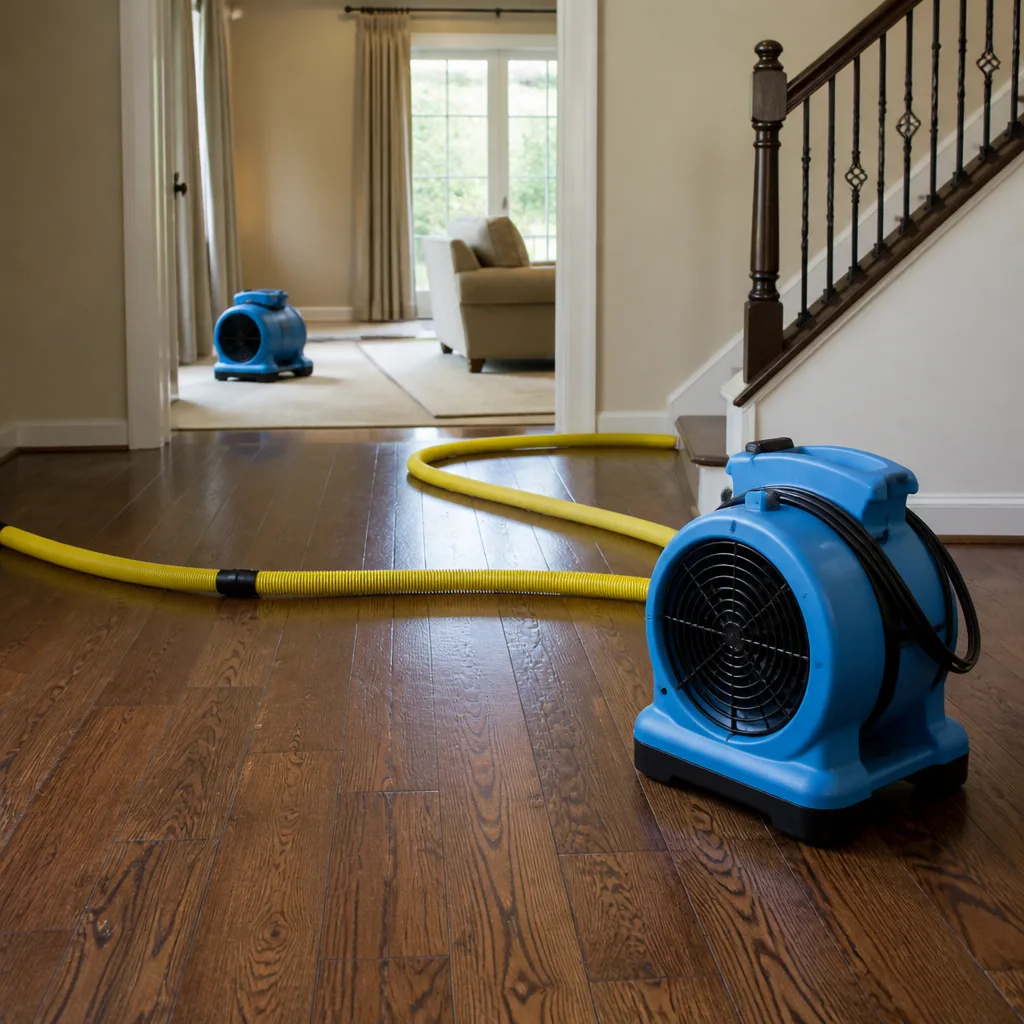
Dri-Eaz dehumidifiers and XPOWER air movers get placed to drive moisture out of old-growth timbers and masonry. Daily readings are logged. We don’t stop until every surface reads below 15% moisture content.
Cleaning & Sanitization
HEPA vacuuming on every surface inside containment. Antimicrobial treatment on remaining framing and plaster. Air scrubbing continues until spore counts are at background levels.
Clearance Testing & Restoration
We bring in an independent third-party to run clearance air samples. Post-remediation verification proves the space is safe. Then we rebuild: new drywall where appropriate, replastering where the building calls for it, paint, trim, and a moisture log in your hands.
Need Emergency Mold Remediation in Central Harlem Now?
Crews minutes away, answering live 24 hours a day. The sooner we start, the less it costs.
Working With Your Insurance Company
Mold claims are where insurance carriers get difficult. They look for reasons to call it a maintenance issue or pre-existing condition. We don’t let that happen through vague paperwork. From the first hour on your Central Harlem job, we document everything: photos of the water source, moisture readings in every affected room, the exact square footage of visible growth, and daily drying logs. That turns a disputed claim into a straightforward one.
We write industry-standard estimates using the same line-item software your adjuster uses. We speak directly with the adjuster, explain the scope in their language, and handle the back-and-forth. You pay only your deductible when the claim is covered. And if the carrier denies, our documentation gives you and your public adjuster what you need to push back.
What We Provide Your Insurer
- Thorough documentation of the loss
- Photos of all damage, room by room
- Moisture readings and drying logs
- A detailed, line-item scope of work
- Direct coordination with your carrier
Built for Central Harlem’s Loss Calendar
Central Harlem’s mold season doesn’t follow one clean calendar. It’s set by the building stock and the weather patterns that hit Manhattan. January and February bring deep freezes that crack supply lines in unheated English basements and against uninsulated party walls. Water sits behind plaster, and by the time the radiators warm the room, the mold is already feeding on the horsehair. March and April mean spring thaw and heavy rain against aging brick facades. Brownstone absorbs water like a sponge, and that moisture migrates inward behind wall cavities.
Summer is the season we get called for roof scupper failures and window lintel leaks during heavy convective storms. When the city’s aging combined sewer system backs up into cellar apartments along Lenox Avenue and Frederick Douglass Boulevard, the moisture creates mold conditions in as little as 48 hours. Fall brings nor’easter season, and older flat tar-and-gravel roofs on brownstones start leaking along parapet walls. The pattern is consistent: water enters, moisture stays, mold grows. We’ve built our dispatch and our drying protocols around that annual rhythm.
Mold Remediation Across Central Harlem’s Neighborhoods
Central Harlem isn’t one uniform grid. The Mount Morris Park Historic District, running along Malcolm X Boulevard and Lenox Avenue around Marcus Garvey Park, is New York City landmark territory. We handle mold there knowing exterior changes, drainage work, and any structural repair tied to a leak needs LPC review on top of standard DOB permits. The St. Nicholas Historic District, west of St. Nicholas Avenue, has its own set of row house rules and its own building profiles: deep narrow lots, rear extensions where kitchens and baths got added in the 1920s, and original cast iron stacks serving multiple floors.
South of 125th Street toward Central Park North, you find the older tenements with six stories, shared stairwells, and basement mechanical rooms that haven’t been touched in decades. East toward Park Avenue and the Metro-North viaduct, row houses sit against commercial frontages where basement access is tight and our crews stage equipment carefully. Off Adam Clayton Powell Jr. Boulevard, the brownstones between 130th and 140th Streets share party walls that make containment setup a two-building conversation. We know these blocks. We know where the risers run, how the basements drain, and which buildings have had stack replacements and which haven’t.
Specialized Mold Remediation Services We Offer in Central Harlem
Mold Inspection & Testing
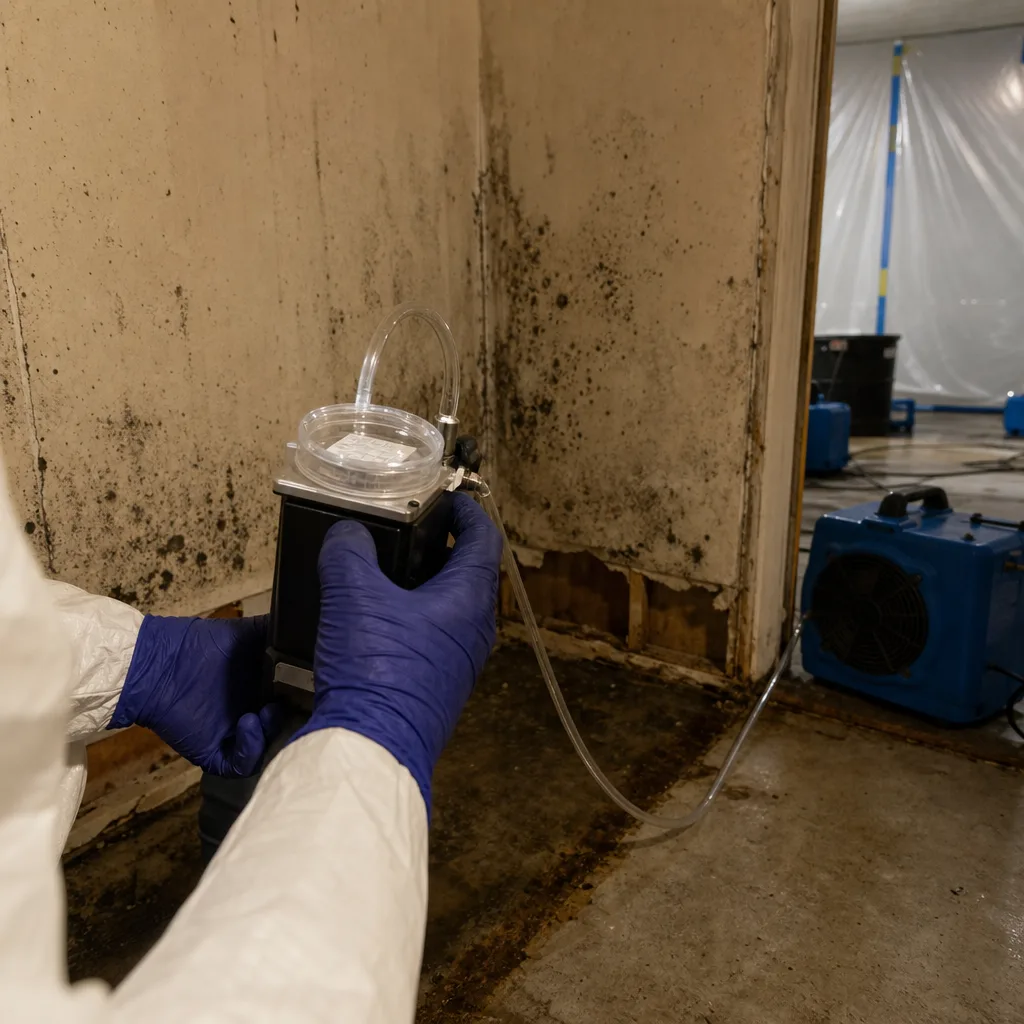
We inspect, map moisture, and take air and surface samples. In Central Harlem brownstones, we pay particular attention to party wall cavities, basement perimeter walls, and the space behind original plaster and wainscoting. You get a clear report: what we found, where it is, and whether it needs remediation now or monitoring.
Mold Removal
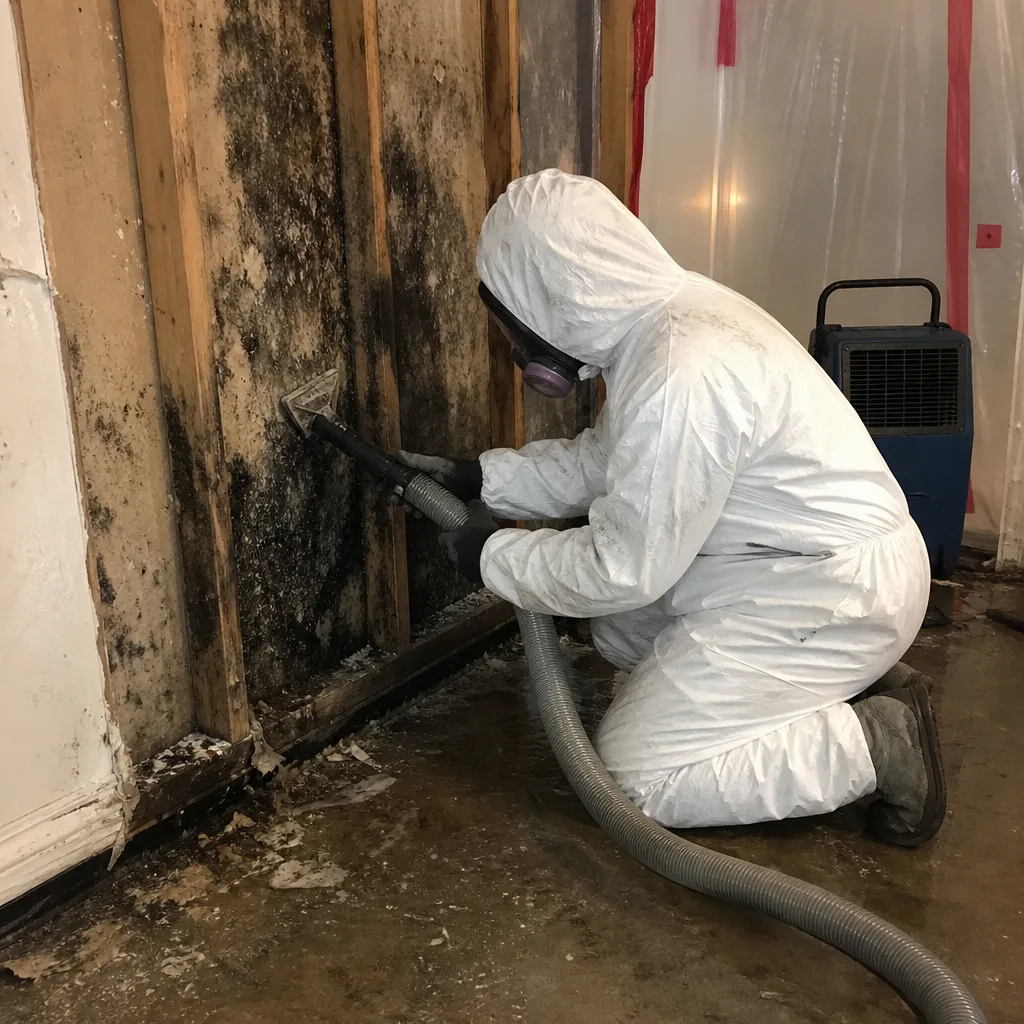
We cut out contaminated material and dispose of it under full containment. In pre-war buildings, that means removing horsehair plaster back to the lath or the studs, bagging it inside the sealed zone, and HEPA-vacuuming every surface before we touch anything else. If the mold is isolated to a small area and structural wood is sound, we remove only what’s needed and treat the rest.
Black Mold Remediation
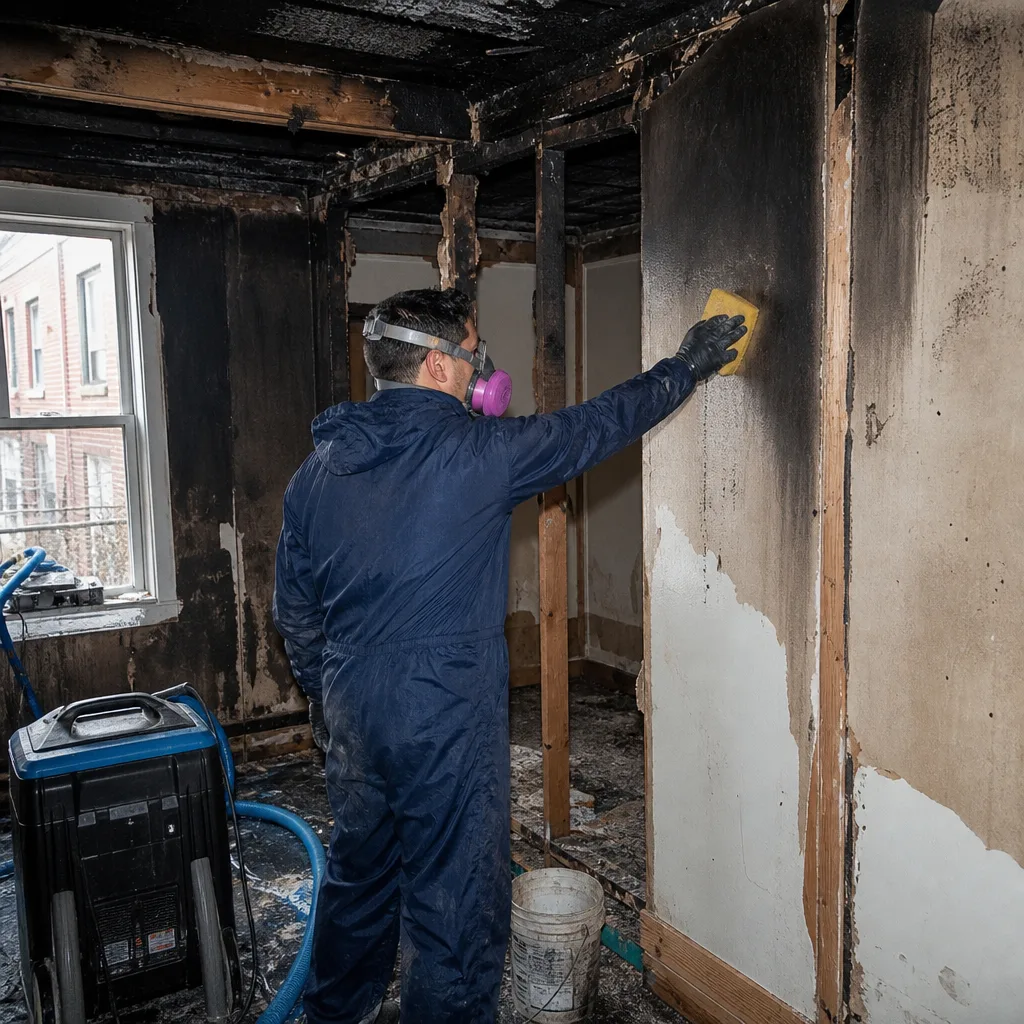
Stachybotrys, the black mold most people fear, grows on chronically wet organic material. We find it in Central Harlem behind leaking cast iron stacks, under English basement floors, and inside wall cavities where a shower pan failed years ago. Full containment is mandatory. Elimination is the only option, not painting over it. We treat and remove, then clear the air.
Air Quality Restoration
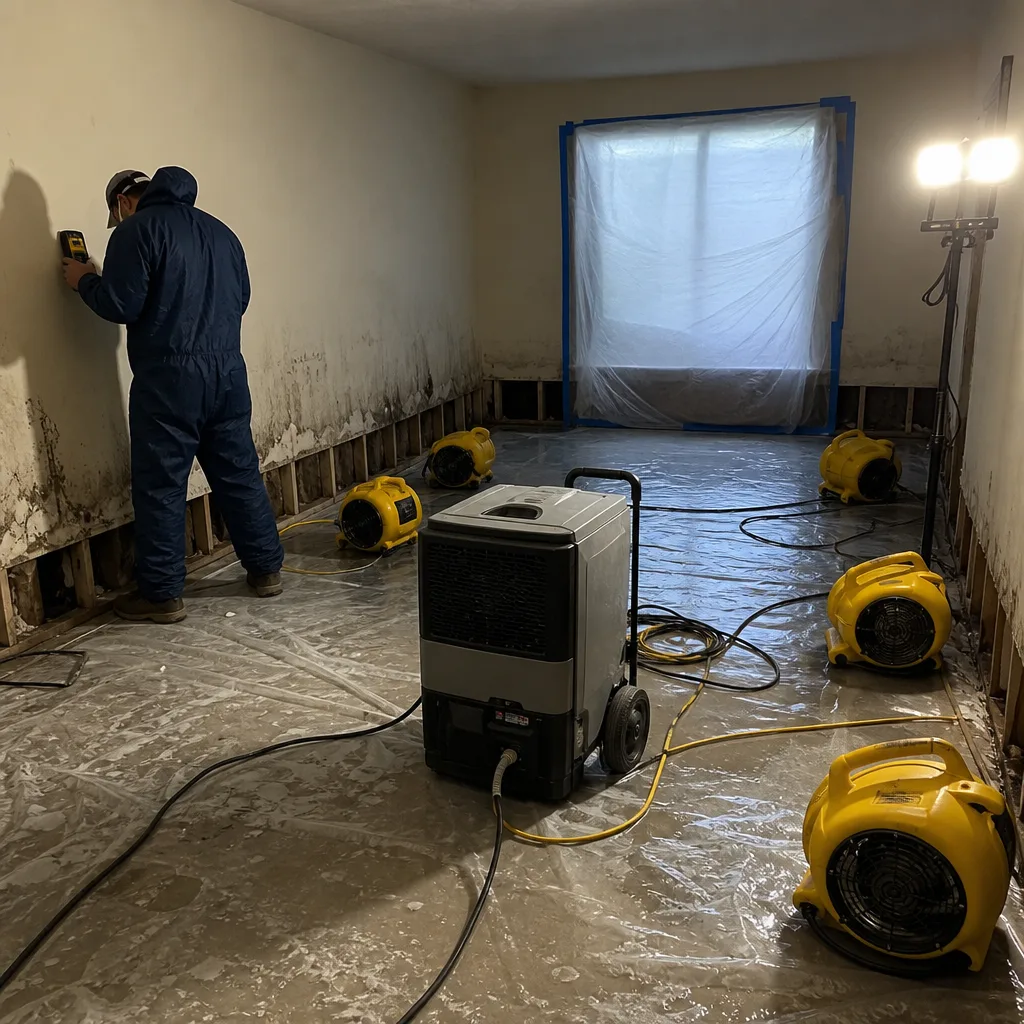
After mold is gone, the air has to be clean. We run HEPA air scrubbers and, when humidity is part of the problem, install supplemental dehumidification. In tight brownstone rooms with limited ventilation, we may recommend an energy recovery ventilator upgrade to keep indoor humidity below 50% year-round. That’s long-term air quality, not just a post-remediation snapshot.
Crawl Space Treatment
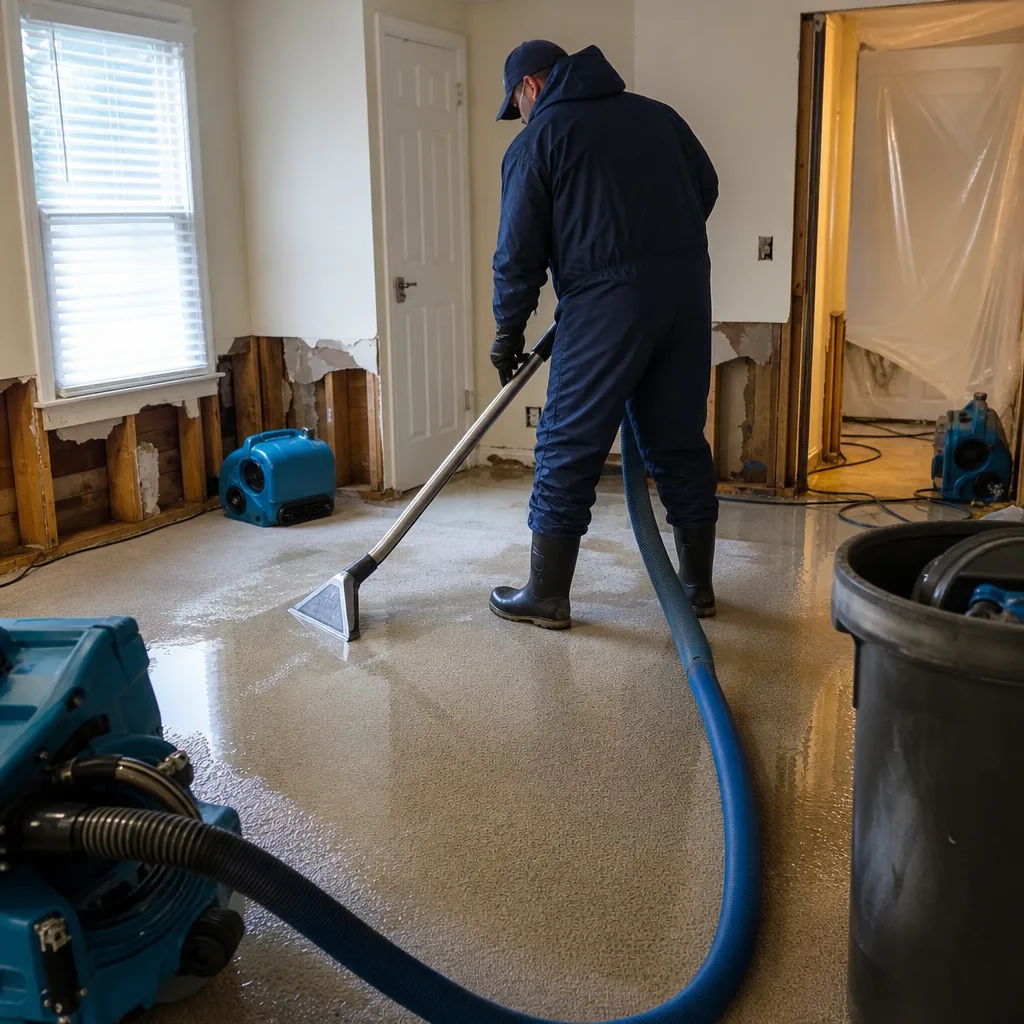
Most Central Harlem brownstones don’t have crawl spaces, but the English basements and shallow sub-floor areas under rear extensions function the same way. We treat these spots with antimicrobials, install vapor barriers where appropriate, and address drainage and ventilation so the space stays dry after we leave. If water is entering through the foundation walls, we identify the path and recommend the fix.
Moisture & Humidity Control
Mold needs moisture above all else. We install dehumidifiers, improve bathroom and kitchen exhaust, and correct grading or gutter issues where they contribute to high indoor humidity. In Central Harlem’s older buildings, a good humidistat reading in winter means nothing in summer. We set up controls that work through all four Manhattan seasons.
What happens when you call
- 1
A real person answersNo phone trees - you reach a local pro.
- 2
You get an upfront price rangeHonest numbers before anyone is dispatched.
- 3
A background-checked tech heads outLicensed & insured, dispatched right away.
- 4
You approve before work beginsNothing starts until you say go.
Mold Remediation Costs in Central Harlem, NY
A small, contained mold job in a Central Harlem apartment runs $1,800 to $3,000 when the growth is limited to one wall or ceiling and no structural repairs are needed. A larger wall-cavity removal with containment, air scrubbing, and plaster removal runs $3,500 to $6,500. Full basement or English basement remediation with cast iron stack replacement, structural drying, and reconstruction commonly falls between $8,000 and $18,000, depending on square footage and whether multiple units are involved.
What moves the price: how far the mold has traveled behind horsehair plaster, whether the source is a leaking stack that needs replacing, whether neighboring units share the affected wall, and whether LPC or DOB review delays the repair timeline. Insurance often covers mold remediation when it’s tied to a covered water loss like a burst pipe or a storm event. When mold results from long-term humidity or deferred maintenance, coverage can get denied. Our free visual inspection gives you a firm scope before you spend a dollar. Call (640) 221-3499 for an exact quote.
We Also Serve Cities Near Central Harlem
Floodline Restoration Co. runs Mold Remediation crews into Midtown West, Upper West Side, Midtown Manhattan, and Upper East Side. If your property sits just outside Central Harlem proper, call (640) 221-3499. Same 45-minute response commitment, same written scope, same live dispatcher.
Serving Central Harlem, NY - Our Local Coverage Area
We’re based in the Central Harlem area and know this community well. Use the map below to see our service coverage - if you’re nearby, we can almost certainly help.
Central Harlem Mold Remediation Questions, Answered
Does mold remediation in a Central Harlem brownstone require LPC or DOB permits?
Mold remediation itself typically requires no LPC or DOB permit unless the work includes structural changes to a landmarked facade or roof. When mold is tied to a leaking roof, parapet, or exterior wall in the Mount Morris Park or St. Nicholas Historic Districts, the repair portion of the job may need Landmarks Preservation Commission approval and Department of Buildings permits. We handle permit coordination and schedule work to avoid permitting delays where possible. Call (640) 221-3499 and we’ll tell you what your specific building requires.
How do you handle mold in horsehair plaster walls without gutting the apartment?
We remove only the contaminated plaster, cutting clean edges back to the lath or studs where moisture readings are normal. Horsehair plaster below the mold line can often stay. The key is moisture mapping first: we find exactly how far the water traveled before we open the wall. That way we gut only what’s necessary and preserve original trim, moldings, and the plaster character of your brownstone. Call (640) 221-3499 for a free visual inspection.
Can mold spread from our brownstone to the neighboring building through the party wall?
Yes. Central Harlem’s attached brownstones share brick party walls, and mold spores travel through open wall cavities, around floor joists, and through small gaps at beam pockets. We’ve handled several jobs where a leak in one English basement migrated moisture and mold into the adjacent brownstone. That’s why our scopes routinely include inspection of the neighboring unit before we file the estimate. Call (640) 221-3499 to discuss your situation.
Do you need to remove original cast iron drain pipes when doing mold remediation in an old Harlem building?
Only if the cast iron is the moisture source. A leaking or sweating cast iron stack that keeps feeding water into a wall cavity means the mold will return no matter how well we remediate. In many Central Harlem brownstones, original stacks have passed their service life. We can pinpoint leaks with camera inspection and pressure testing, then replace only the failing section. If the stack is sound, we leave it alone. Call (640) 221-3499 for an assessment.
What is the standard drying goal for structural wood and plaster in a pre-war Central Harlem brownstone?
We dry structural wood to below 15% moisture content, measured with penetrating moisture meters. Plaster walls should also read below 15% at the surface and in depth. In pre-war brownstones, old-growth timbers dry slower than modern lumber, so we run Dri-Eaz dehumidifiers and air movers longer and take daily readings. We provide you and your insurer a full moisture log before reconstruction begins. Call (640) 221-3499 for a same-day inspection.
How quickly can you get to a Central Harlem address?
Our commitment is 45 minutes from your call to our crew at your door. We maintain live dispatch around the clock. When you call at any hour, a real person answers, gets your address, and dispatches the nearest certified team. Call (640) 221-3499 now if you need us.
Do we need to leave our apartment during remediation?
For small jobs under containment, you can usually stay in unaffected rooms. For larger removals with heavy demolition, we recommend staying elsewhere while air scrubbers run and plaster debris is being removed. We’ll tell you honestly which situation you’re in, based on the scope, before work begins. Call (640) 221-3499 for guidance.
What should I do in the first 30 minutes after I find mold in my Central Harlem home?
Close the door to the affected room if possible, don’t touch or disturb the growth, and don’t run box fans or a vacuum on it. That spreads spores. Avoid breathing the air in that room and keep kids and pets out. Call (640) 221-3499. We’ll walk through what to check over the phone and get a crew moving to you. The first 30 minutes are about not making it worse.
Floodline Restoration Co. has served New York City since 2010 as a full-cycle restoration company. We started at the floodline and built our reputation on staying until the rebuild is done. The 90-Day Done Right Promise, our Keystone Standard, backs every mold remediation job in Central Harlem in writing. If it’s not done right, we make it right. No arguing.
Call (640) 221-3499 now for a free visual mold inspection in Central Harlem. A live dispatcher answers. A certified crew arrives. And you’ll have a written scope before any work starts.
Written by Curt Bowman, Owner at Floodline Restoration Co., serving New York City since 2010.