
Free visual inspection and a written scope of work before any mitigation begins - photos, moisture readings, and drying logs go in your claim file
The scope we write is the scope we bill. Anything new gets shown to you, in writing, before we touch it.
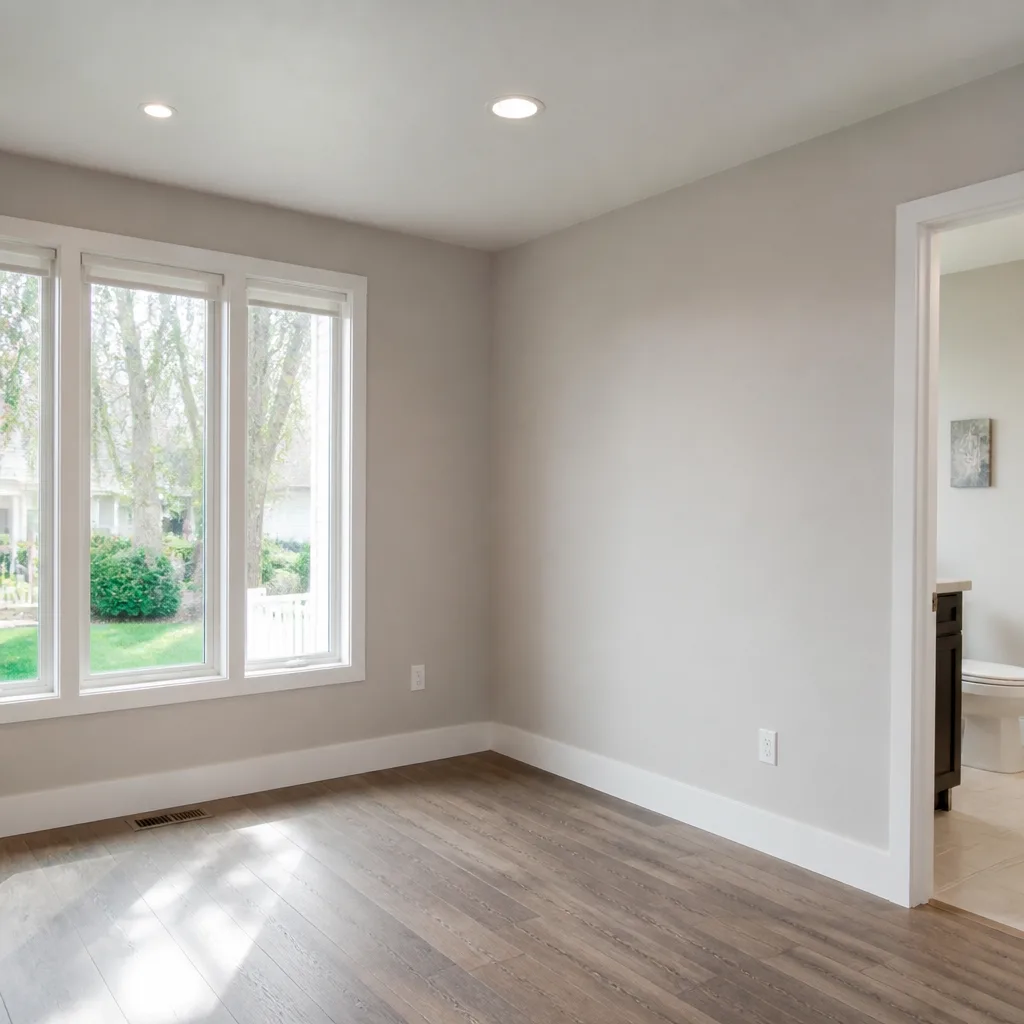
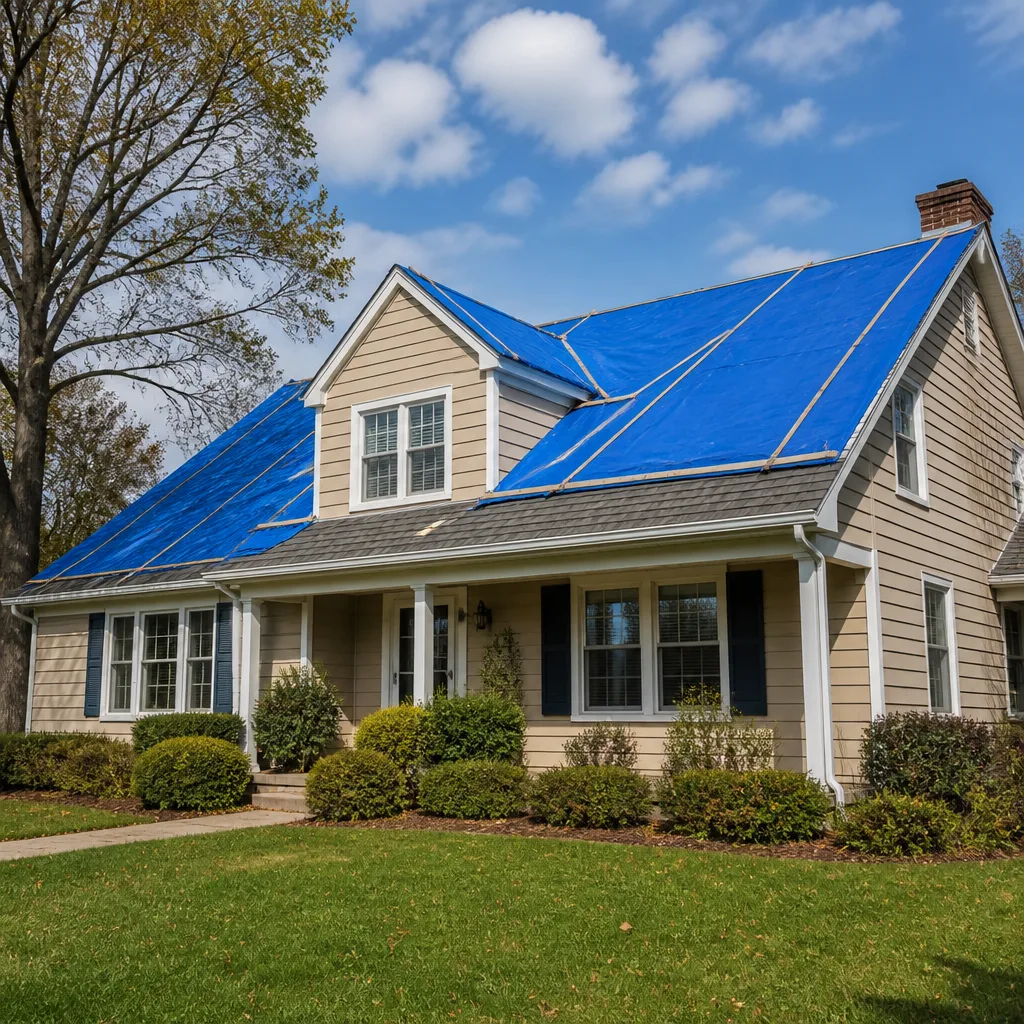
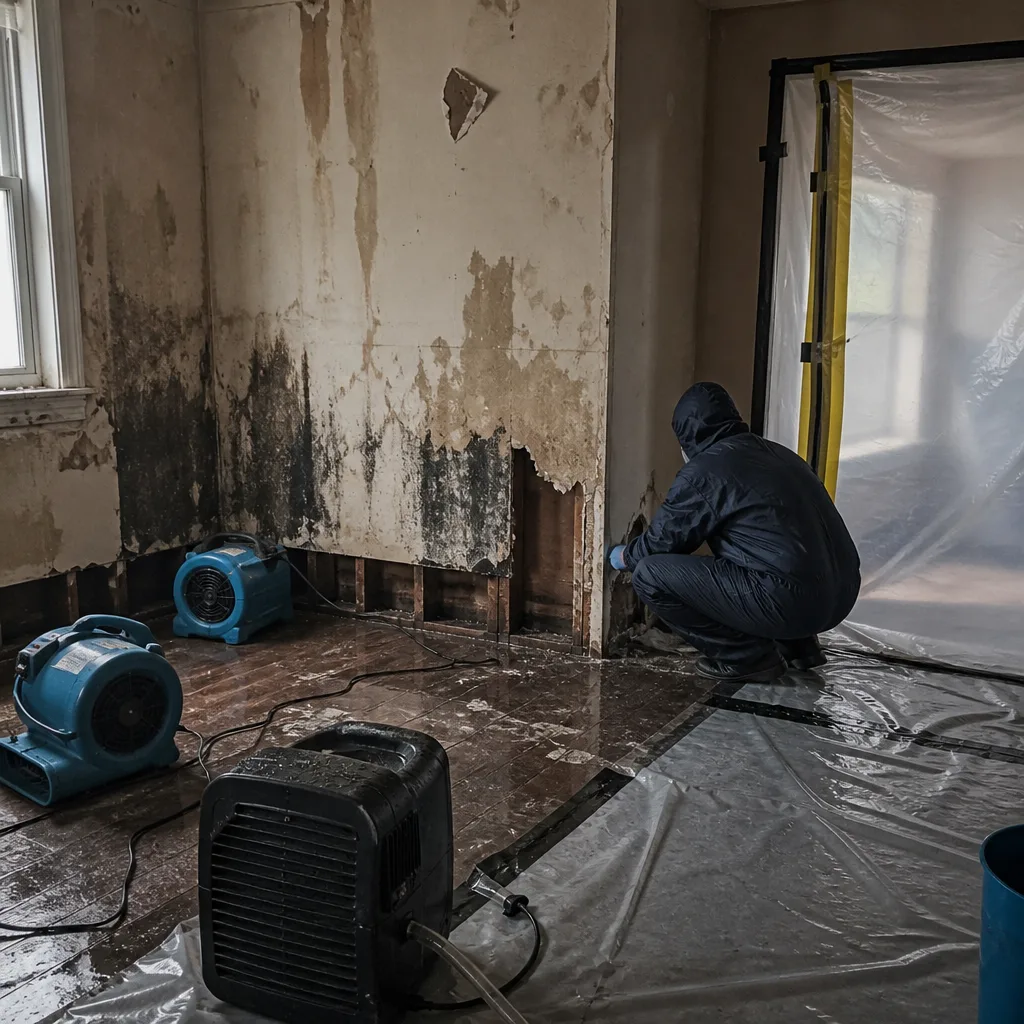 Before
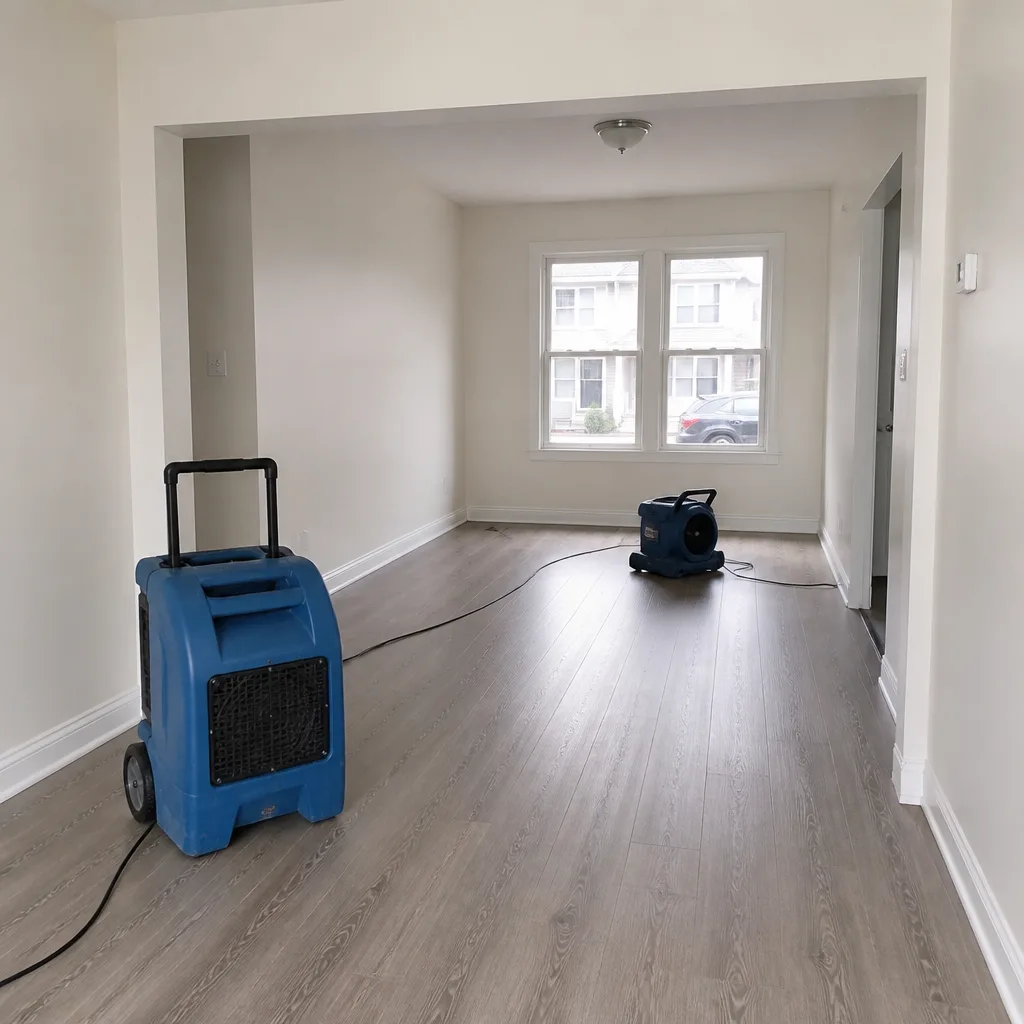 After
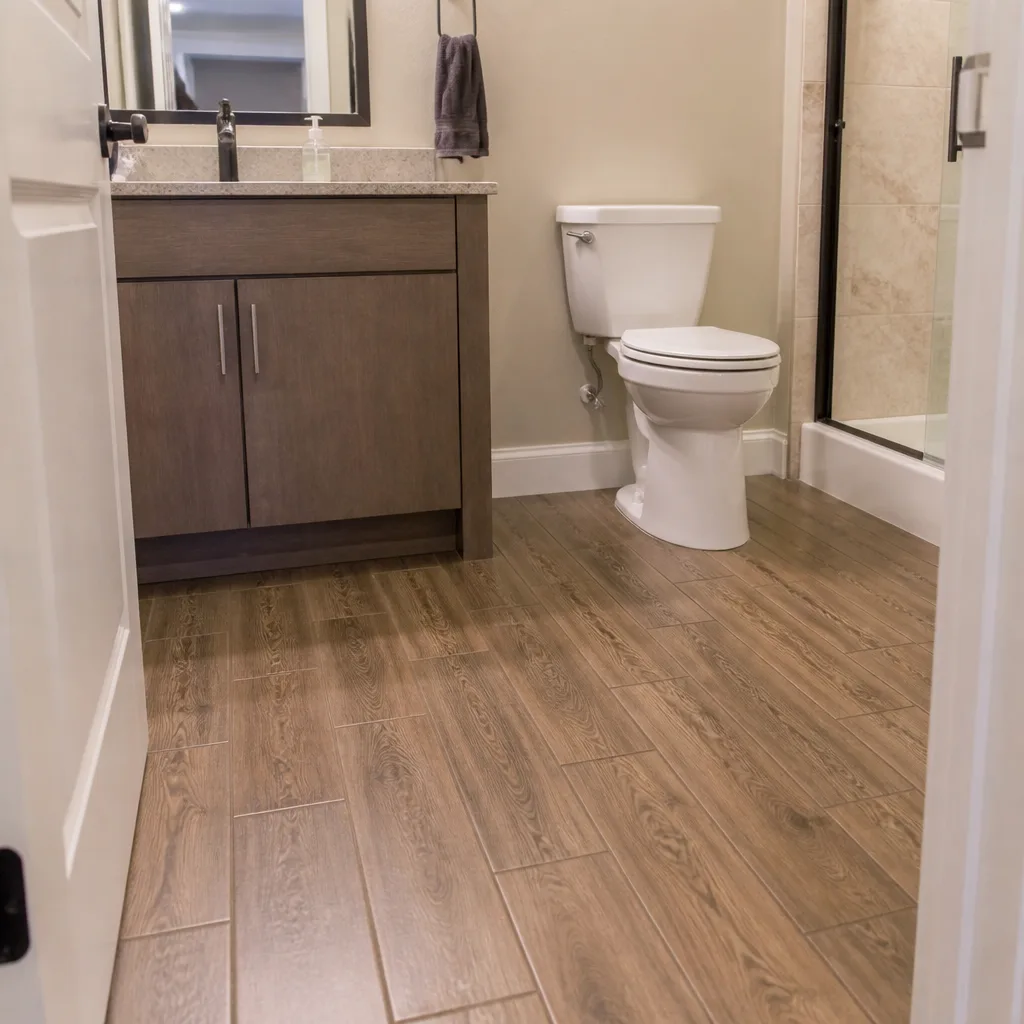
After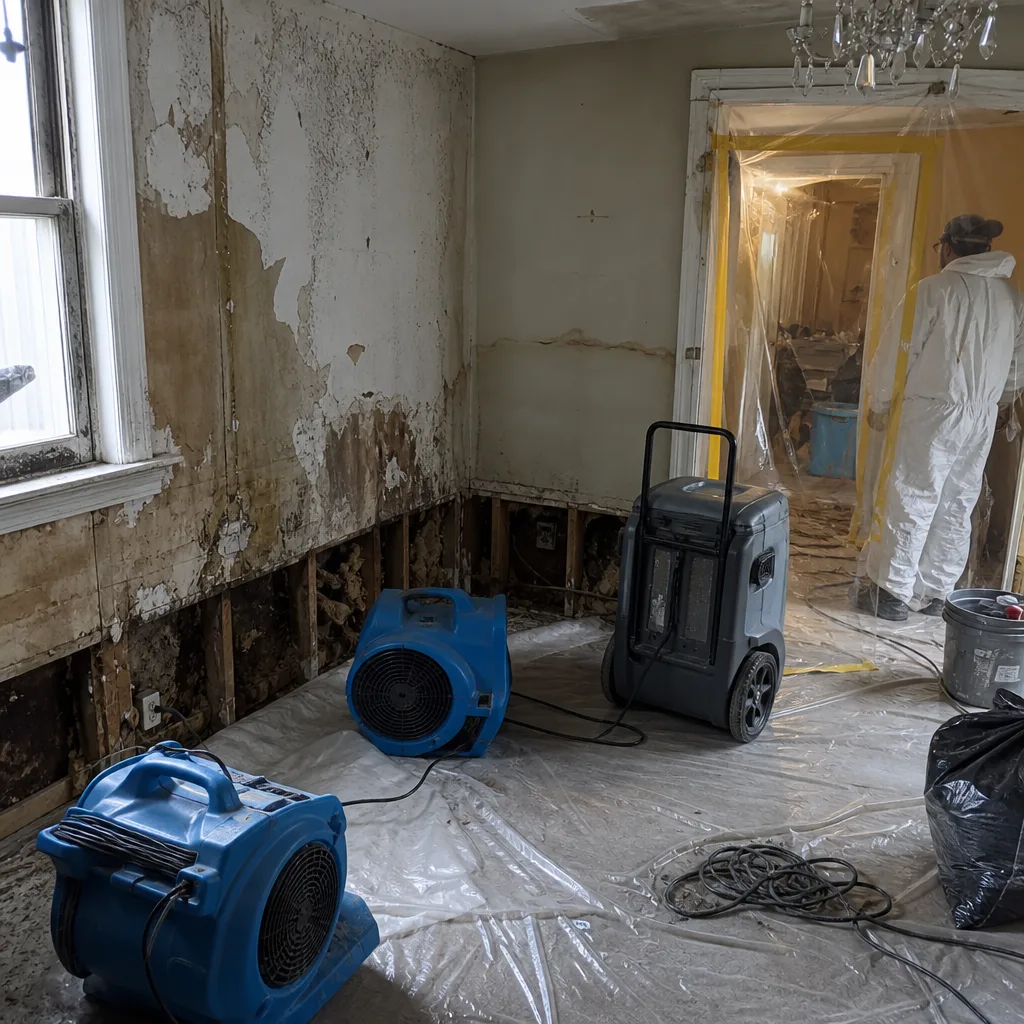 Before
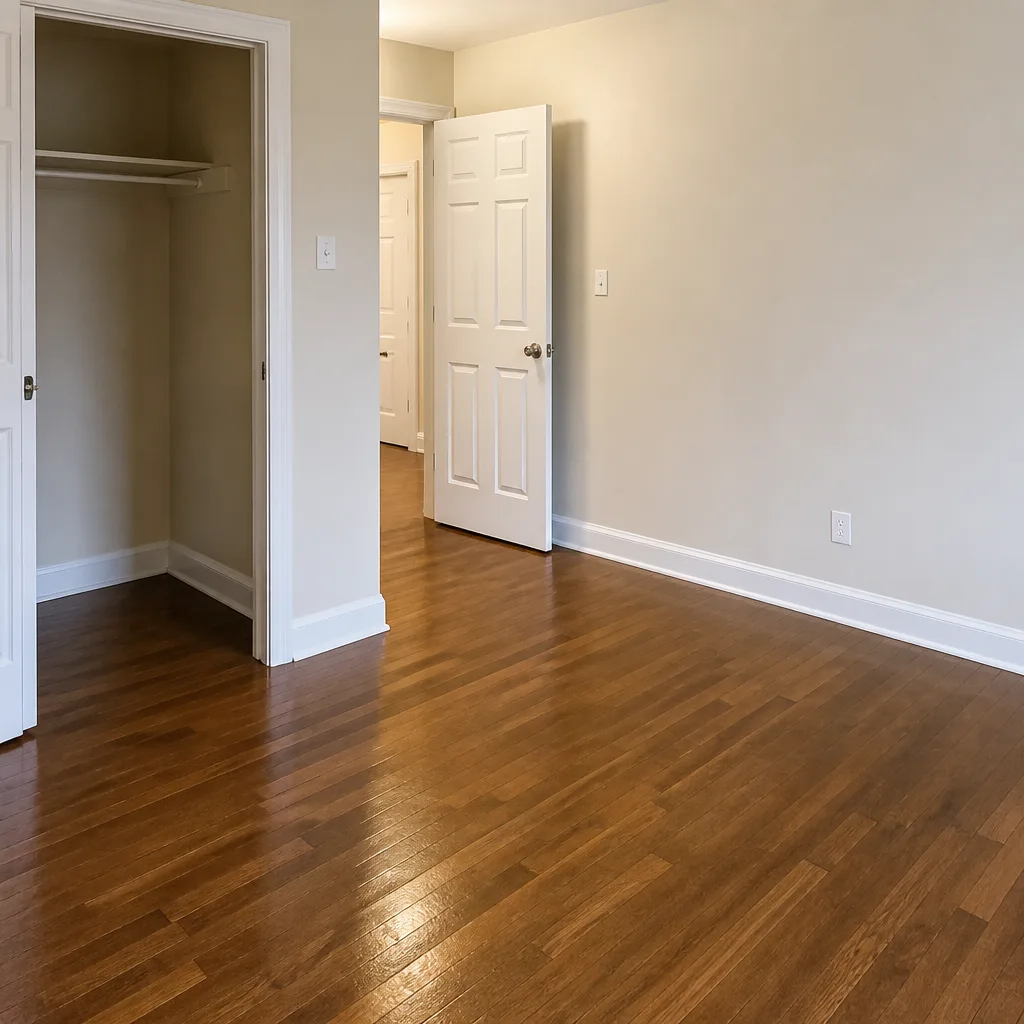 After
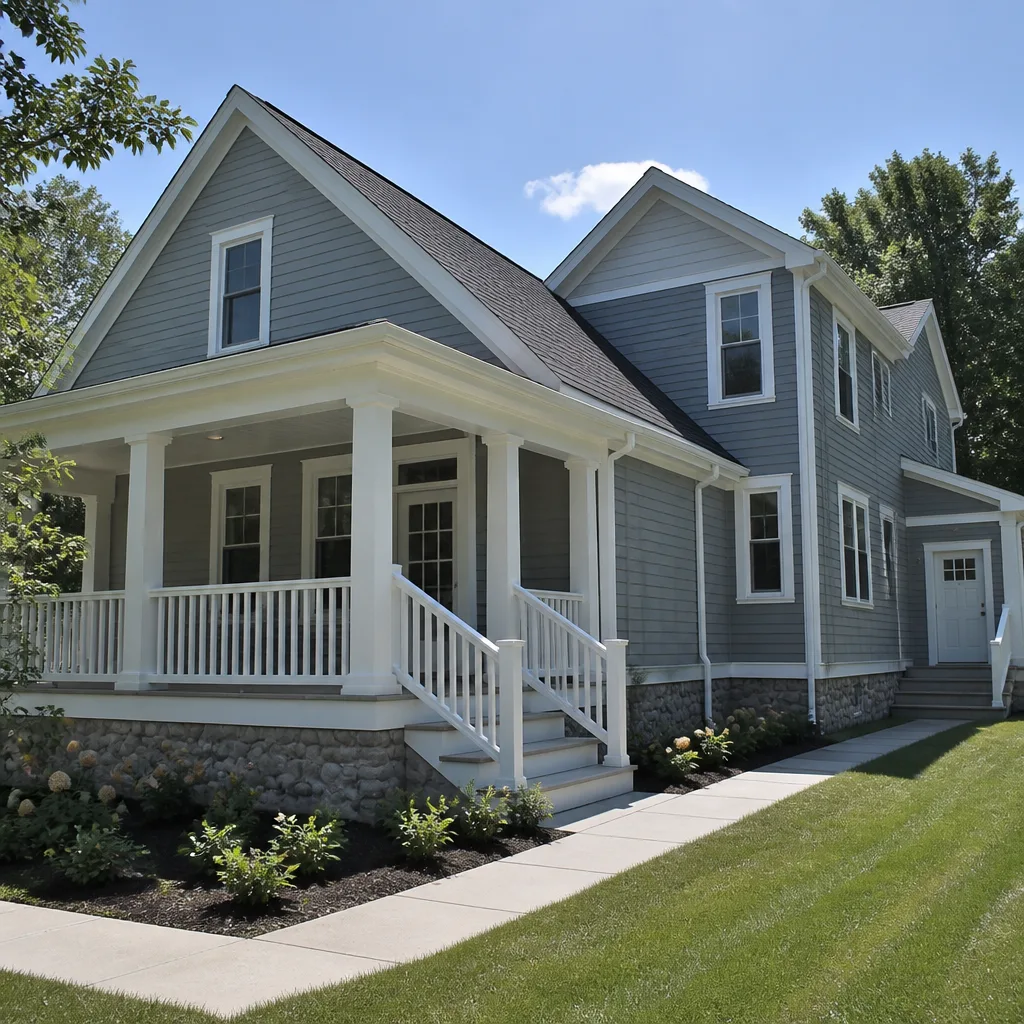
After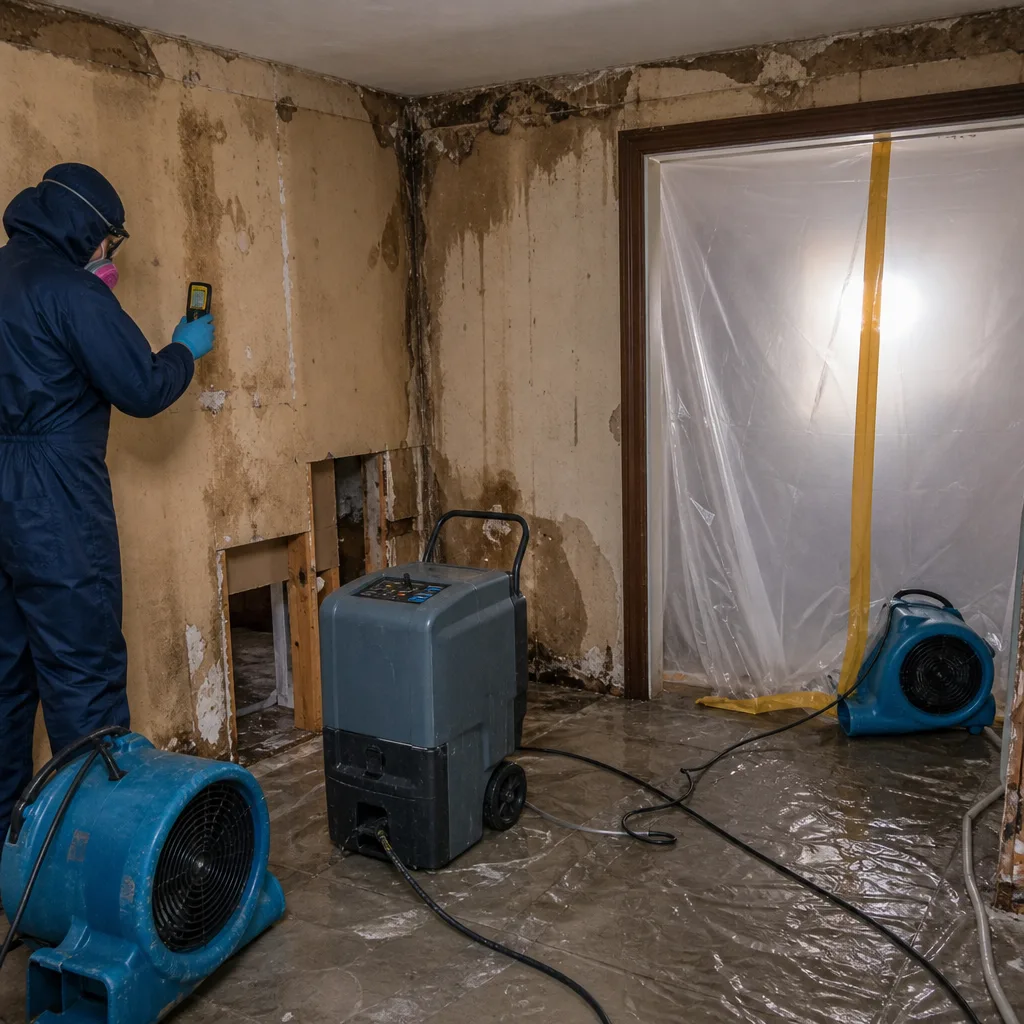 Before
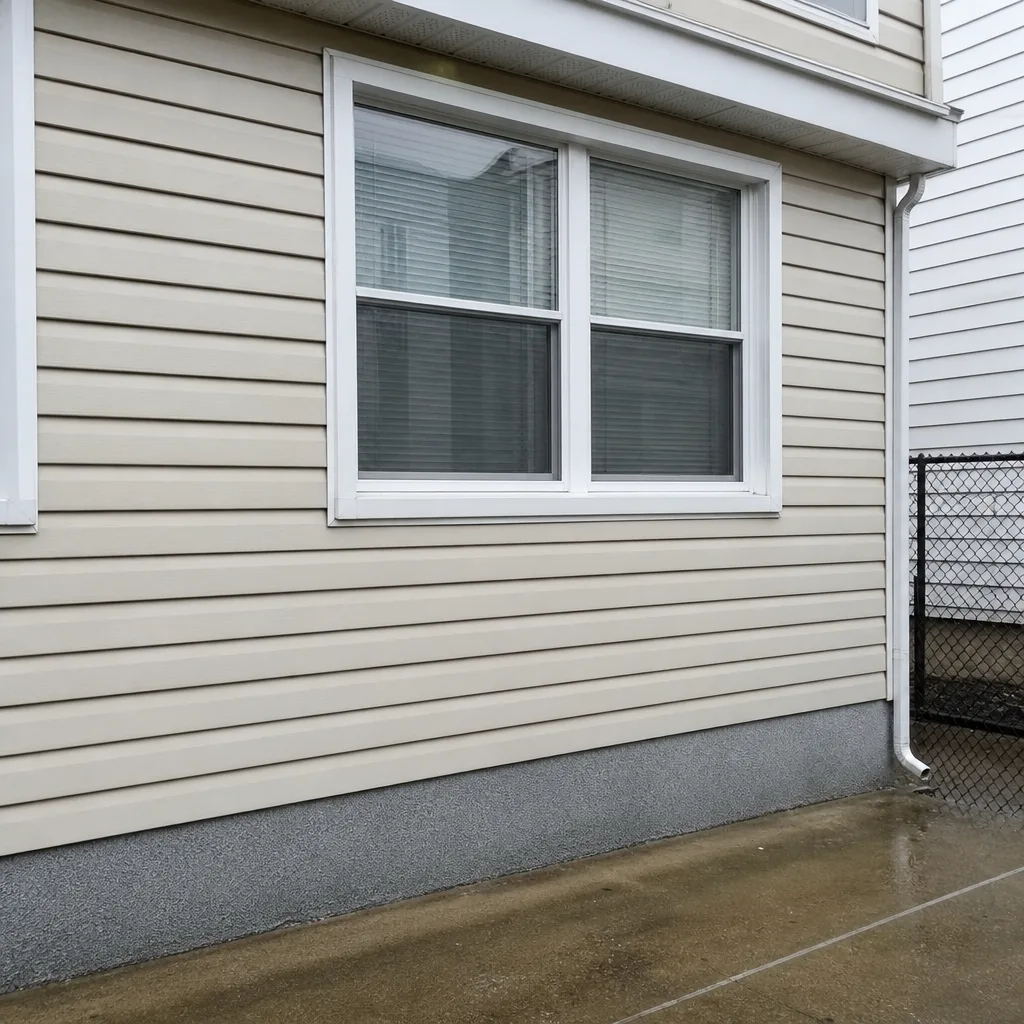 After
After24/7 Emergency Biohazard & Crime Scene Cleanup in West New York
A biohazard or crime scene in a West New York apartment building never stays contained to one unit. Shared walls, common hallways, and interconnected air shafts in these pre-war brick walk-ups let fluids and airborne pathogens move vertically through the structure before anyone notices. That’s why our crew answers live at (640) 221-3499 around the clock and dispatches into West New York neighborhoods immediately. The first call triggers a free visual inspection, and in most cases our certified technicians begin containment within hours, not days. The first few hours decide whether contamination spreads to units above and below the original incident.
Understanding Biohazard & Crime Scene Cleanup Severity in West New York Properties
Biohazard severity in West New York is almost always structural. A trauma event on a fourth-floor unit off Bergenline Avenue isn’t a single-room job. Blood and bodily fluid find their way through ceiling seams, electrical chases, and the shared plaster-and-lath wall systems common to buildings constructed between 1900 and 1950. We classify contamination using the same framework the IICRC uses for water and biohazard events: Category 1 is clean source, Category 2 is contaminated, and Category 3 is grossly contaminated. Crime scene and unattended death work falls into Category 3 by definition. When decomposition has begun, the fluids involved can carry bloodborne pathogens, and the air in the unit requires HEPA air scrubbing before anyone works without full PPE. In these tightly connected buildings, we map the vertical migration path first. If the event happened on the fourth floor, we’re walking the third and second floors with moisture meters and thermal imaging before writing a single line of scope. That’s the only way to prevent a contamination event from becoming a building-wide one.
Why West New York Property Owners Choose Floodline Restoration Co.
- 45-minute response commitment. When a biohazard event happens, our first call back to you comes fast. We aim for 45 minutes to a West New York address, with a live dispatcher on the line the whole time.
- 24/7 live answer. No automated system, no voicemail tree. A real person answers at (640) 221-3499 at 2 a.m. and can tell you what to do in the first hour before we arrive.
- IICRC-certified crews trained for trauma and biohazard work. Our technicians hold certifications in water damage (WRT), applied microbial remediation (AMRT), and fire and smoke restoration (FSRT), and follow the containment and decontamination protocols West New York’s dense buildings require.
- Free visual inspection with no obligation. We’ll walk the unit and the floors around it, show you what we found, and give you a written scope before any work begins.
- Direct insurance billing. We deal with the carrier, not you. You never play messenger between us and the adjuster, and photo documentation goes to them from the first hour.
- One crew from first containment to final repairs. The same team that sets up containment and removes biohazard material handles the cleaning, the sanitation, and any structural repairs. No handoffs, no inherited crews.
Our Biohazard & Crime Scene Cleanup Process
Inspection & Assessment
We walk the unit of the incident, then immediately walk the floors above and below if the building is a pre-war walk-up. We check shared wall assemblies, hallway air movement, and any sign of fluid migration through ceiling seams. The scope we write includes every affected area, not just the room where the event occurred.
Containment & Stabilization
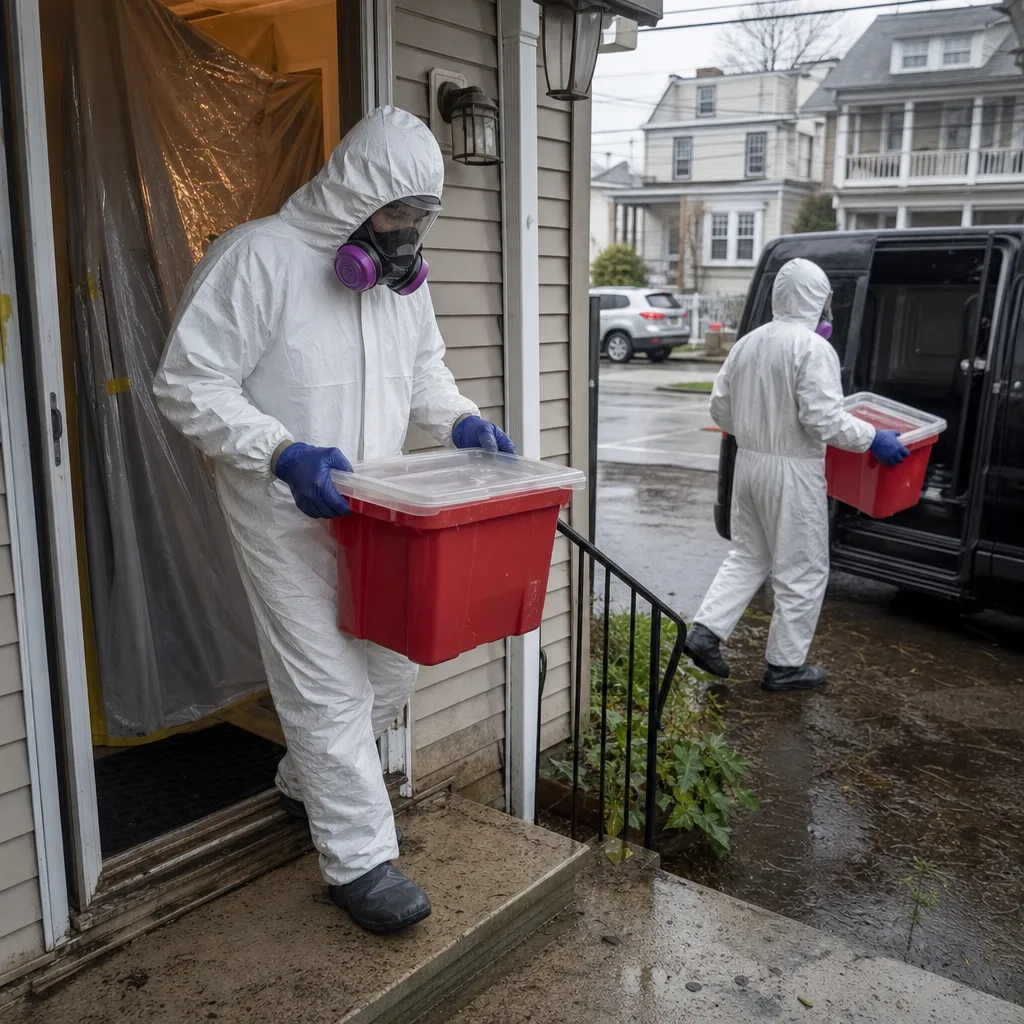
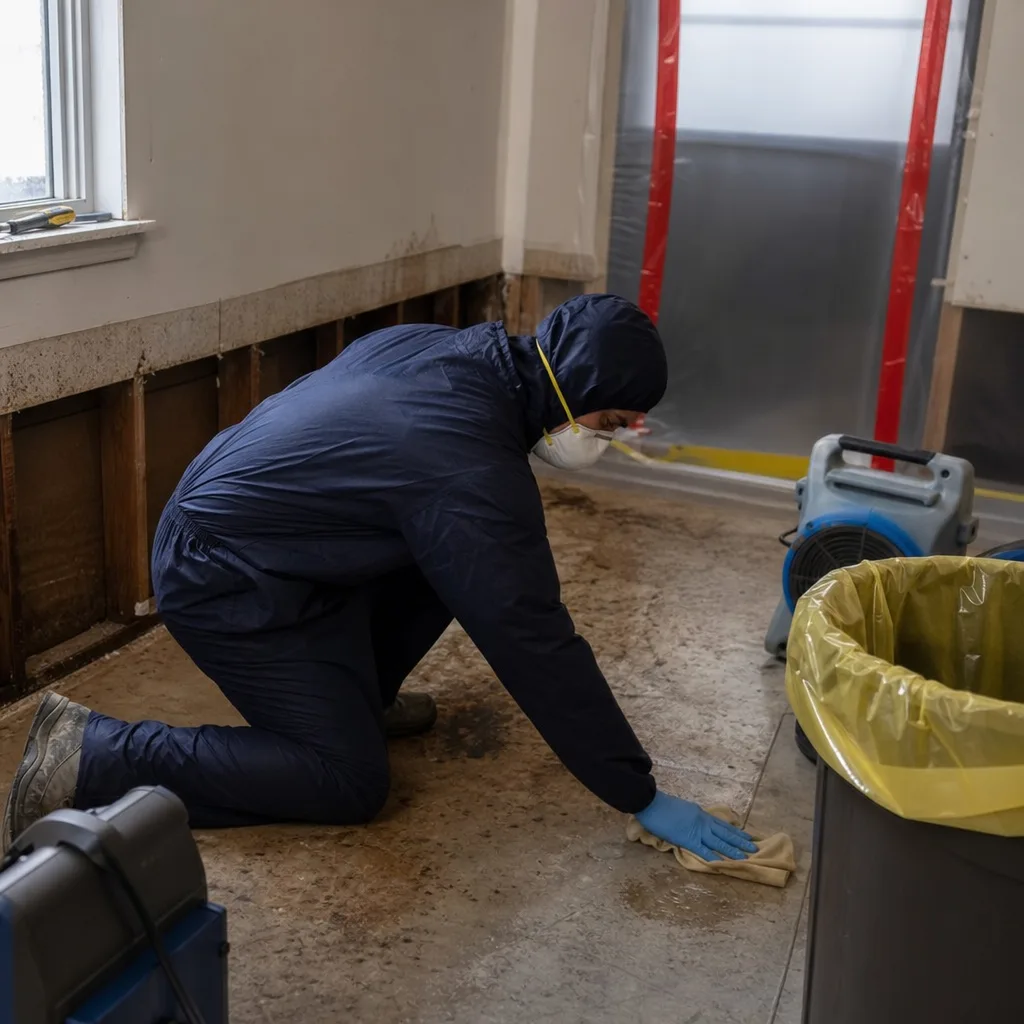
We seal the affected unit with 6-mil polyethylene containment and establish negative air pressure using HEPA air scrubbers. In connected West New York buildings, this prevents aerosolized pathogens from traveling into stairwells and neighboring units. Fluid loss is halted at the source, and Category 2 or 3 water from burst supply lines is extracted.
Drying & Dehumidification
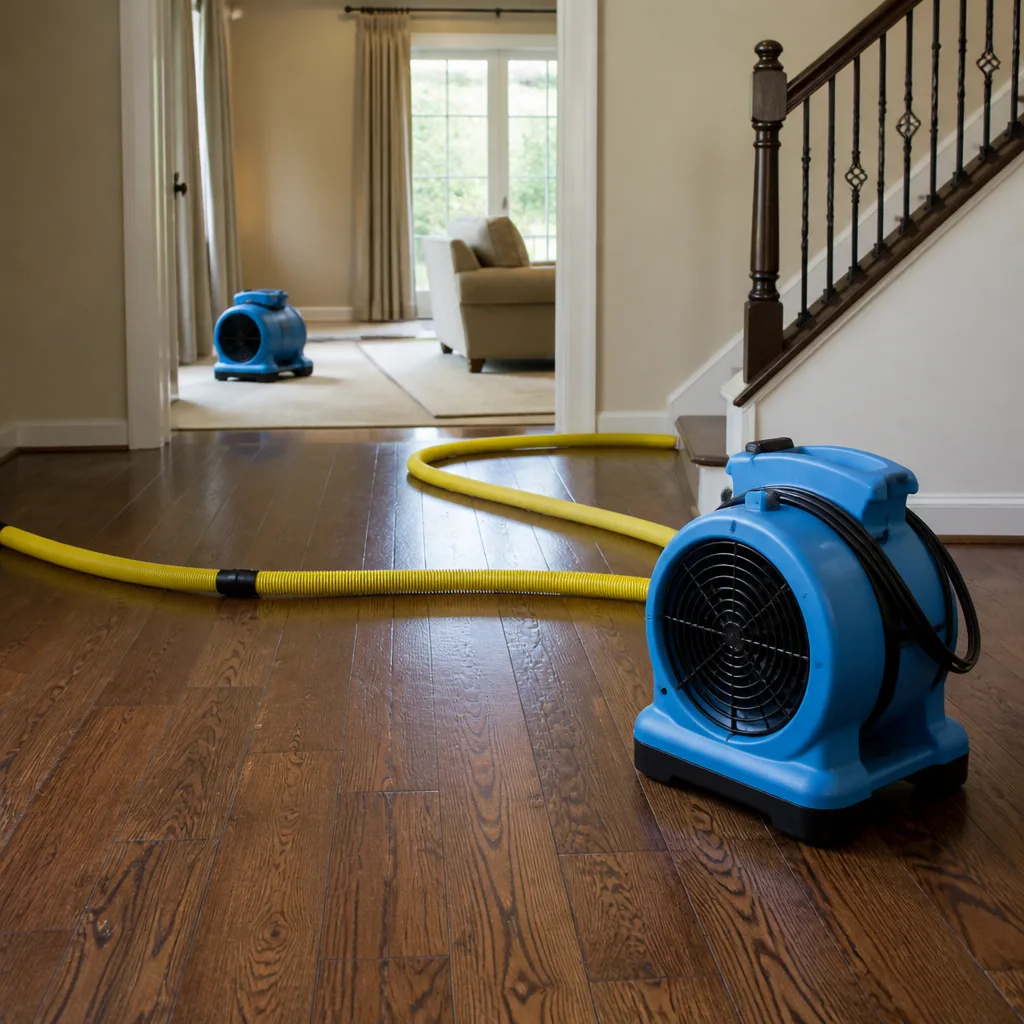
Professional-grade Dri-Eaz dehumidifiers and air movers dry the affected wall cavities and subflooring after extraction. Each unit gets daily moisture readings with a hygrometer and thermal imaging, logged until the dry standard set by the IICRC is met. We hand that log to you and your carrier.
Cleaning & Sanitization
All biohazard material is removed and disposed of under state regulations for medical and biological waste. We clean and apply an EPA-registered antimicrobial to affected hard surfaces, then treat porous materials that can be salvaged. Carpet and padding soaked with blood or bodily fluid are removed and bagged on site.
Odor & Pathogen Control
Where decomposition has occurred, we use hydroxyl generators and ozone treatment in sealed conditions to neutralize odor at its source. Air scrubbers run continuously during all work, and we re-test with air sampling in the units above and below before clearing the space.
Repairs & Restoration
If drywall, plaster, baseboards, or flooring were opened to find and remove contamination, our crew repairs them to pre-loss condition. The team that started the job finishes it. When we’re done, you get the written 90-Day Done Right Promise, our Keystone Standard, in your hand. If anything wasn’t done right, we come back and make it right.
Need Emergency Biohazard & Crime Scene Cleanup in West New York Now?
Crews minutes away, answering live 24 hours a day. The sooner we start, the less it costs.
Working With Your Insurance Company
Most West New York biohazard and crime scene cleanup jobs involve a homeowners or building policy, and many also involve a landlord’s policy and possibly a third carrier if another tenant’s unit was affected. We handle that. From the first hour we photograph every surface, every wall cavity we open, and every reading we take. Our line-item scope uses industry-standard pricing from Xactimate, which your adjuster already knows and trusts. We send the documentation directly to your carrier, coordinate with all adjusters on the claim, and bill the insurance company directly once the work is approved. You shouldn’t have to translate our work into insurance language. That’s our job. If the adjuster has questions about a moisture reading or why containment extended to the unit downstairs, we answer those questions ourselves.
What We Provide Your Insurer
- Thorough documentation of the loss
- Photos of all damage, room by room
- Moisture readings and drying logs
- A detailed, line-item scope of work
- Direct coordination with your carrier
Built for West New York’s Loss Calendar
Biohazard and crime scene events don’t follow a season, but the conditions that worsen them do. In January and February, West New York’s aging galvanized and cast-iron supply lines freeze and burst during deep cold snaps, sending Category 2 and Category 3 water through shared plaster-and-lath walls. An unattended death discovered during a winter freeze is frequently accompanied by water damage that has been wicking through the building for days before anyone called. In spring, the steep Palisades grade inland sends heavy runoff hard against older building foundations, creating basement moisture in the same buildings where a biohazard event may have occurred on an upper floor. Summer brings thunderstorms and flash flooding along the Hudson River waterfront, leaving ground-floor units in FEMA-designated flood zones damp and vulnerable to mold growth even after the biohazard itself has been mitigated. Late summer and fall, when apartments sit closed with higher humidity, is when odors from an earlier incident can return if antimicrobial treatment wasn’t thorough. Our crew knows this calendar. We’ve worked every month of it in West New York.
Biohazard & Crime Scene Cleanup Across West New York’s Neighborhoods
West New York is not one building type. The response on Bergenline Avenue, where storefronts sit under four stories of apartments, is different from the response in a Hudson River waterfront high-rise, where a single unit’s biohazard event ripples through HVAC risers rather than open window shafts. In the dense inland blocks between Bergenline and Park Avenue, we typically access units through narrow stairwells and must run containment negative-air machines off 15-amp circuits from adjacent units. In the pre-war walk-ups near Miller Park and along 60th Street, interconnected air shafts between buildings mean we seal windows and vents before starting work, because odors can travel horizontally between buildings that share a wall. In the Port Imperial and River Road corridor, newer towers carry modern mechanical systems but sit in the flood zone, so a biohazard event in a lower level often adds floodwater to the equation. Along Kennedy Boulevard East, we frequently coordinate with landlords who own multiple contiguous buildings, and the scope of a job extends past the first address.
Last fall we were called to a fourth-floor unit in the dense inland blocks off Bergenline Avenue after an unattended death. Before writing the scope of work, our techs walked the second and third floors with moisture meters and found Category 2 water from a burst galvanized line had already wicked through the shared wall assembly. We set up containment on all three floors, ran antimicrobial treatment on the affected plaster, and coordinated with the landlord and three separate adjusters to keep the pre-loss condition intact.
Specialized Biohazard & Crime Scene Cleanup Services We Offer in West New York
Crime Scene Cleanup
A crime scene in a West New York walk-up often extends beyond the room where the event took place. Blood spatter travels, and in a pre-war building it can travel through the seams. We contain the unit, test the walls and floors around the scene, and remove all biohazard material before repairing surfaces to pre-loss condition. The scene is made safe, and then the space is made right.
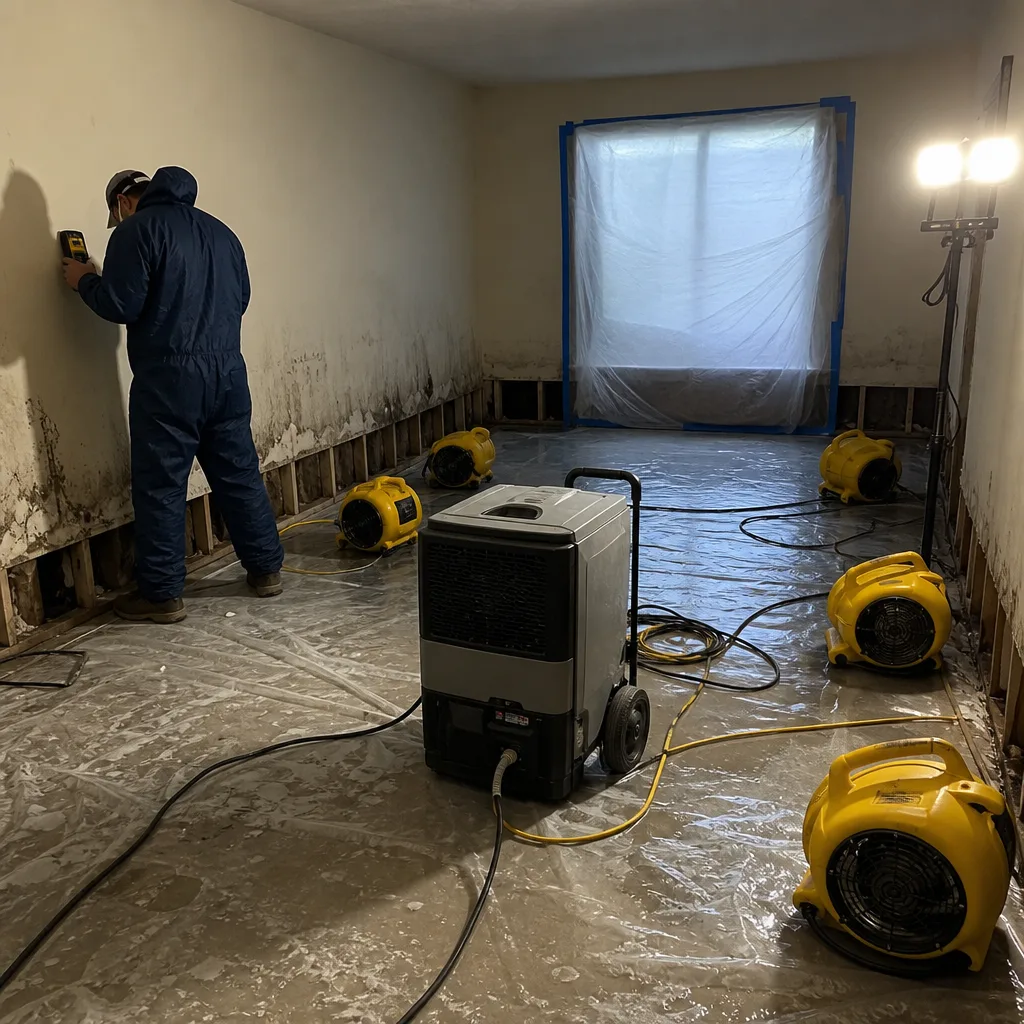
Trauma & Unattended Death Cleanup
Decomposition fluids migrate. In a West New York apartment, they can penetrate subflooring and dry into the joist bays that connect your unit to the one below. We remove affected materials, treat the structure with antimicrobials, and use hydroxyl generators to neutralize odor at its source. If the event occurred in a unit off Bergenline Avenue, we walk the ceiling of the unit below before we ever write the estimate. That’s the only honest way to do this work in these buildings.
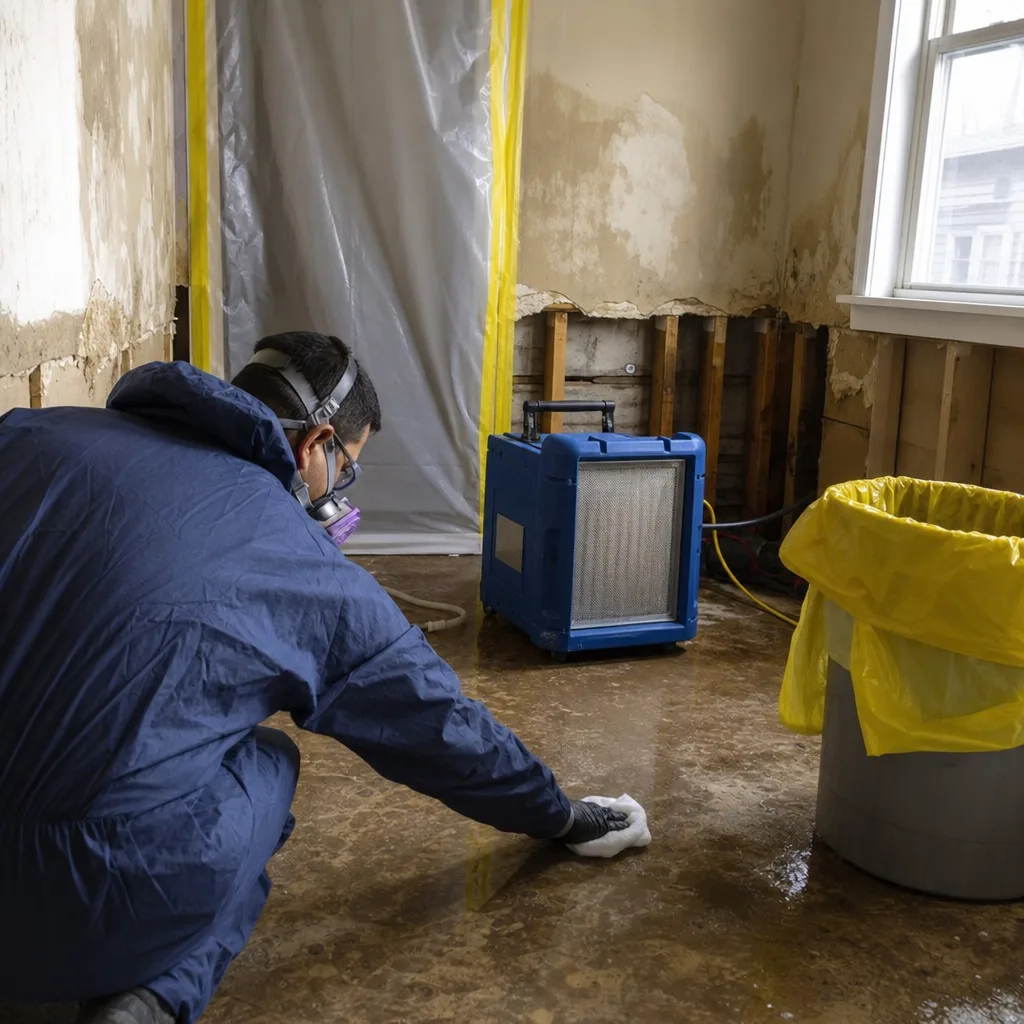
Hoarding Cleanup
Hoarding cleanup in a West New York apartment is a coordination job as much as a cleaning job. Stairwell access limits what can be removed per trip, and the load-bearing capacity of older floors must be respected. We work with the tenant, the family, and the landlord to sort, remove, and clean, always preserving anything with legal or personal value before disposing of the rest. Then we deep-clean the unit and treat for odors and pests.
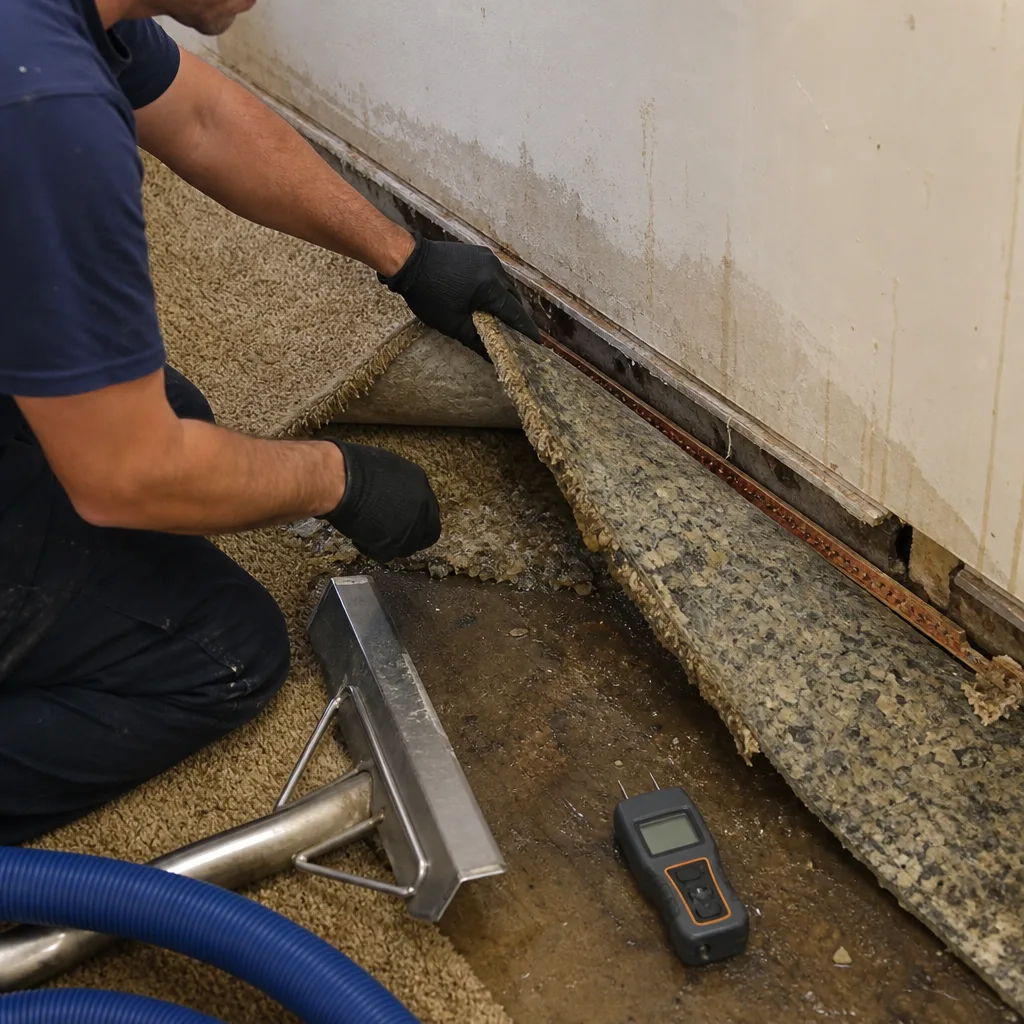
Blood & Bodily Fluid Cleanup
After an unattended death or traumatic event, blood that has dried into wood subflooring or plaster is not cleaned by wiping the surface. The porous material itself must be removed or treated in place with an EPA-registered antimicrobial. In West New York, our Biohazard & Crime Scene Cleanup team tests the affected area, removes what must be removed, and salvages what can honestly be salvaged. No shortcuts, no surface-only cleaning.
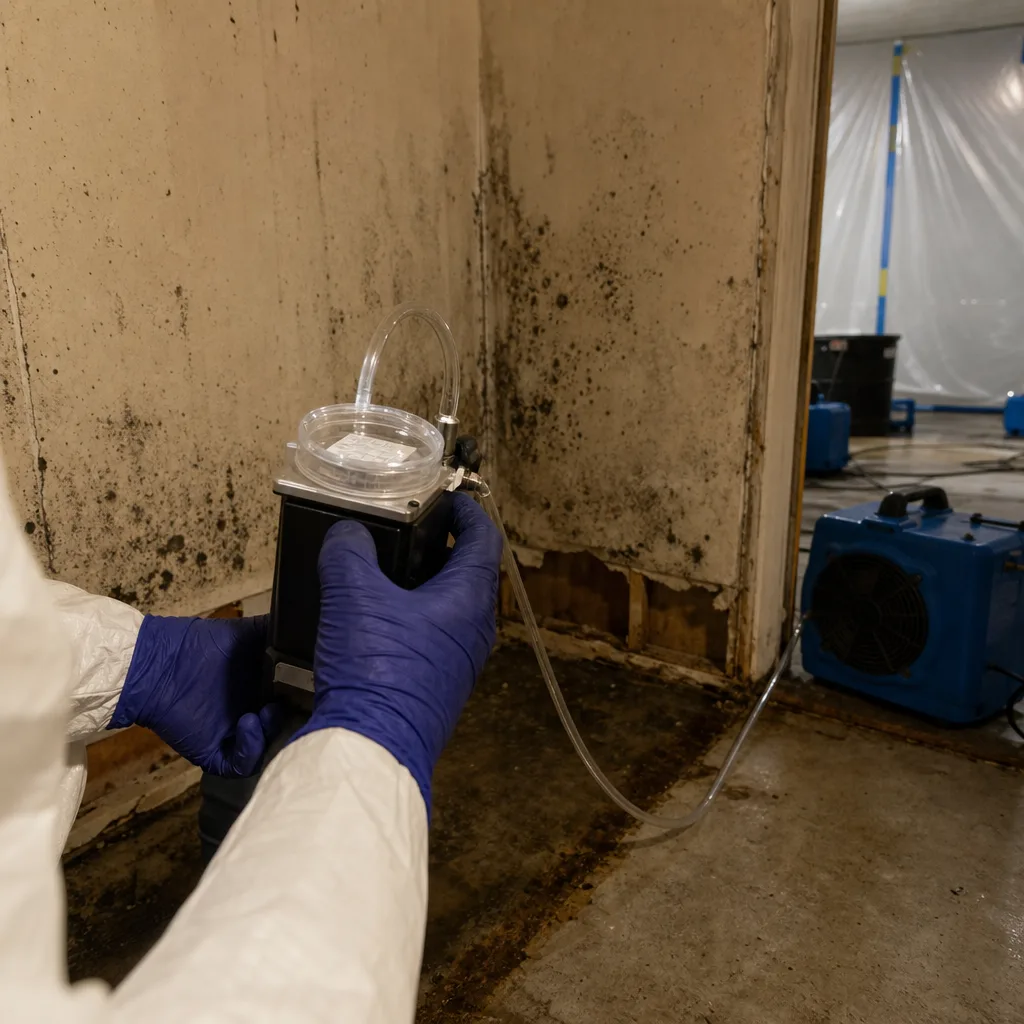
Infectious Disease Disinfection
When a tenant has a serious communicable illness, or a death involves infectious disease, the unit must be disinfected to IICRC standards before anyone re-enters. We use EPA-registered disinfectants with a dwell time of at least ten minutes on all hard surfaces, and HEPA vacuum all soft surfaces. In a connected West New York building, we recommend testing the shared hallway and stairwell rather than assuming the contamination stopped at the door.
What happens when you call
- 1
A real person answersNo phone trees - you reach a local pro.
- 2
You get an upfront price rangeHonest numbers before anyone is dispatched.
- 3
A background-checked tech heads outLicensed & insured, dispatched right away.
- 4
You approve before work beginsNothing starts until you say go.
Biohazard & Crime Scene Cleanup Costs in West New York, NJ
In West New York, a crime scene cleanup in a single apartment unit typically runs $1,500 to $4,000 when the contamination is contained to one room and the unit below shows no migration. An unattended death with decomposition fluids extending through the subfloor into the unit below usually falls between $4,000 and $10,000, depending on how many floor levels are involved and whether joist bays or shared walls require opening. Hoarding cleanup ranges from $2,000 to $8,000 based on the volume of material and the number of trips required for stairwell removal. Infectious disease disinfection for a single unit runs $1,000 to $2,500, with adjacent-unit air testing adding $300 to $600 per unit. These are honest ranges for West New York’s building stock. The fastest way to a firm number is a free visual inspection. We walk the unit, walk the floors around it, and hand you a written scope before any work is approved. Call (640) 221-3499 for a no-obligation inspection and a line-item quote.
We Also Serve Cities Near West New York
Our crews respond daily across West New York and the surrounding Hudson County towns, including North Bergen, Ridgefield, Weehawken, and Union City. The building types and loss patterns are similar in these communities, but the coordination is always local. If your building is within ten minutes of Boulevard East, a crew can reach you fast.
West New York Biohazard & Crime Scene Cleanup Questions, Answered
Does West New York require a permit for biohazard cleanup in a pre-war walk-up?
No permit is generally required for biohazard cleanup itself, but any structural repair that follows (opening walls, replacing subflooring, new drywall) may require a building permit depending on the scope. Our team handles the permit work as part of the job so you don’t have to chase the building department.
If a biohazard incident happened on my floor, do the units below me need to be tested for contamination?
In West New York’s pre-war buildings, yes, the units below should always be walked and tested. Decomposition fluids and blood can travel through ceiling seams and joist bays, and odors can migrate vertically through wall chases. We walk the floors below before writing the scope every time. If we find contamination there, containment extends to those units and their carriers are notified.
Can your crew work in a West New York building while other tenants are still living there?
Yes, and we routinely do. Proper containment with 6-mil polyethylene and negative air pressure keeps pathogens out of the shared hallways and stairwells. We schedule loud work during daylight hours and keep the containment zone clearly marked. Tenants in adjacent units can stay, and we’ll communicate directly with the landlord about the containment boundaries.
What category of water is involved if a decomposing body is found in a unit?
Decomposition fluids are always classified as Category 3 water, the same grossly contaminated category as sewage. That means any porous material the fluids touched (carpet, pad, some drywall, some subfloor) must be removed or treated in place with an antimicrobial, not just dried. Surface cleaning is not enough for Category 3 contamination.
How quickly can mold start on wet drywall after a biohazard incident in a West New York apartment?
Mold can begin growing on wet drywall within 24 to 48 hours in West New York’s climate, faster in the humid summer months when a unit sits closed. That’s why speed matters on any biohazard job where water is also present. Our 45-minute response commitment and same-day extraction prevent a biohazard event from becoming a mold remediation job too.
How fast can someone actually get here?
We aim to reach any West New York address within 45 minutes of your call. A live dispatcher answers (640) 221-3499 at any hour, and the crew you speak with is the crew that shows up. In most cases, containment begins the same visit.
Will my insurance cover biohazard and crime scene cleanup?
Most homeowners and building policies cover crime scene and unattended death cleanup as long as the loss is sudden and accidental and not excluded under the policy terms. We document everything from the first hour, bill your carrier directly, and handle adjuster communication on your behalf. If the policy has limits on biohazard coverage, we’ll show you the numbers in writing before you commit to anything.
What should I do in the first 30 minutes after discovering a biohazard scene in West New York?
Do not enter the area. Close the door to the unit if you can do so safely, keep other tenants away from the hallway, and call a professional crew. Do not try to clean blood, bodily fluids, or decomposition material yourself, and do not run air movers or fans in the space. Those spread aerosolized pathogens through floor seams and stairwells in connected West New York buildings. Call (640) 221-3499 and a live dispatcher will walk you through the next step.
Serving West New York, NJ - Our Local Coverage Area
We’re based in the West New York area and know this community well. Use the map below to see our service coverage - if you’re nearby, we can almost certainly help.
Call for Emergency Biohazard & Crime Scene Cleanup in West New York
If you’re dealing with a trauma scene, unattended death, or any biohazard event in a West New York property, call us now at (640) 221-3499. You’ll get a live person on the line, free inspection, a written scope before any work starts, and the 90-Day Done Right Promise in writing when the job is finished. We stand behind the work. That’s the Keystone Standard, and it isn’t negotiable.
Written by Curt Bowman, Owner at Floodline Restoration Co., guiding West New York property owners through the worst days with steady, certified crews since 2010.