
Free visual inspection and a written scope of work before any mitigation begins - photos, moisture readings, and drying logs go in your claim file
The scope we write is the scope we bill. Anything new gets shown to you, in writing, before we touch it.
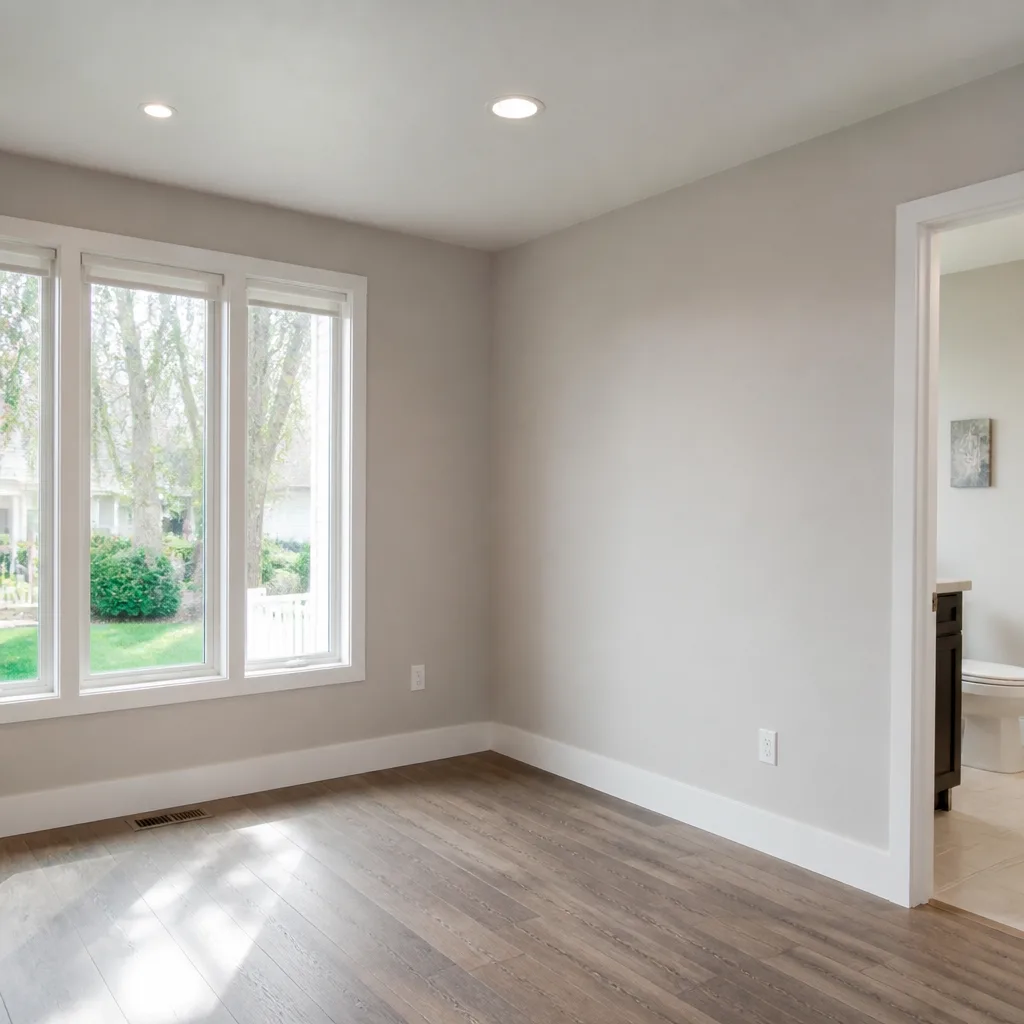
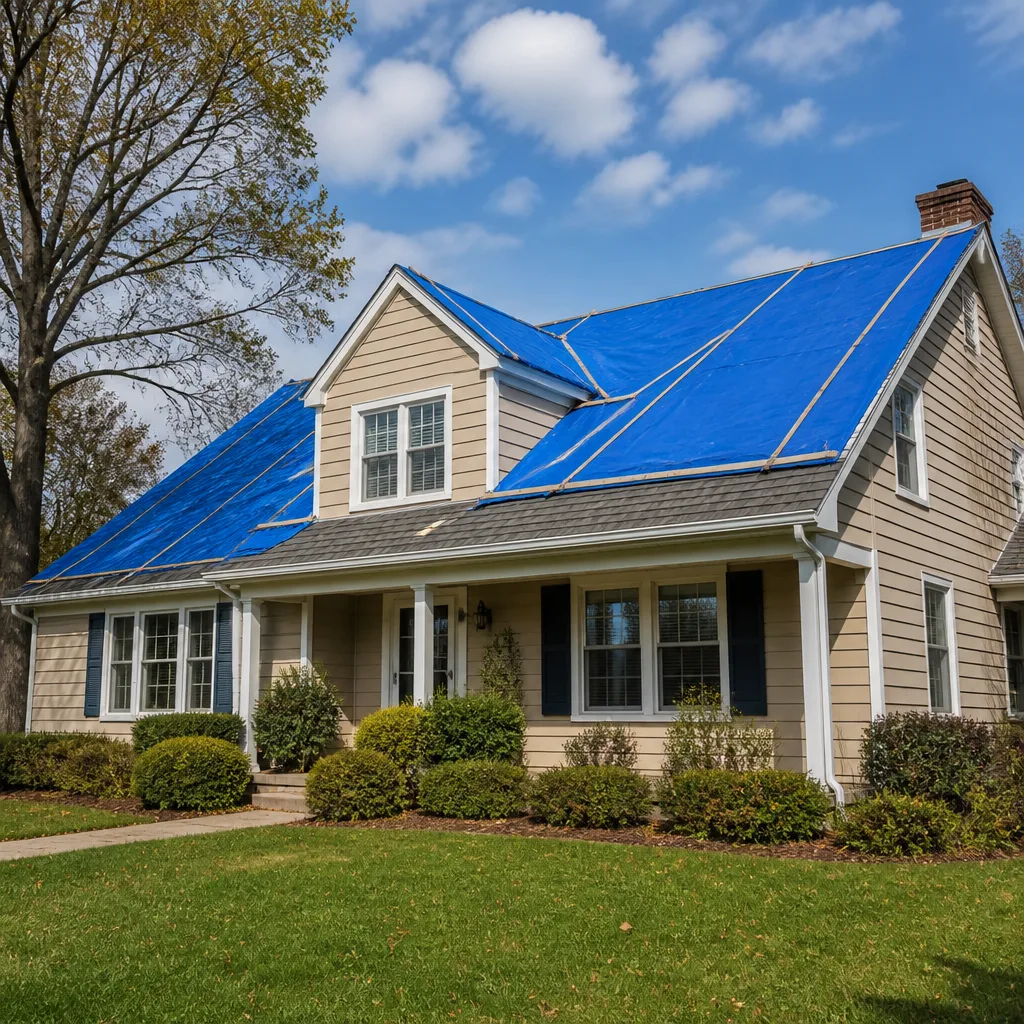
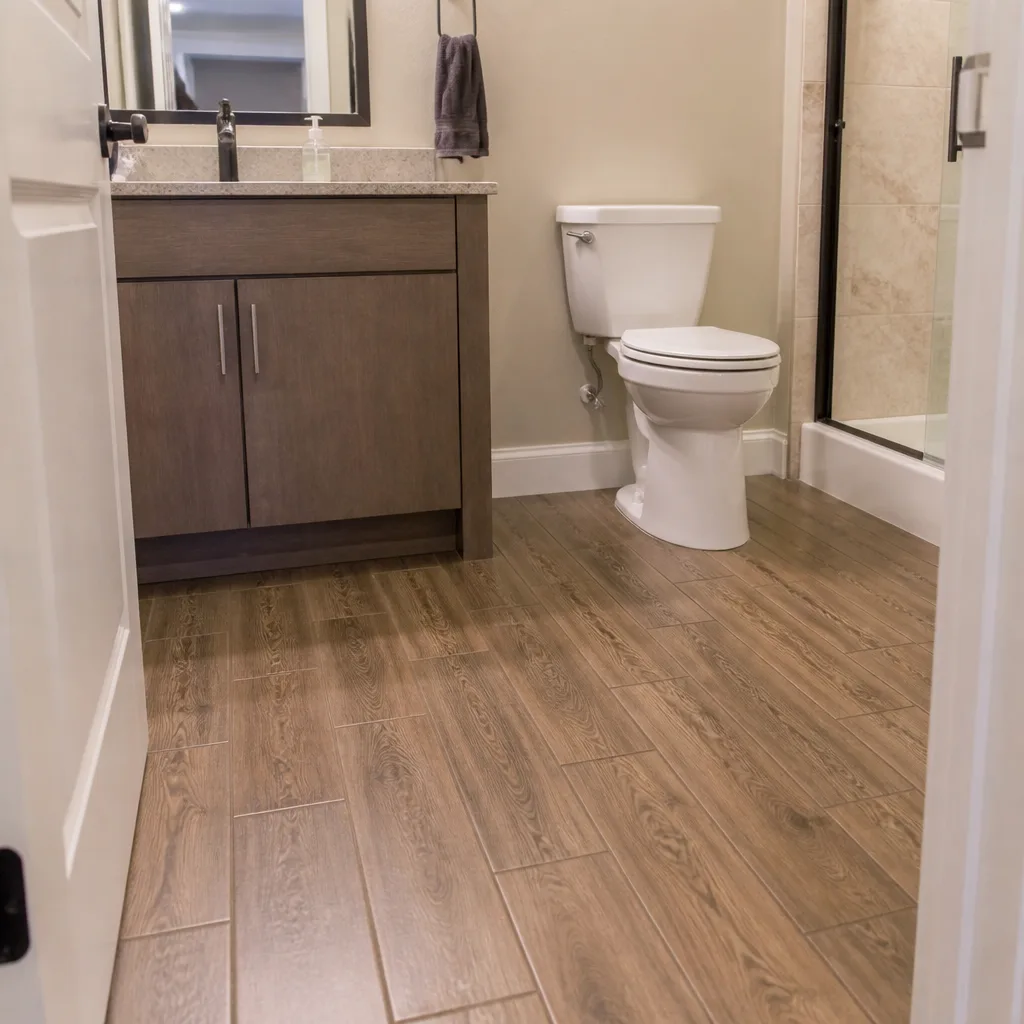
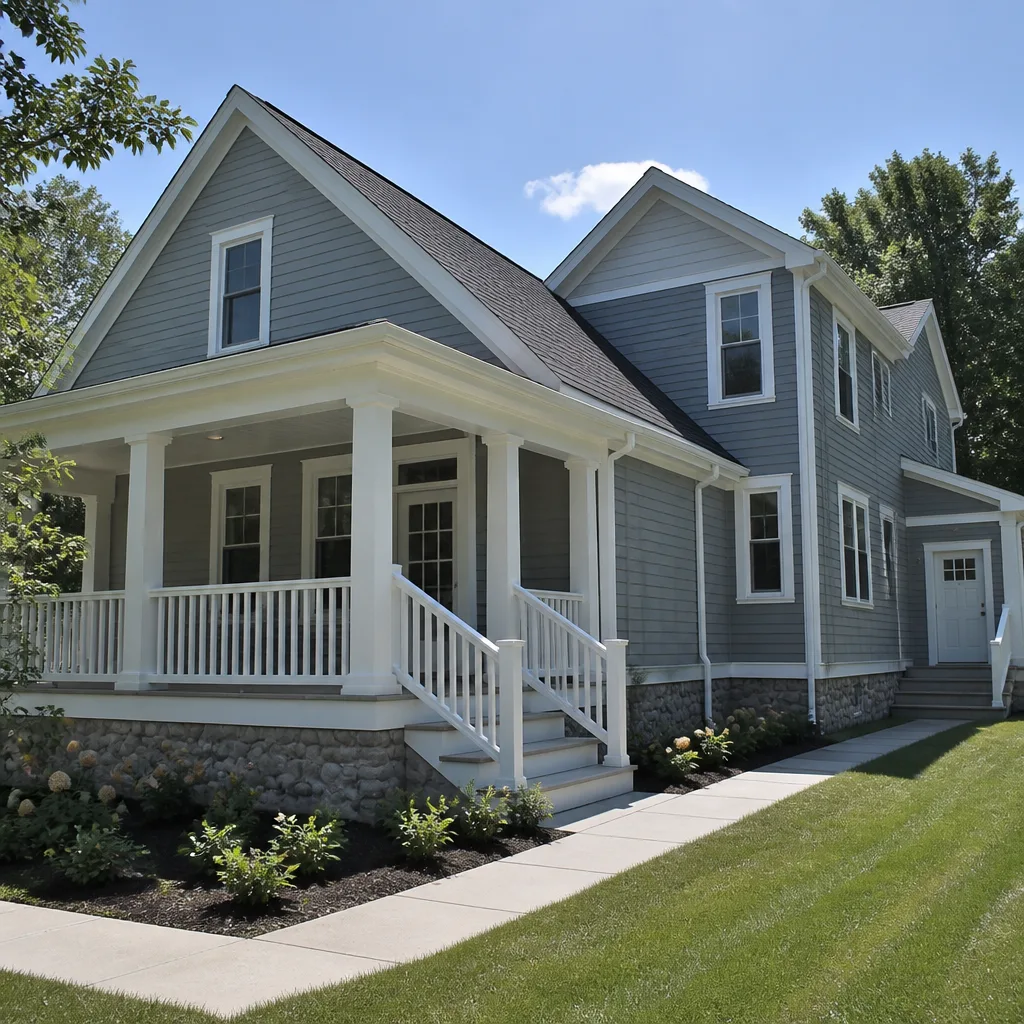
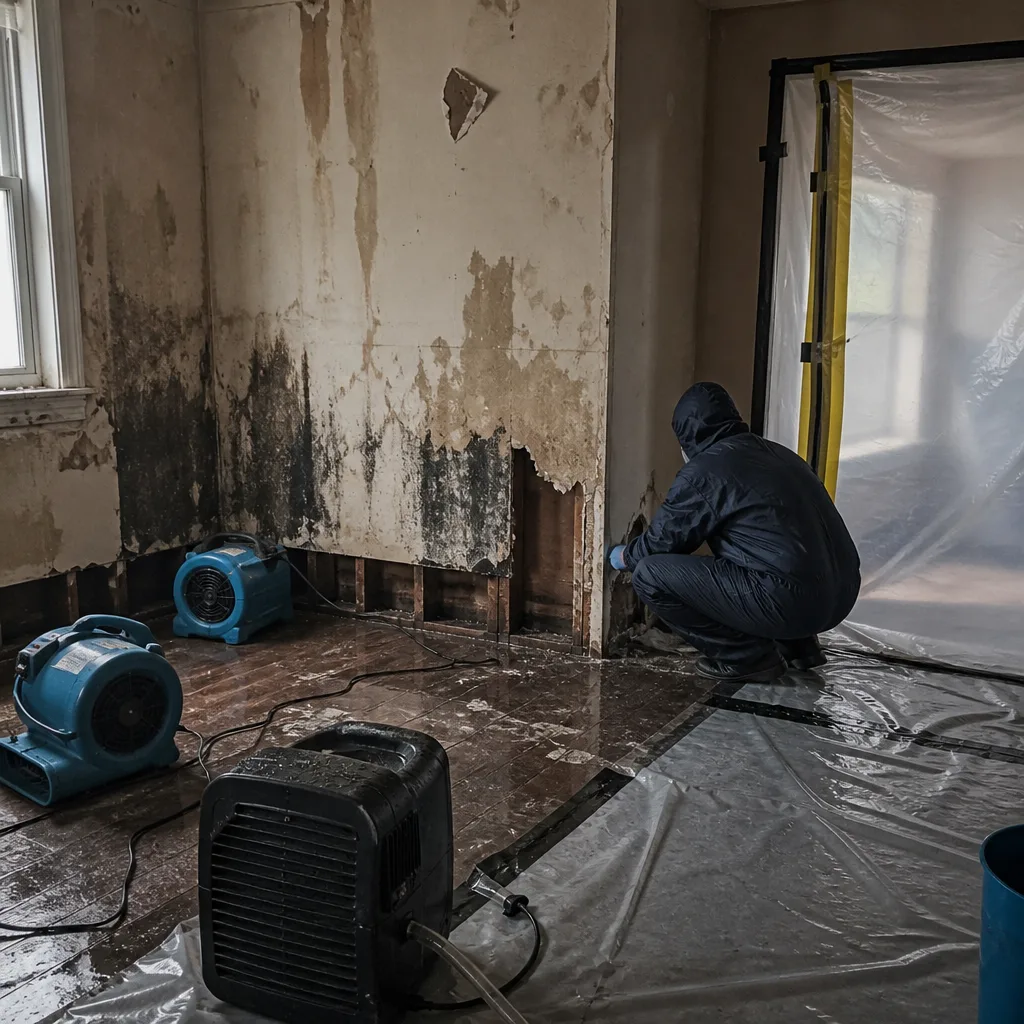 Before
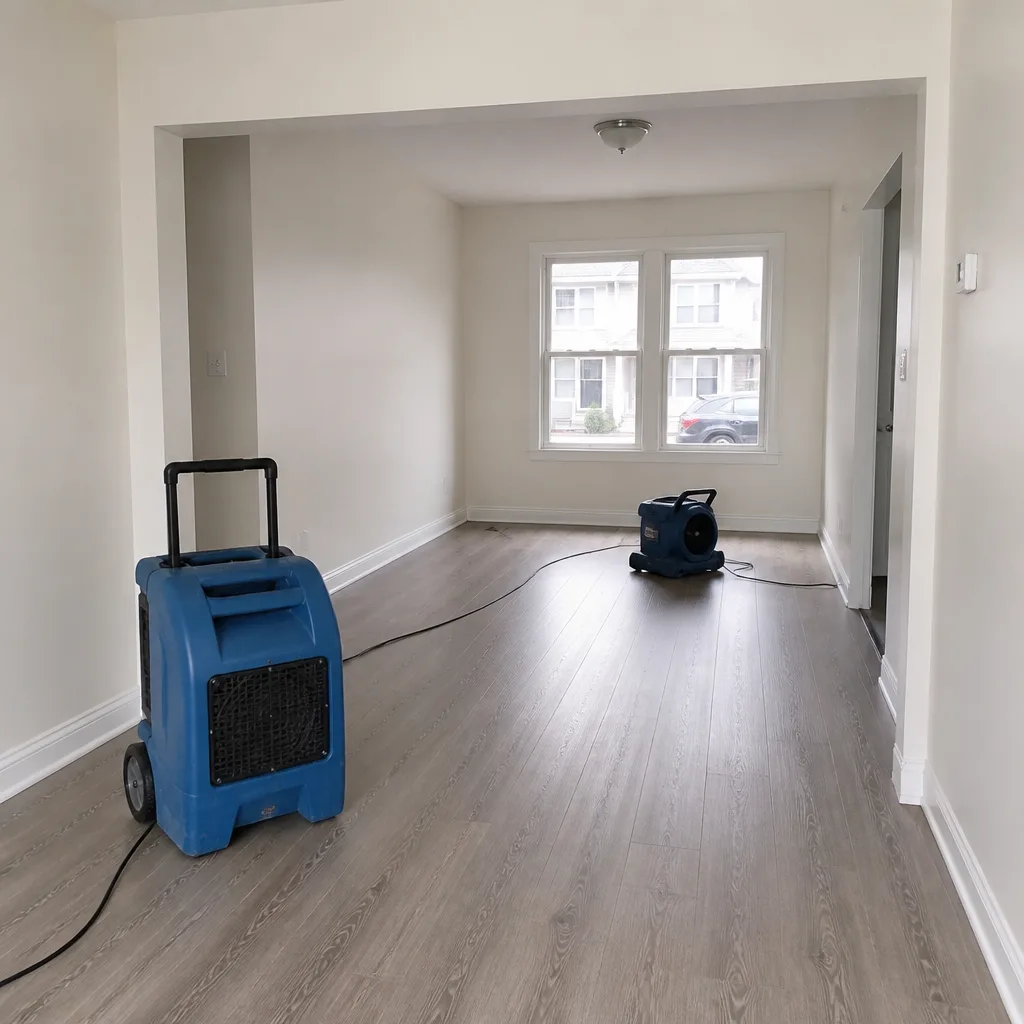 After
After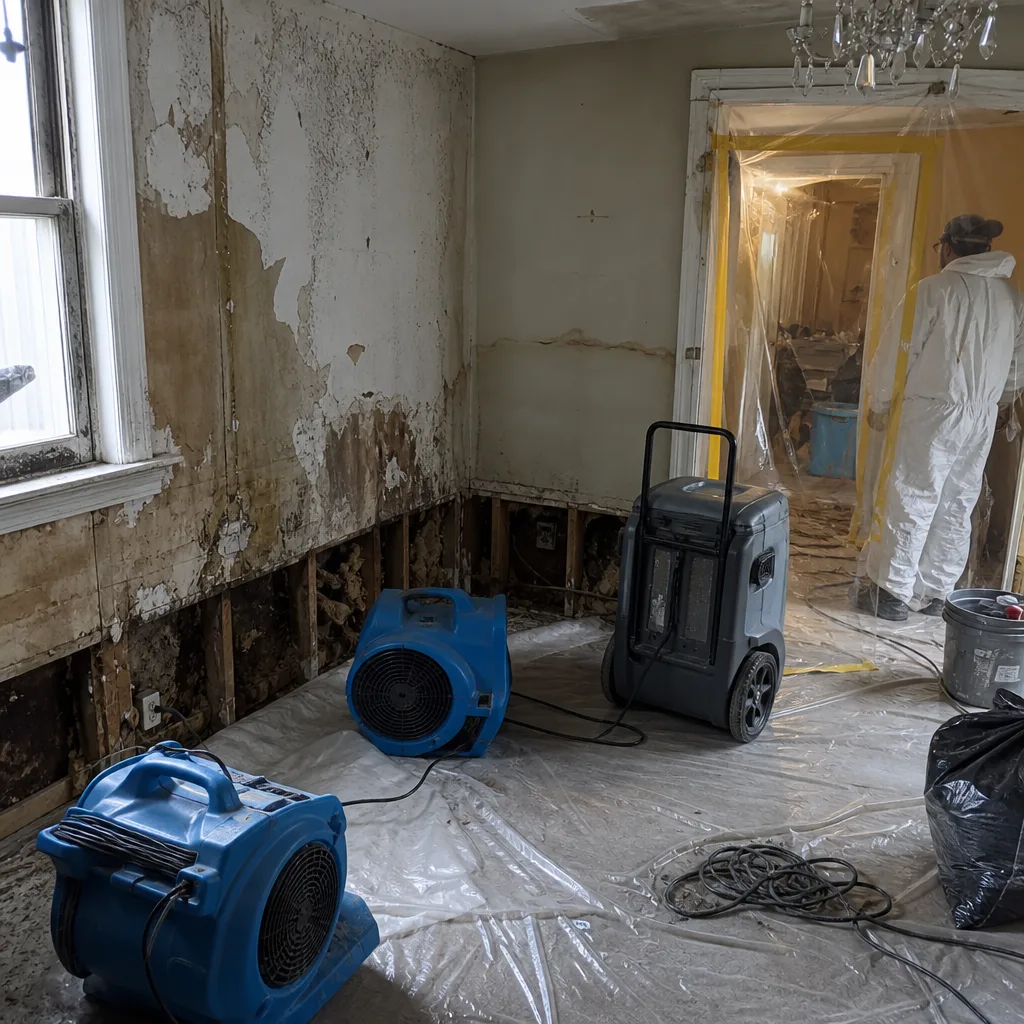 Before
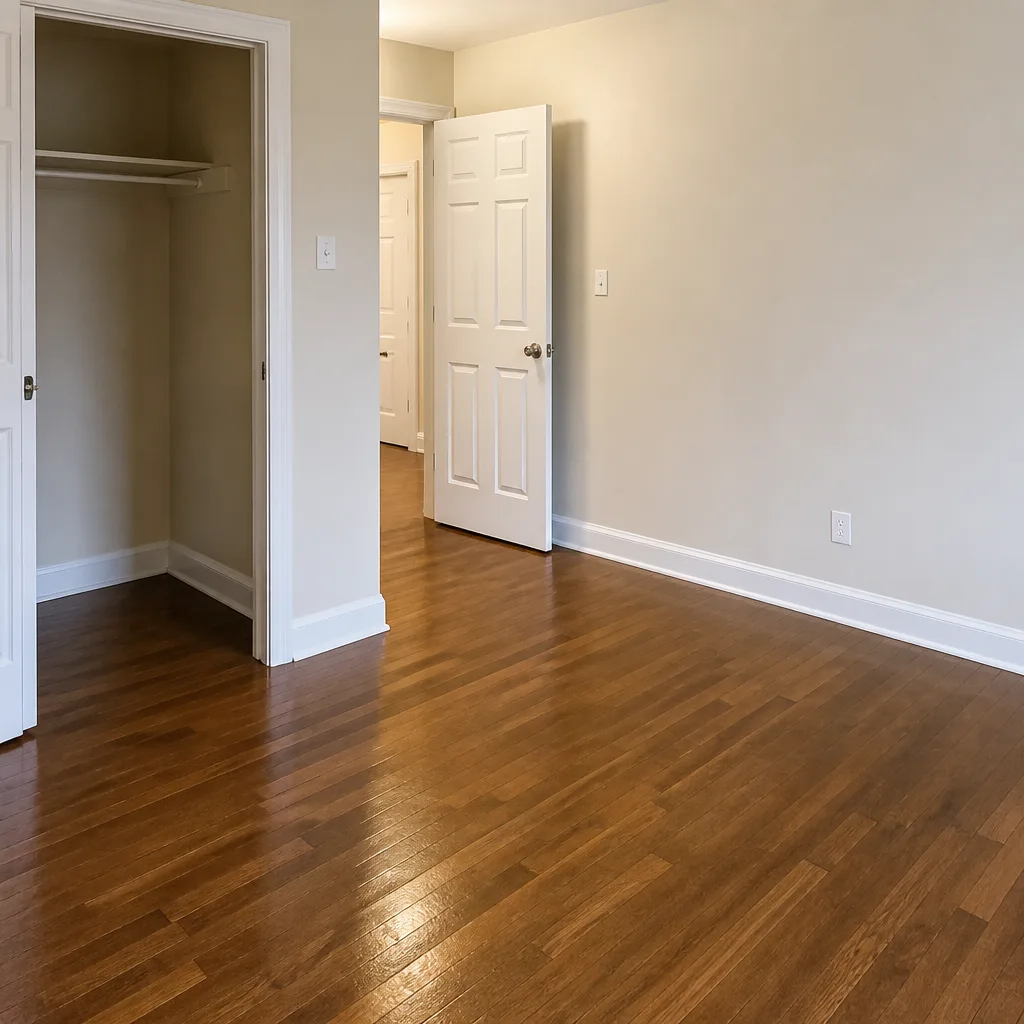 After
After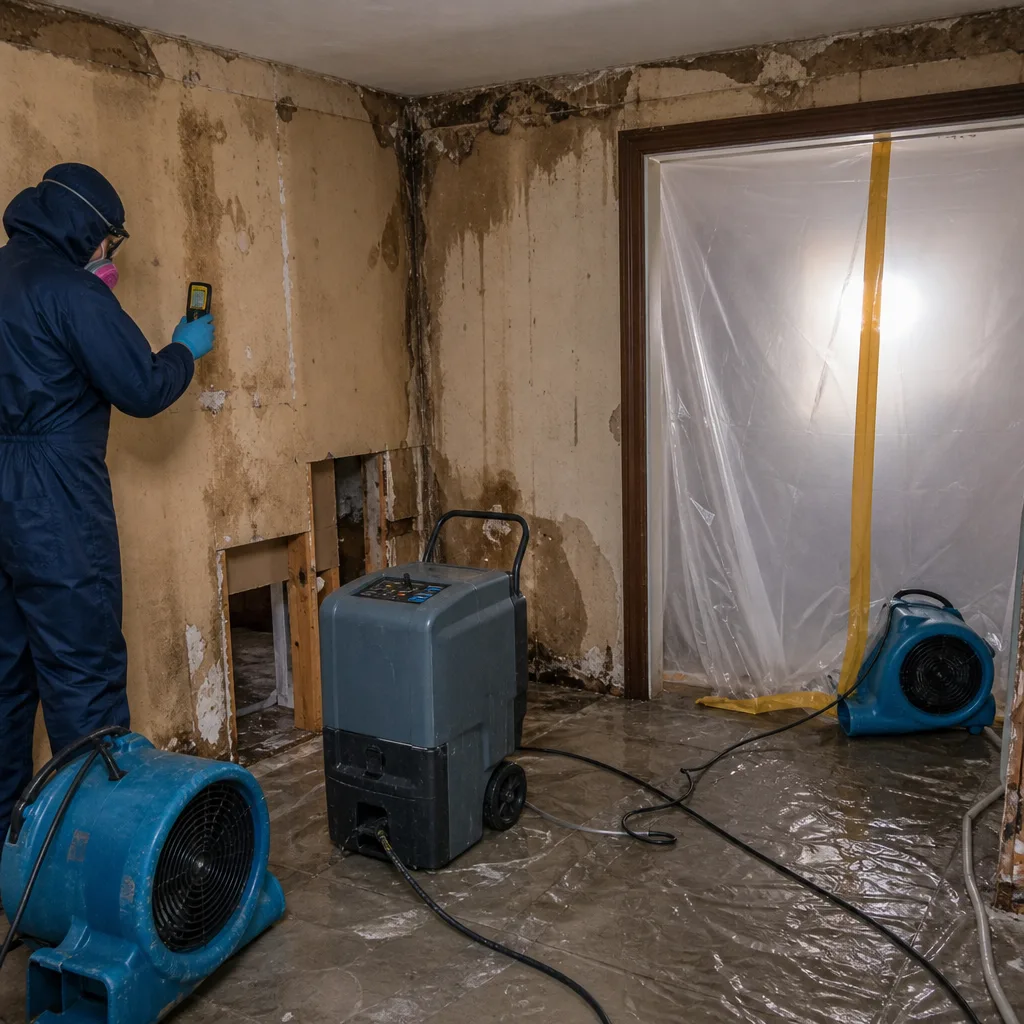 Before
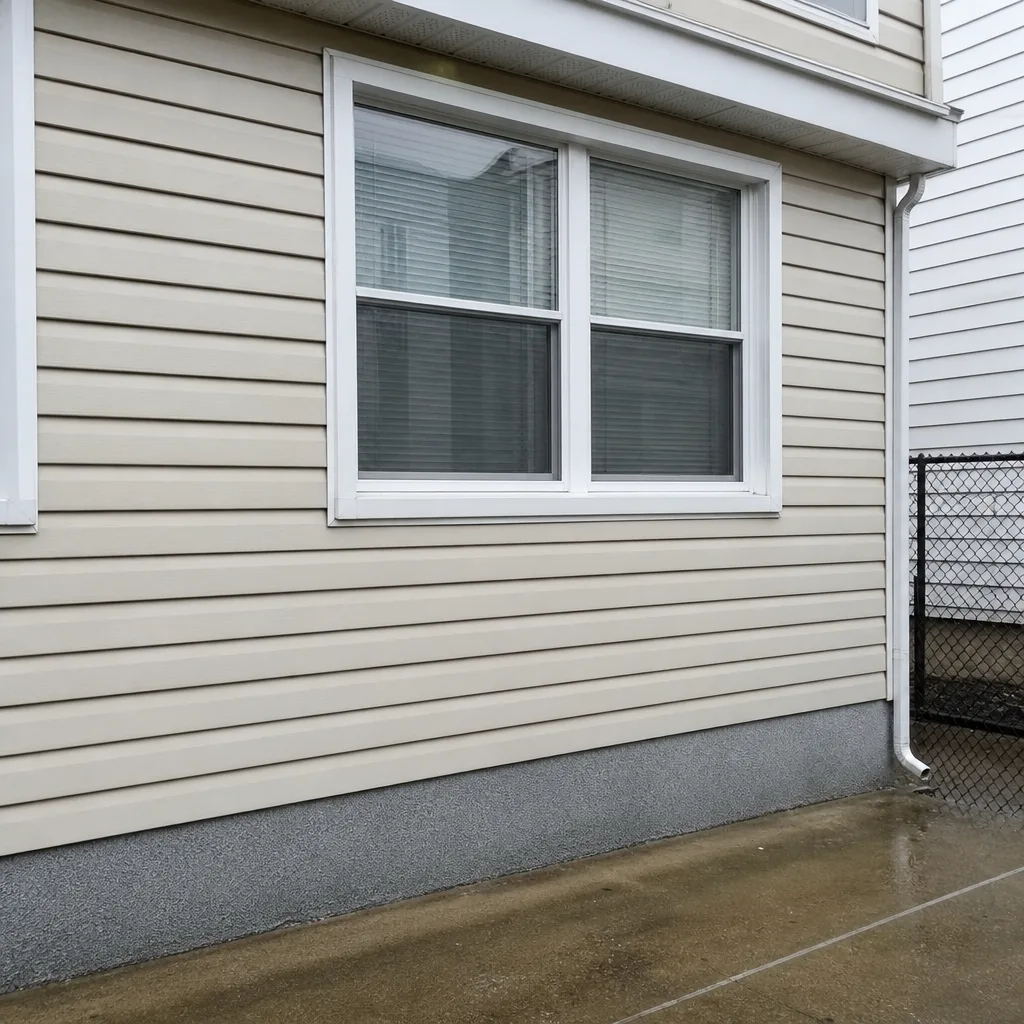 After
After24/7 Emergency Reconstruction & Cleanup in West New York
A pipe lets go on the fourth floor of a pre-war walk-up in West New York, and within forty minutes water is in the third-floor apartment, the second-floor hallway, and the basement stairwell. Reconstruction and cleanup here is rarely a one-unit job. It’s a stacked-building job. Our crews answer live at (640) 221-3499 and start the scope the same visit, because the first hour decides whether you’re drying plaster or replacing it. We dispatch into West New York around the clock with a free visual inspection, so the loss is documented before walls start holding water against framing.
Understanding Reconstruction & Cleanup Severity in West New York Properties
West New York’s housing stock splits into two very different risk profiles. The inland blocks, built between 1900 and 1950, are dense four-to-six-story brick tenements with aging galvanized and cast-iron supply lines. When one corrodes and bursts, Category 2 water moves through shared plaster-and-lath or early drywall assemblies across multiple floors. Moisture mapping on one floor shows saturation on the floors below. Along the Hudson River waterfront, newer luxury high-rises sit inside FEMA Special Flood Hazard Areas, where ground-level spaces carry persistent moisture and mold risk even without a visible pipe failure. Our Reconstruction & Cleanup crews read each building type differently: thermal imaging for lath-and-plaster migration in the tenements, sub-slab moisture checks and antimicrobial treatment planning in the waterfront towers. Severity in West New York is not just how much water. It’s how many units share the framing.
Why West New York Property Owners Choose Floodline Restoration Co.
- 45-minute response commitment - a live dispatcher confirms a crew the moment you call (640) 221-3499, and we hold ourselves to arrival inside the West New York grid within 45 minutes.
- 24/7 live answer, never a recording - at 2 a.m. on a Saturday, a real person picks up. That’s the dispatch board Curt Bowman built the company around in 2010.
- IICRC-certified crews - our technicians hold WRT, FSRT, and AMRT credentials and train to RIA and IFA standards, so structural drying and contents handling meet carrier expectations.
- Free visual inspection - before any line-item estimate, we walk every affected floor, not just the loss floor, because West New York buildings share their bones.
- Direct insurance billing - we file estimates, moisture logs, and photo documentation straight to your adjuster. You don’t play messenger.
- One team, extraction to rebuild - the same background-checked, uniformed crew that maps moisture on day one handles daily readings, pack-out, drywall, flooring, and finish work.
Our Reconstruction & Cleanup Process
Inspection & Assessment
We start on the loss floor, then walk every unit below it. Thermal imaging and moisture meters track where water traveled through shared assemblies. For FEMA flood-zone buildings, we check sub-slab and foundation-wall readings before writing anything.
Extraction / Stabilization
Professional-grade extraction pulls standing water from every affected surface. We stabilize the structure so drying can begin immediately, and we document conditions room by room for the insurer.
Drying & Dehumidification
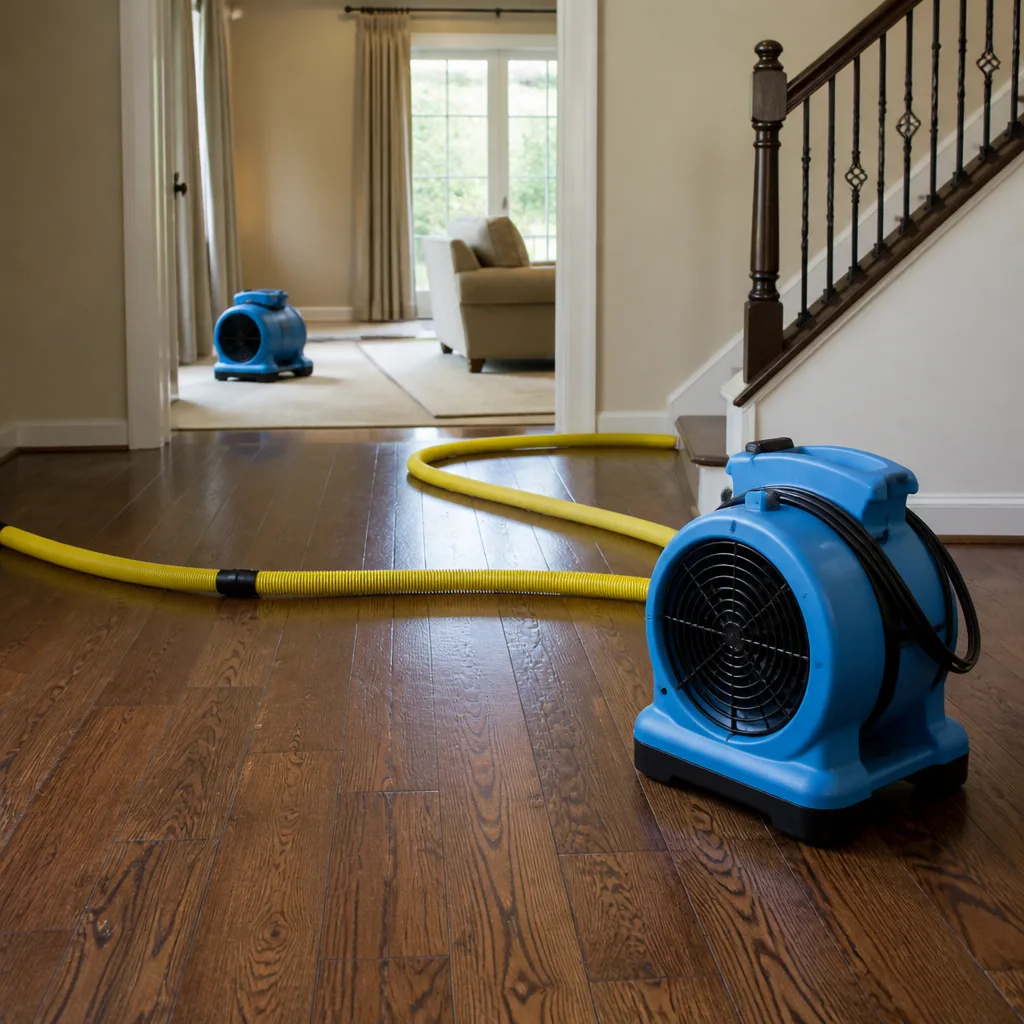
Dri-Eaz and Phoenix air movers and dehumidifiers are placed per a moisture map, not by guesswork. Daily hygrometer readings get logged until the dry standard is met. In plaster-and-lath buildings, drying runs longer and we plan for it.
Cleaning & Sanitization
HEPA air scrubbers run during controlled demolition and cleaning. We treat affected surfaces with antimicrobials where water category or flood-zone exposure requires it, then document the treatment.
Contents Pack-Out & Restoration
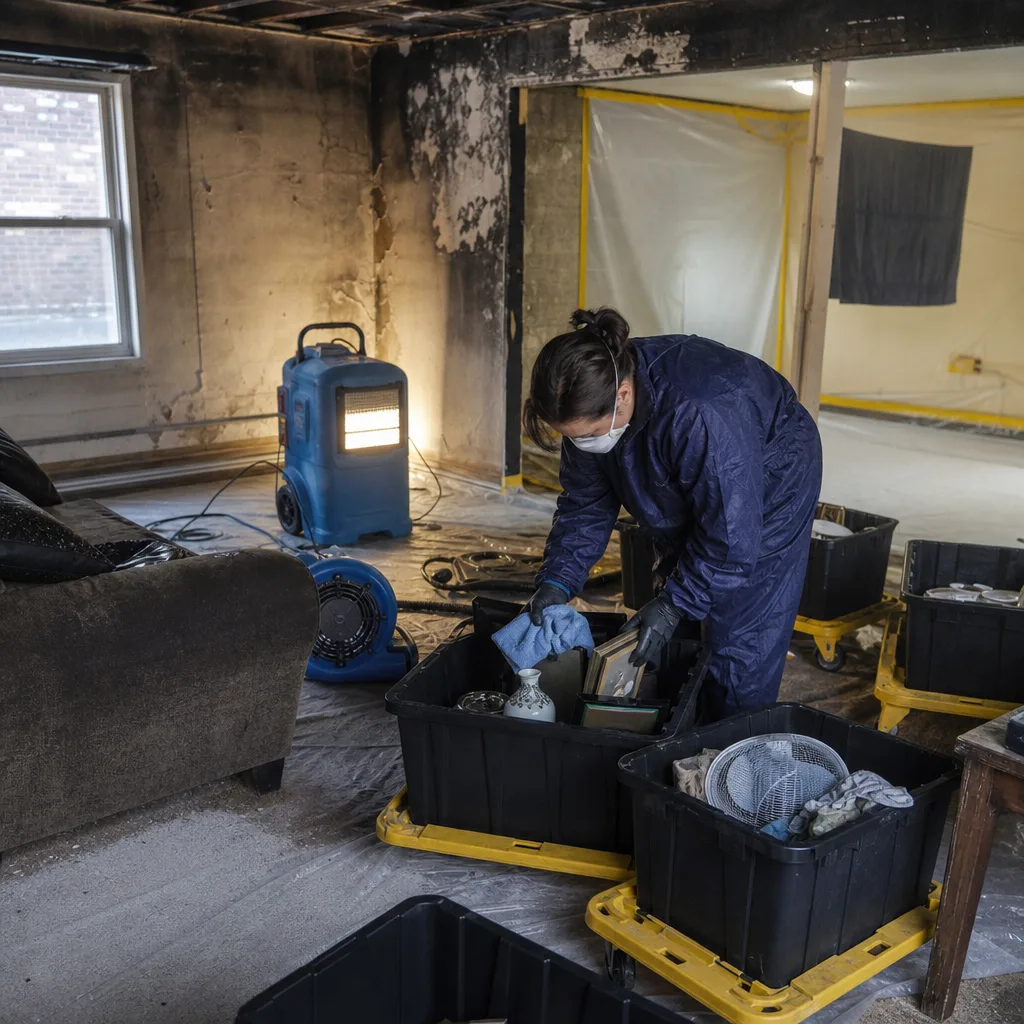
Furniture, clothing, and personal property get inventoried, packed, and moved to a secure facility when needed. In fourth-floor walk-ups, our crews carry contents down six flights when there’s no elevator. We coordinate with tenants and landlords on access.
Repairs & Reconstruction
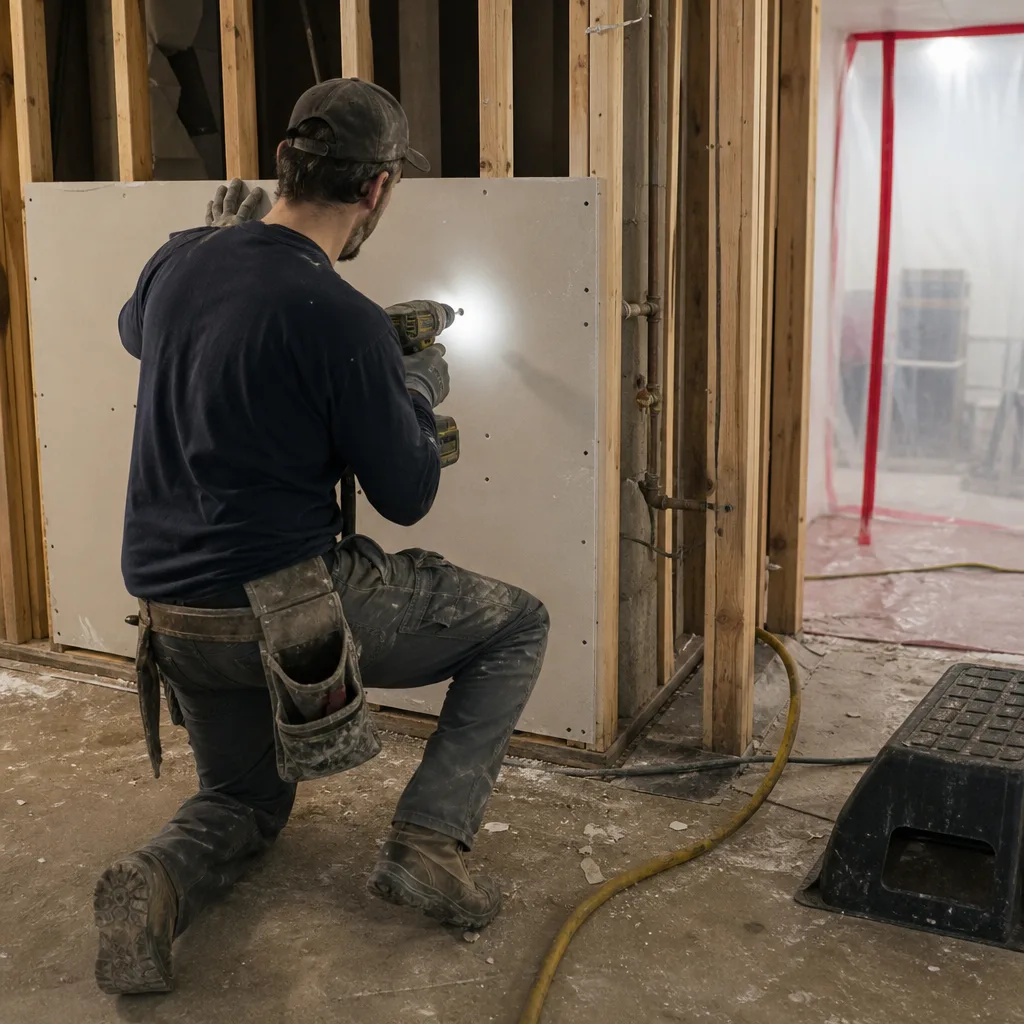
Drywall, plaster, flooring, trim, and paint go back in to match the original building character. One crew handles it from first extraction to final coat, backed by the 90-Day Done Right Promise in writing.
Need Emergency Reconstruction & Cleanup in West New York Now?
Crews minutes away, answering live 24 hours a day. The sooner we start, the less it costs.
Working With Your Insurance Company
West New York stacked-unit losses create overlapping claims. A fourth-floor pipe burst lands on the landlord’s policy, the third-floor tenant’s contents policy, and sometimes the second-floor unit’s liability coverage all at once, with two or three different adjusters asking for different paperwork. We file each one the same documentation, formatted to their carrier’s standards. No handwritten scribbles. No missing moisture readings. From the first hour on site, we photograph every affected room, log every daily drying reading, and produce a line-item scope the adjuster can approve without a second site visit. For property owners in West New York, direct billing means our office talks to the carrier and you don’t chase anyone.
What We Provide Your Insurer
- Thorough documentation of the loss
- Photos of all damage, room by room
- Moisture readings and drying logs
- A detailed, line-item scope of work
- Direct coordination with your carrier
Built for West New York’s Loss Calendar
West New York’s reconstruction season follows its plumbing and its geography. January and February deep freezes burst supply lines in uninsulated interior walls of 1920s tenements, sending water across multiple floors before anyone notices. March and April thaw saturates the steep Palisades grade, pushing runoff hard against older brick foundations and producing sub-slab water intrusion on the uphill blocks from Boulevard East down toward Bergenline Avenue. Summer thunderstorms overwhelm old roof drains and flash-flood basement stairwells in minutes. Nor’easters in fall and winter drive water into waterfront high-rises where ground-floor mechanical rooms sit in the flood zone. Every one of these is a reconstruction job, not a cleanup job. The building’s age and the shared framing decide the scope. We schedule full rebuilds the same way we schedule extractions: with a written plan before work starts.
Reconstruction & Cleanup Across West New York’s Neighborhoods
The inland blocks between Boulevard East and Bergenline Avenue hold the oldest tenements, where a third-floor kitchen line failure in one building on 60th Street can pull us into the landlord’s second building on 59th Street before the first drying cycle finishes. Those multi-building relationships are common in West New York because entire blocks changed hands together. Along Palisade Avenue and up toward the Weehawken line, the grade is steep and foundation-wall water intrusion recurs every heavy rain. The waterfront high-rises near Port Imperial and River Road carry a different exposure: FEMA flood-zone moisture in ground-level parking and amenity spaces, where reconstruction requires extended structural drying before any finish material goes back. Around 57th Street and the midtown grid, the pre-war walk-ups are dense enough that we plan stairwell containment and pack-out routes before we write the estimate, because dust from controlled demolition travels through shared hallways faster than water does.
Specialized Reconstruction & Cleanup Services We Offer in West New York
Full-Service Reconstruction
We rebuild what the water or fire took, matching pre-war plaster, trim, and flooring character where the building calls for it. In West New York’s tenements, that often means replacing full wall sections across multiple units so the repair doesn’t read as a patch. One crew handles it end to end.
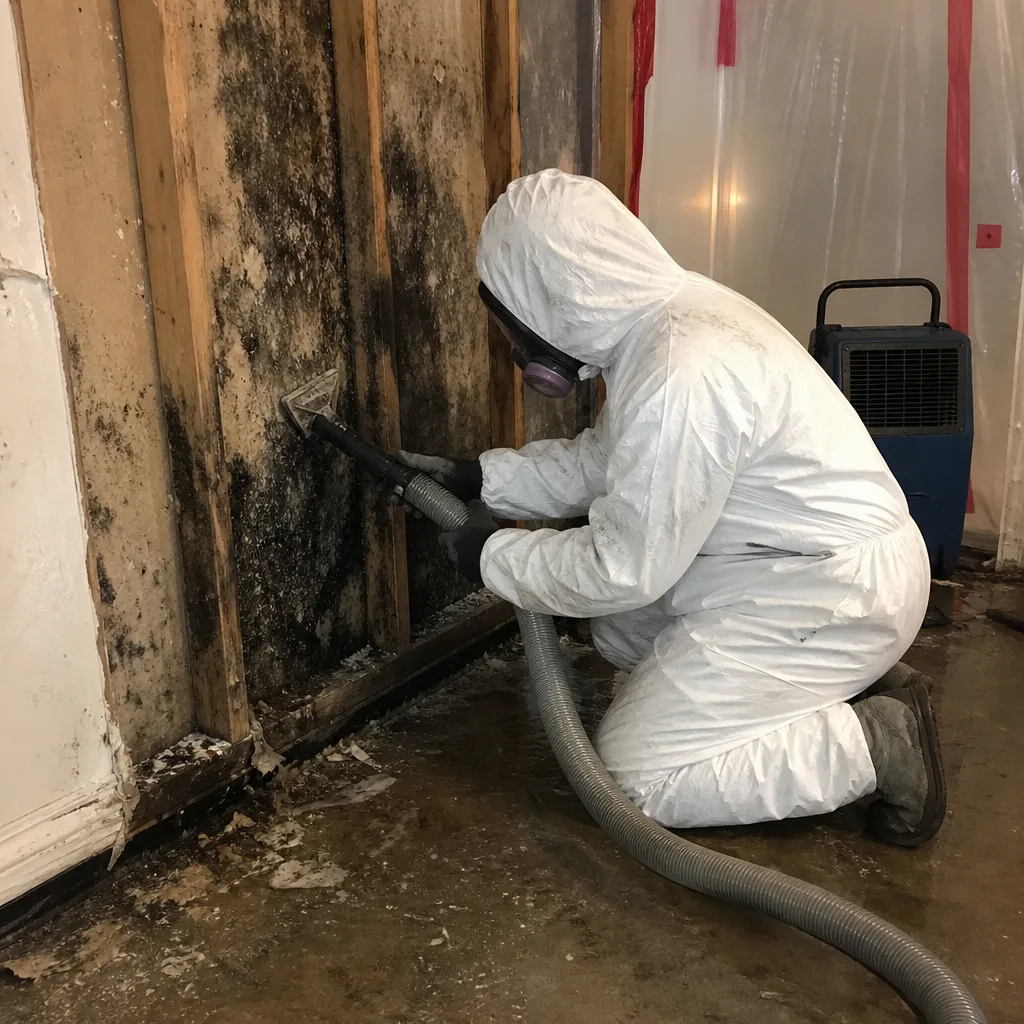
Contents Restoration & Pack-Out
Fourth-floor units with no elevator or a too-small elevator need crews who carry contents by hand. We inventory first, pack second, move third. Furniture, clothing, documents, and electronics go to a secure facility or stay on site in sealed containers. Tenants get an itemized list. Adjusters get the same list.
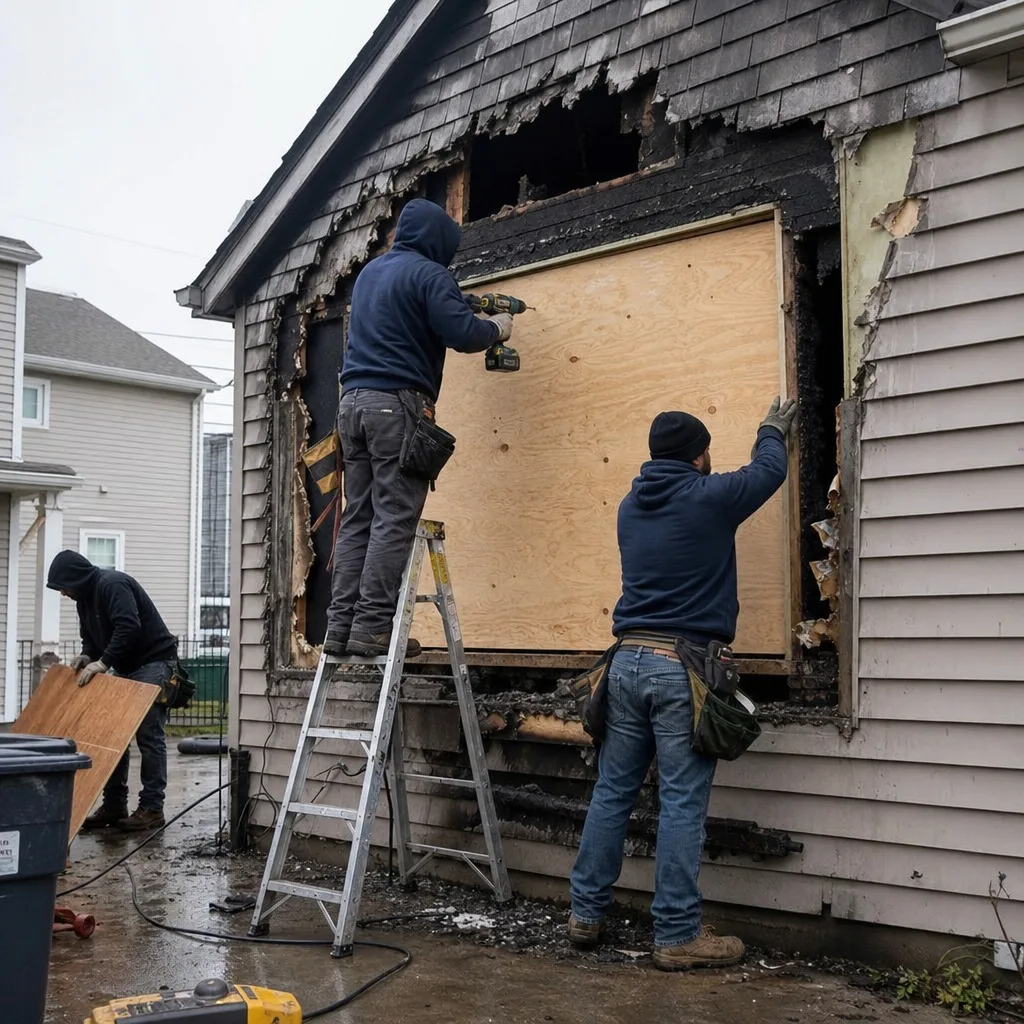
Drywall & Flooring Repair
After drying is complete, we replace saturated drywall and plaster, level subfloors, and install flooring to match. In stacked buildings, we coordinate with the units above and below so the repair week is planned, not improvised.
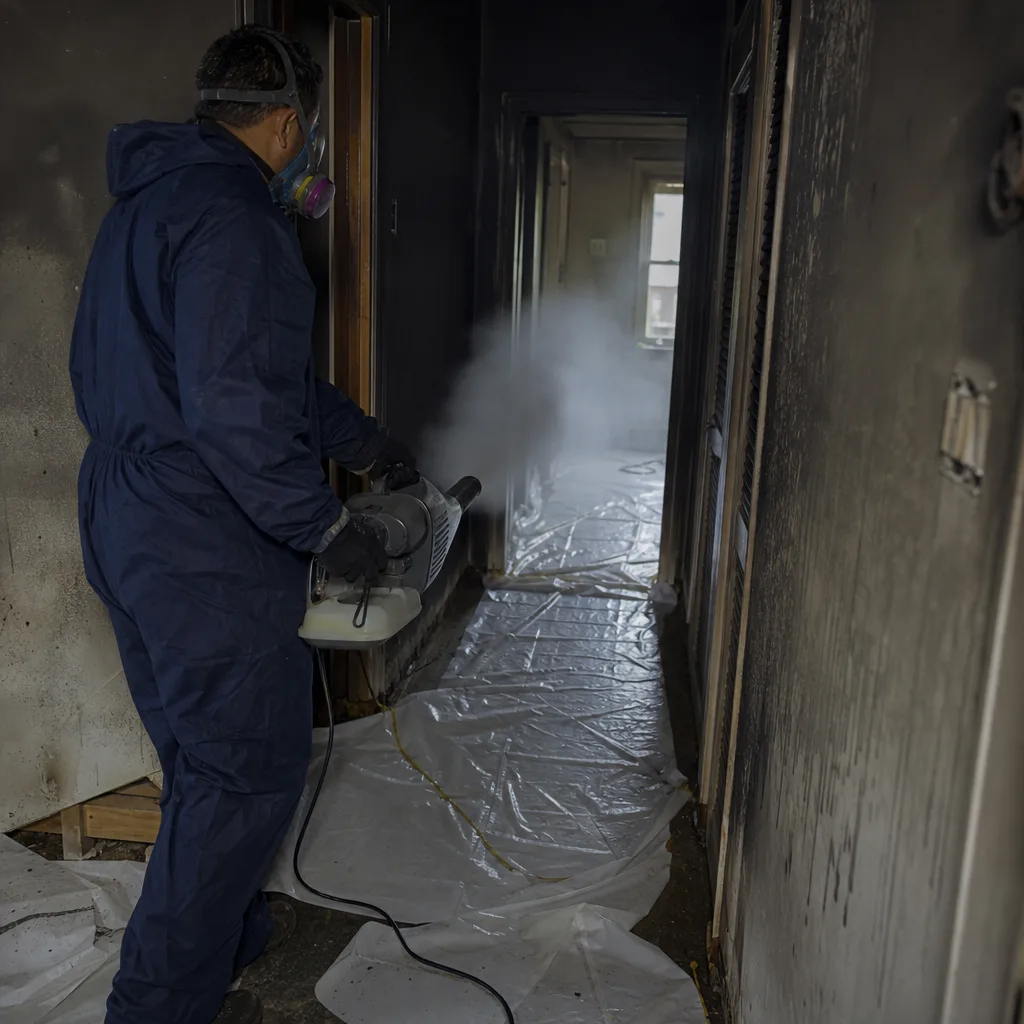
Insurance Claim Documentation
This is where West New York multi-unit losses get complicated. We produce the moisture map, photos, drying logs, and line-item scope in the format each carrier wants. For landlords with multiple contiguous buildings, we consolidate documentation so one claim file doesn’t become five.
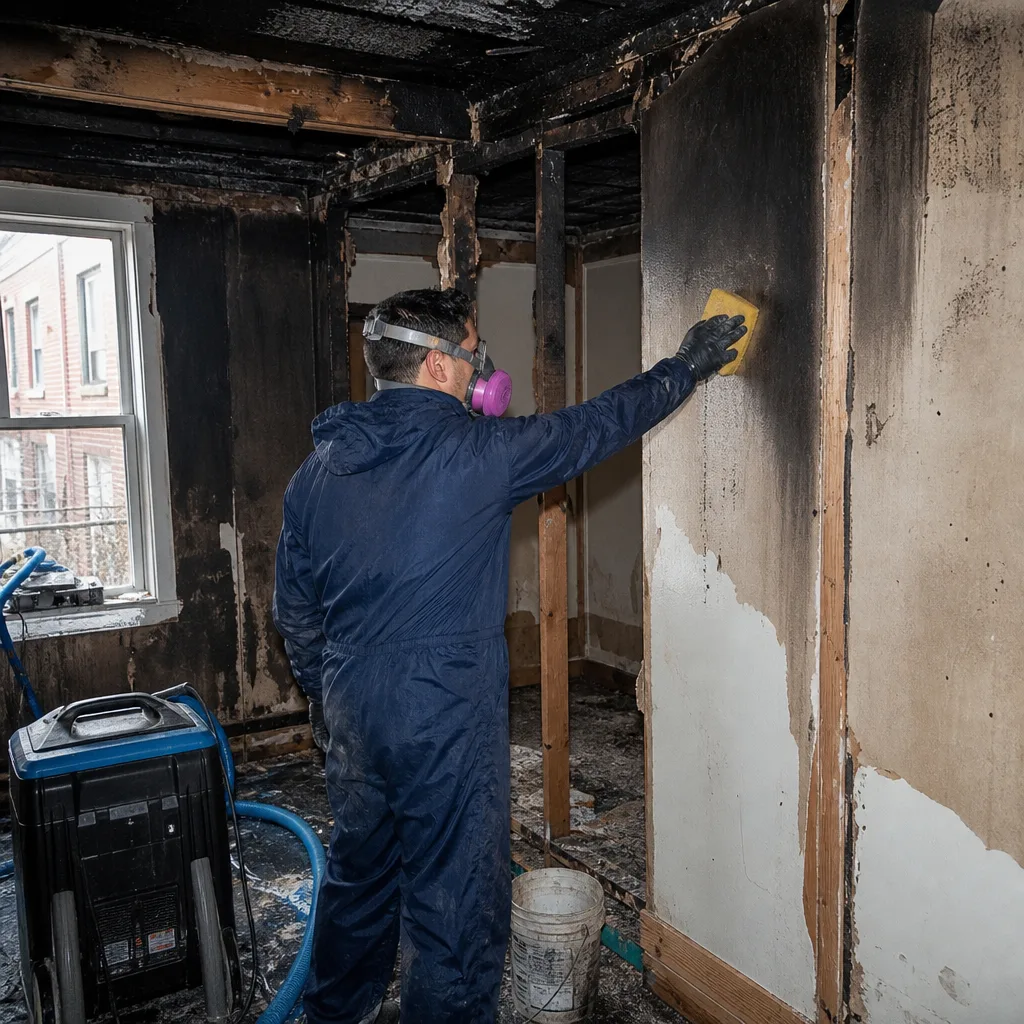
Carpet & Upholstery Cleaning
After a loss, salvageable carpet and upholstery get deep cleaned and deodorized on site or at our facility. For flood-zone ground-floor spaces, we document cleaning and antimicrobial treatment separately for the insurer.
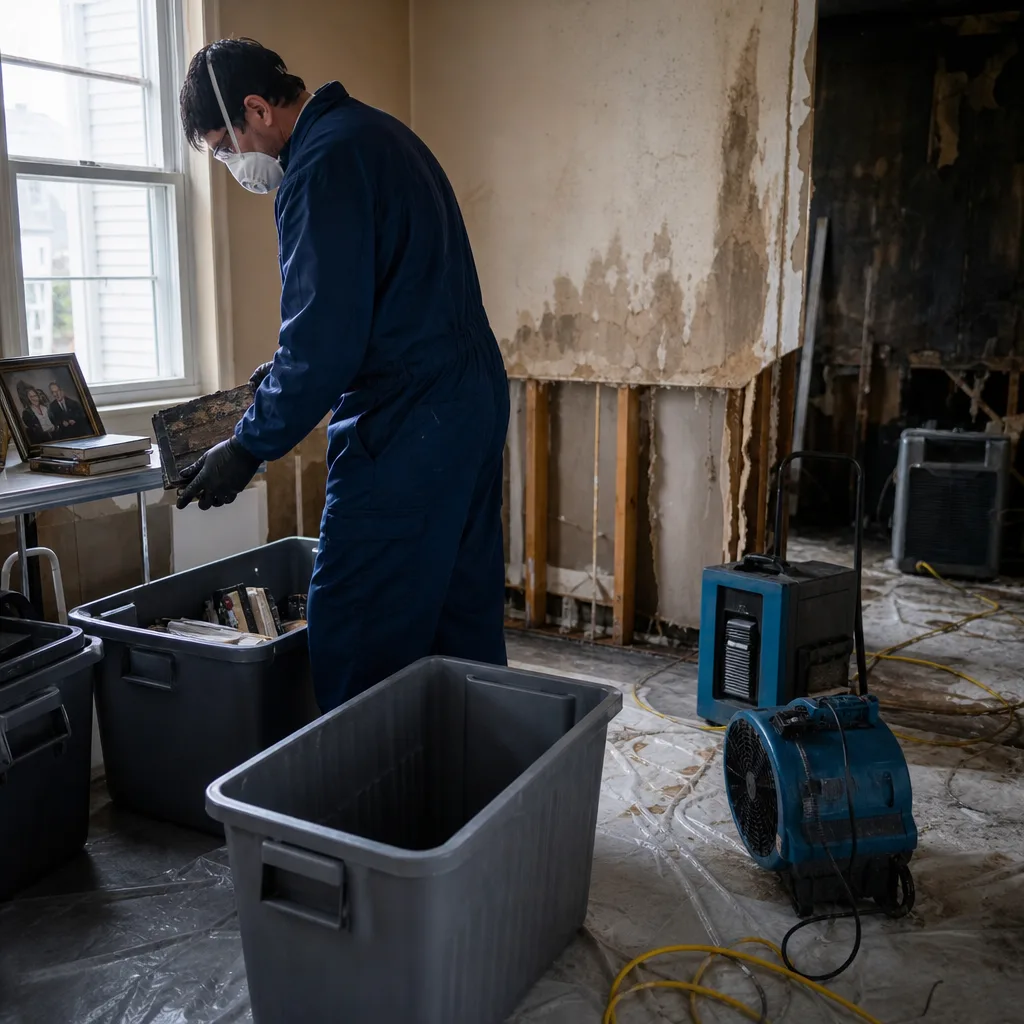
Post-Construction Cleanup
After reconstruction, we remove dust, debris, and construction residue. HEPA air scrubbing runs through final cleaning so tenants walk into a unit that’s finished, not just repaired.
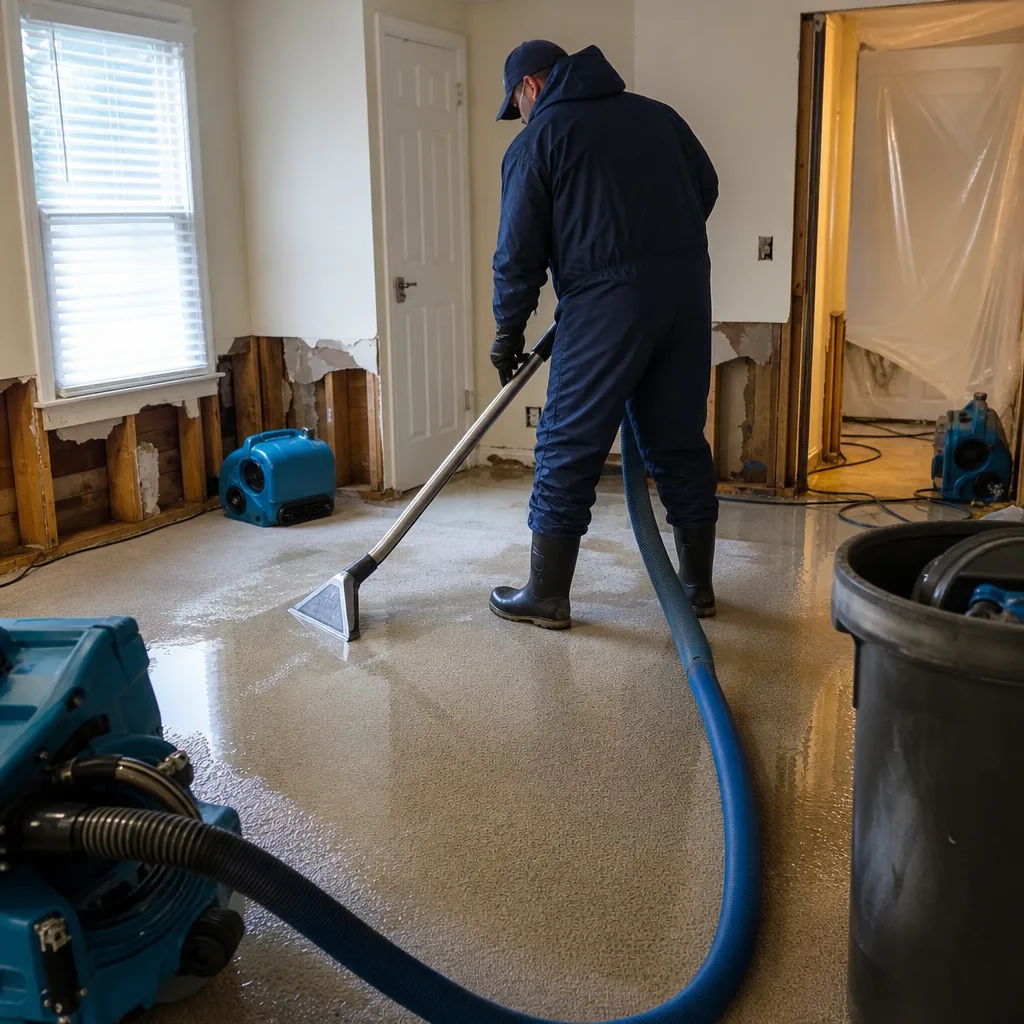
What happens when you call
- 1
A real person answersNo phone trees - you reach a local pro.
- 2
You get an upfront price rangeHonest numbers before anyone is dispatched.
- 3
A background-checked tech heads outLicensed & insured, dispatched right away.
- 4
You approve before work beginsNothing starts until you say go.
Reconstruction & Cleanup Costs in West New York, NJ
A single-unit drywall and flooring rebuild after a pipe burst in West New York typically runs $4,500 to $11,000 depending on how many walls opened and whether flooring is tile or wood. A multi-floor, multi-unit reconstruction in a pre-war brick walk-up commonly lands between $18,000 and $45,000 because the scope includes plaster replacement, structural drying across stacked units, and coordinated pack-out. Waterfront high-rise ground-floor jobs with FEMA flood-zone exposure add $2,500 to $7,000 for extended drying and antimicrobial treatment. Contents pack-out and restoration from a fourth-floor unit adds $1,200 to $4,500 depending on volume and stair access. The free visual inspection turns these ranges into a written line-item scope before any work begins. Insurance typically covers the reconstruction scope; our direct billing keeps the deductible the only out-of-pocket number you face. Call (640) 221-3499 for a firm number on your building.
We Also Serve Cities Near West New York
Our crews handle reconstruction and cleanup in North Bergen, Ridgefield, Weehawken, and Union City as well. The same live dispatch, the same IICRC-certified teams, the same 90-Day Done Right Promise. If your building sits just over the municipal line, call (640) 221-3499.
Serving West New York, NJ - Our Local Coverage Area
We’re based in the West New York area and know this community well. Use the map below to see our service coverage - if you’re nearby, we can almost certainly help.
West New York Reconstruction & Cleanup Questions, Answered
How fast can you start structural drying in a West New York pre-war walk-up after a fourth-floor pipe burst?
We arrive within 45 minutes of your call and start structural drying the same visit. Our crews dispatch from the New York City office directly into West New York, and water extraction begins before the first dehumidifier is placed. For pre-war walk-ups, we walk the floors below the loss before setting equipment, so drying covers every unit water reached, not just the one with the burst pipe.
What’s the difference between reconstructing a unit in an inland brick tenement versus a waterfront high-rise?
The inland tenement is plaster-and-lath over shared framing, so water travels horizontally and vertically through the same assemblies, and reconstruction means opening walls on multiple floors at once. The waterfront high-rise sits in a FEMA flood zone, so ground-floor reconstruction requires extended structural drying, sub-slab moisture readings, and antimicrobial treatment before finish work starts. Different buildings, different scopes, same written line-item before we begin.
Do you coordinate directly with multiple insurance adjusters when a loss affects several units in one West New York building?
Yes. We file the same documentation, moisture logs, photos, and line-item scope to every adjuster on the claim, formatted to each carrier’s standards. For landlords with multiple contiguous buildings, we consolidate the paperwork so one loss doesn’t turn into five separate claim battles. Direct billing means we talk to the carriers and you don’t relay messages between them.
Can you handle pack-out of contents from a fourth-floor unit when the elevator is out or too small?
Yes. We carry contents by hand when the elevator is down, too small, or nonexistent in older walk-ups. Our crews inventory everything first, pack second, and move third, using stairwells with containment set up so dust and debris don’t spread to other floors. The pack-out list goes to you and to the adjuster.
How do you handle the steep Palisades grade and foundation-wall water intrusion in West New York’s uphill blocks?
We start with thermal imaging and sub-slab moisture readings at the foundation wall, then design the drying plan around the groundwater path, not just the visible staining. In the uphill blocks along Boulevard East and Palisade Avenue, heavy rain forces water into older foundations at the wall-to-slab joint. Reconstruction there often means foundation-wall treatment and drainage correction before interior finish work.
Will my insurance cover the full reconstruction cost?
Most multi-unit water losses in West New York are covered under the property owner’s policy plus tenant contents policies, and our line-item scope and moisture logs get filed directly to the carrier. You pay the deductible. We bill the rest straight to the insurance company so the claim doesn’t stall on paperwork.
How long does full reconstruction take after a multi-floor water loss?
Typical single-unit reconstruction runs 5 to 10 working days after drying completes. A multi-floor pre-war building with plaster replacement and coordinated access across units commonly runs 3 to 6 weeks. Waterfront flood-zone jobs add time for extended structural drying before any finish material goes back. We give you a written schedule before work starts.
What should I do in the first 30 minutes after discovering water in a West New York apartment building?
Shut the building water supply at the main valve if you can reach it safely, then call (640) 221-3499. Document what you see with your phone, notify any tenants in units below the source, and don’t enter standing water if electric panels or wiring are involved. A live person answers and a crew starts toward you immediately.
On 57th Street in the inland blocks, a third-floor supply line let go and put Category 2 water through two shared-floor apartments. Our techs ran moisture mapping on the second and first floors, pulled early drywall to reach saturated lath, and coordinated pack-out with both tenants while we filed drying logs for two separate insurance adjusters, all before the first dehumidifier cycled off. That’s the job in West New York. The building shares its bones, and the scope has to account for every unit the water found, not just the one where the pipe failed.
Call (640) 221-3499 for a free visual inspection and a written line-item estimate. Floodline Restoration Co. serves West New York with live dispatch 24 hours a day, 7 days a week, and every job carries the 90-Day Done Right Promise, in writing, no arguing.
Written by Curt Bowman, Owner at Floodline Restoration Co., serving West New York since 2010.